Toyota Tundra Rear Axle Bearing: How to Select a Compatible Part
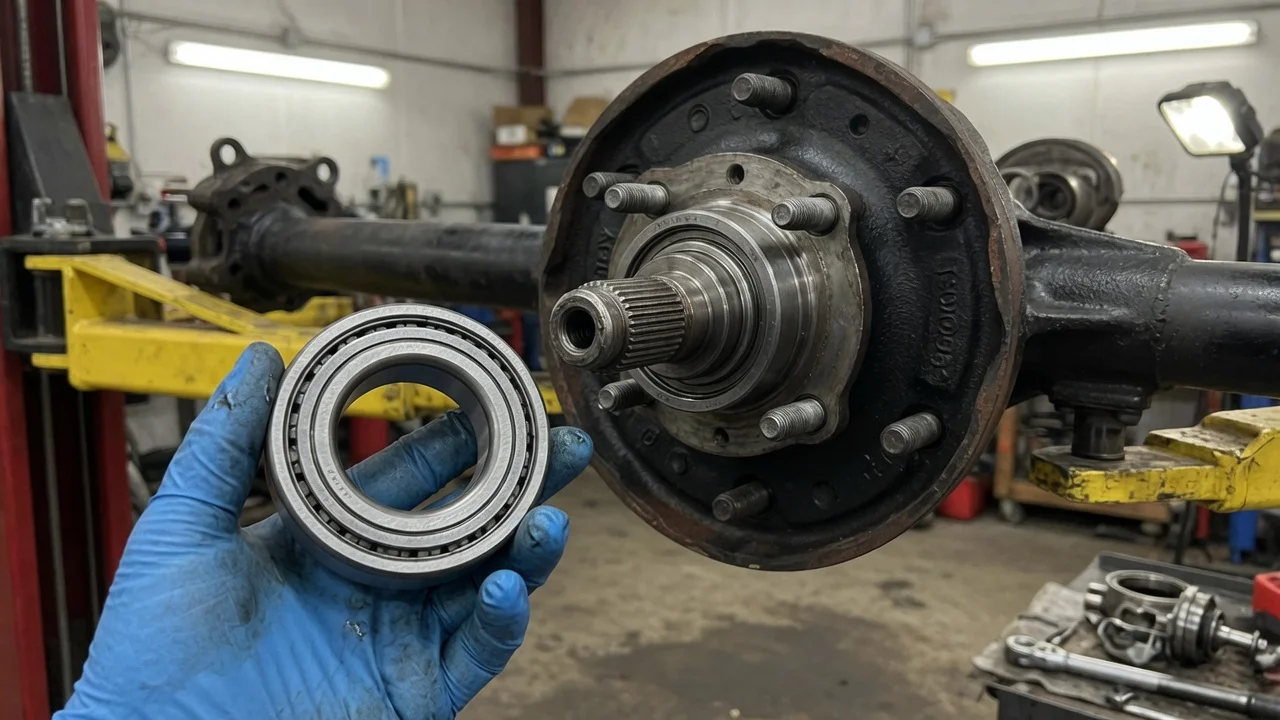
A worn rear wheel bearing on a Toyota Tundra usually shows up as a growl or hum that rises with road speed, sometimes with gear oil seeping past the axle seal. Buying the replacement looks simple, but Tundra rear axles have changed across generations and configurations, and a bearing that is close is not good enough. This guide explains how to match the part to your truck, which features actually matter, and what the job involves beyond the bearing itself.
Define the job the product must do
Start by confirming that the rear axle bearing is really the problem. Typical signs include a rumble or growl that changes with vehicle speed rather than engine speed, noise that shifts when the truck loads one side in a sweeping turn, and gear oil on the inside of the wheel, brake backing plate or drum. Differential gear whine, tire wear noise and a dragging brake can sound similar, so a proper inspection with the rear end raised, checking for play and roughness at each wheel, saves you from buying parts you do not need.
Next, think about how the truck is used. A Tundra that tows a camper, hauls loads regularly or sees water crossings puts more stress on the rear bearings and seals than a commuter, which affects how much you value a complete kit and a reputable bearing maker. Also be honest about your practical constraints: on many Tundra rear axles the bearing is pressed onto the axle shaft and held by a retainer, so the work requires a hydraulic press and the right adapters. If you do not have that equipment, you may be buying the part for a shop to install, or buying a pre-pressed axle assembly instead of a bare bearing.
Check compatibility
Fitment depends on the exact vehicle configuration, not just the model name. Record the model year, generation, engine, cab and bed style, two-wheel or four-wheel drive and any towing or payload package. Rear axle and differential assemblies differ between Tundra generations and, in some years, between engine and drivetrain combinations, so a bearing listed only as "fits Tundra" without a year range and configuration notes deserves suspicion. The most reliable approach is to use your VIN with a Toyota parts catalog or dealer parts counter to get the factory part number, then cross-reference that number to any aftermarket option.
When comparing listings, look at the interfaces the bearing must match: inner diameter for the axle shaft, outer diameter for the housing bore, width, and whether it is a sealed unit or relies on gear oil lubrication with a separate seal. Check how it is retained on the shaft and whether the listing includes or requires a new retainer ring, inner seal or outer seal. Confirm how the ABS wheel speed sensor is arranged on your axle so the new parts do not interfere with it. Finally, verify whether left and right sides use the same part on your truck rather than assuming they do.
Features that affect the choice
The biggest decision is between a genuine Toyota part, a bearing from an established bearing manufacturer that supplies original equipment, and a low-cost generic unit. A factory part number match and clear manufacturer branding on the bearing itself are useful evidence. Labels such as heavy-duty, premium or OE quality are marketing terms unless the seller backs them with a specific part number cross-reference, published dimensions and a stated warranty. Reviews that mention a specific year and configuration are more informative than general star ratings.
Kit contents matter as much as the bearing. A kit that includes the bearing, retainer ring and seals in the correct sizes reduces the risk of reusing a part that should be replaced, and avoids a second order when you discover a missing piece mid-job. Pre-pressed axle shaft assemblies cost more but remove the need for a press, which can make sense for owners working at home. Compare warranty terms carefully, including whether they cover parts only and whether professional installation is required to keep coverage.
Limitations and ownership costs
A new bearing will not fix a worn or scored axle shaft surface, a damaged housing bore, a failing differential or a leaking pinion seal, so inspect these while the axle is out. The job usually involves removing the wheel, brake components and axle shaft, and on axles where gear oil lubricates the bearing, you will lose some fluid and need to refill the differential with the type and quantity listed in the manufacturer specifications. Budget for gear oil, seals, possibly brake hardware and, if you are not doing it yourself, shop labor for pressing and installation.
Retainer rings that are pressed onto the shaft are commonly treated as single-use, so plan to replace them rather than reuse the old one, following the service information for your truck. Torque values, retainer installation procedures and fluid specifications should come from the factory service manual for your exact configuration. There is no universal replacement interval for rear axle bearings; condition depends on load, operating conditions, water exposure and seal health. Note the repair in your service history and listen for any returning noise during routine inspection as part of your normal maintenance schedule.
Build a practical shortlist
Before buying, confirm these points for each candidate. Does the listing name your model year range and configuration, including drivetrain and, where relevant, engine? Can you trace it to the Toyota part number obtained with your VIN? Are the inner diameter, outer diameter and width published and consistent with the factory part? Is the bearing sealed or oil-lubricated, matching your axle's design? Does the package include the retainer ring and seals you need, or will you order them separately?
Then weigh the practical factors. Decide whether you need a bare bearing, a complete kit or a pre-pressed axle assembly based on your tools and whether a shop will do the pressing. Check that the brand marking on the bearing is clear and the seller explains the warranty in plain terms. Add the cost of gear oil, seals and labor to compare the real total rather than the part price alone. A short list of two or three options that pass every compatibility check is better than chasing the cheapest listing that only claims to fit a Tundra.