Toyota Tundra 4WD Actuator Replacement Cost
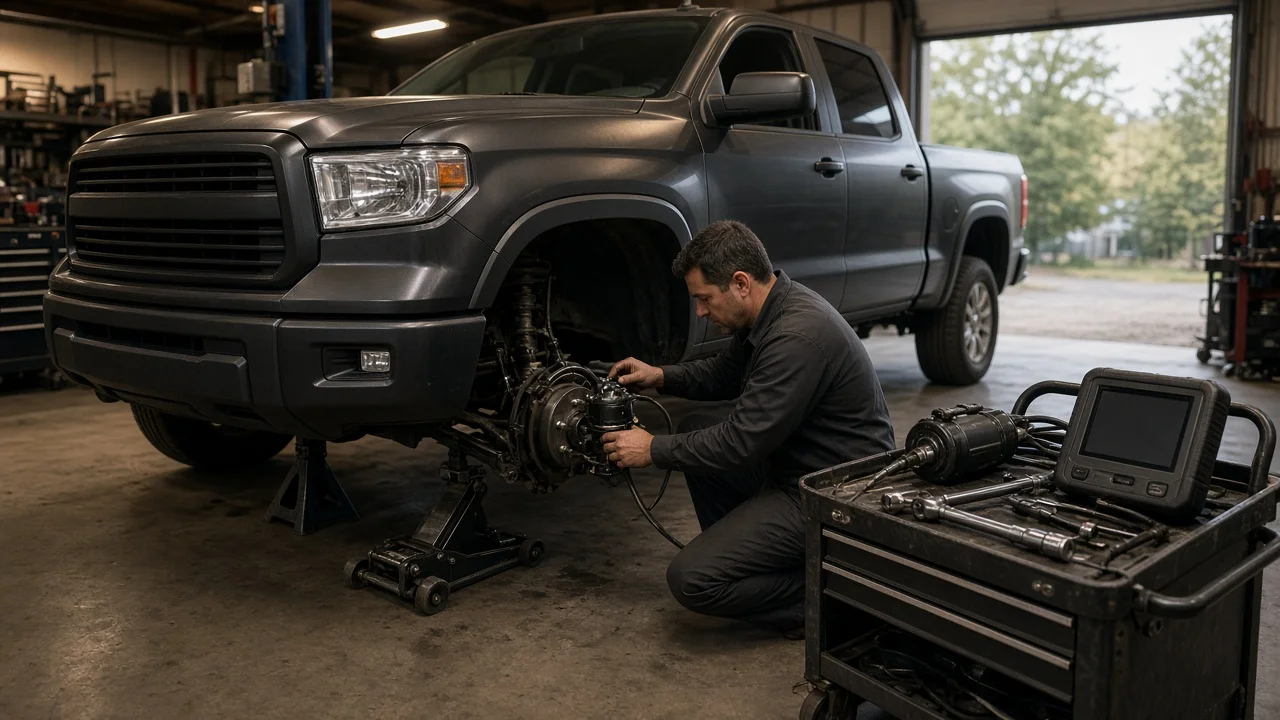
A Toyota Tundra that will not engage four-wheel drive, shows a flashing 4WD indicator or makes noise when shifting into 4HI may need a new 4WD actuator. The symptom alone does not prove it. The cost of replacing a Tundra 4WD actuator depends on which actuator your truck uses, what caused the fault and what the shop counts as part of the job. Here is how to read estimates so you compare the same repair.
What the estimate includes
The term 4WD actuator is used loosely, so start by confirming which component the quote covers. Depending on model year and vehicle configuration, it can mean the front axle or differential actuator that connects the front driveline when four-wheel drive is selected. It can also mean the transfer case shift actuator that moves the transfer case between ranges. Some designs are vacuum-operated and rely on a separate switching valve and hoses. Others are electric motors controlled by a module. A shop should identify the part by VIN and by inspection, not by symptom.
Next, separate totals from partial quotes. A parts counter price or an online listing covers only the component. A labor-only figure leaves out the part, fluid and fees. A complete repair estimate usually combines several items: diagnosis, the actuator, any seals or small hardware the procedure requires, labor, and a fluid top-off if a housing is opened. It should also include a functional test in 2WD and 4WD, shop supplies and taxes. Only that complete number tells you what you will actually pay to have working four-wheel drive again.
What changes the cost
Vehicle configuration comes first. Tundra generations and drivetrain packages use different actuators, connectors and part numbers, so a price quoted for one truck does not transfer to another. Part source matters too. A genuine Toyota unit, a new aftermarket unit and a remanufactured unit can differ in price, fit and warranty. Labor depends on where the actuator sits and what must come off to reach it, such as a skid plate, wiring brackets or other underbody components. Book labor time is a starting point. Local shop rates and the difference between dealer and independent pricing change the final figure.
Condition and operating conditions can add time. Trucks driven on salted roads, through mud or in heavy off-road use often have corroded fasteners and brittle connectors or vacuum lines. A seized or broken bolt can turn a routine job into a longer one. Scope is the biggest variable. Testing may show that the real fault is a blown fuse, damaged wiring, a leaking vacuum hose, a failed switching valve, a 4WD selector switch or a control module problem. In that case, replacing the actuator alone will not fix the truck. A careful diagnosis before ordering parts protects you from paying for the wrong repair.
Compare like-for-like options
Options typically fall into a few groups. You can repair the existing system, replace the actuator with a new genuine or aftermarket part, install a remanufactured unit, or fit a used part from a salvage vehicle. A repair may be enough when the problem is a corroded connector, a cracked vacuum line or a stuck mechanism that responds to service. Internal motor or diaphragm failure generally means replacement. Ask each shop which approach it recommends and why, based on what it found during inspection.
To compare fairly, line up quotes on equal scope. Confirm that each includes the same part type and the same post-repair test. Each should also include the same associated work, such as seals, fluid, and initialization or relearn steps where the procedure calls for them. Then compare warranties: how long the part is covered, whether labor is covered if it fails, and who pays if the new actuator does not cure the symptom. A lower price on a used part with no warranty and no diagnosis is not the same offer as a higher price that includes testing and coverage.
Read an itemized quote
A useful quote shows the actuator part number, the brand, and whether the part is new, remanufactured or used. It lists labor hours and the hourly rate separately. It states the diagnostic fee and whether that fee is credited toward the repair. It also names every additional part, such as gaskets, O-rings, hoses, connectors or a switching valve. Fluid, shop supplies, disposal or environmental fees and taxes should each appear as their own line rather than being hidden in a single total.
Look for what the shop actually found: stored trouble codes, the results of an actuator operation test and any wiring or vacuum checks. Read the exclusions carefully. Common ones include broken or seized fasteners, damaged connectors discovered during removal, related repairs found after disassembly and fluid service beyond a top-off. Ask the shop to get your written approval before adding work. Make sure the warranty terms for parts and labor are stated on the estimate itself.
Decide the next step
Before approving a repair, write down the symptoms and when they happen. Note whether the indicator flashes, whether the truck engages 4HI or 4LO at all, and whether the problem appears only in cold or wet weather. Gather your service history, including any transfer case or differential fluid service. Check that maintenance follows the maintenance schedule and manufacturer specifications for your truck rather than a universal interval. Then request three things: a diagnosis with a code readout and functional testing, a VIN-specific part number, and at least two written estimates covering the same scope.
Avoid shortcuts that can cost more later. Do not order an actuator based on a symptom alone, and do not install an untested used part without a return option. Do not mask a fault by disconnecting components. Do not use part-time four-wheel drive on dry pavement to force engagement unless your owner's manual allows it. If one quote is far lower than the others, check whether it leaves out diagnosis, associated parts or warranty before you decide.