Toyota Torque Converter Shudder: Initial Diagnosis
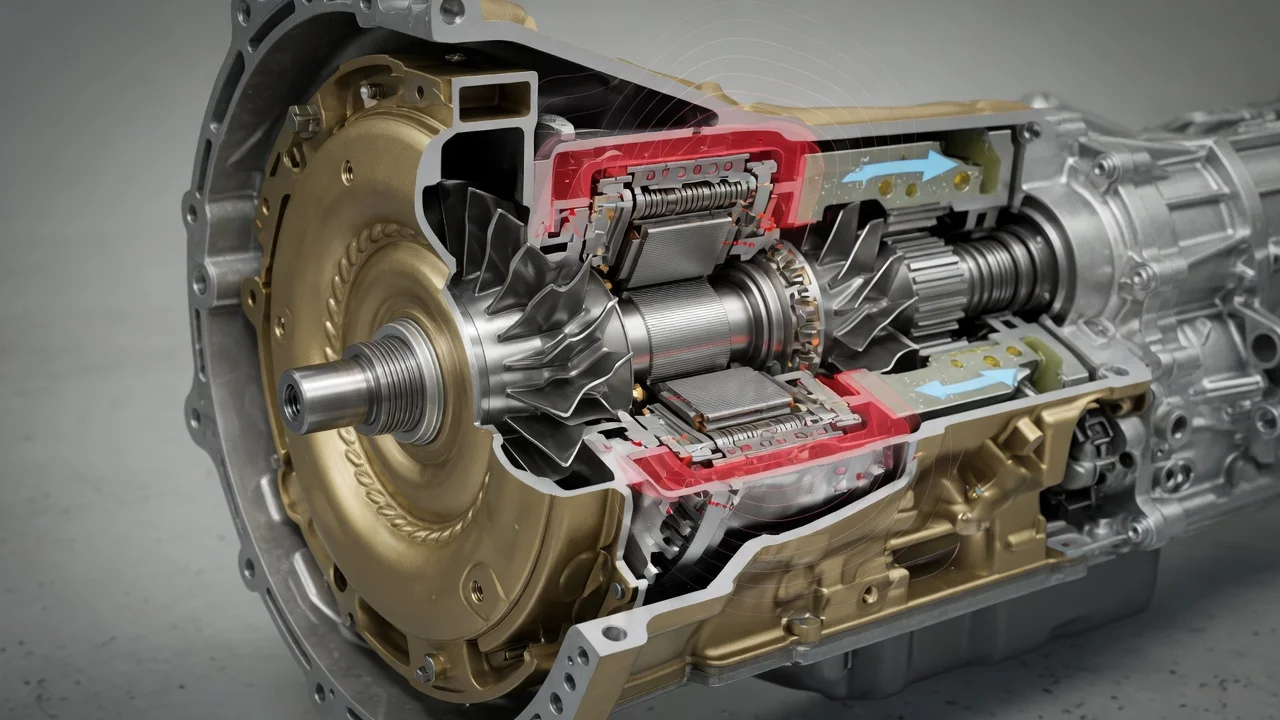
On a Toyota automatic with a lock-up torque converter, a common complaint is a vibration at light, steady throttle that feels like driving over rumble strips. The cause can be the converter clutch, its hydraulic or electronic control, or the fluid. Engine misfires, worn mounts and driveline faults can feel almost the same. This guide explains how to record the symptom, identify your transmission, separate the likely causes, and decide what needs confirming before anyone replaces parts.
Identify the transmission first
Toyota uses several transmission types, and the diagnostic path depends on which one you have. Conventional stepped automatics with four to ten speeds use a torque converter with a lock-up clutch. Many Toyota CVTs also have a torque converter with lock-up. Most Toyota hybrids with a power-split eCVT have no torque converter at all, so a shudder in those vehicles needs a different diagnosis. Confirm the exact transmission code from the vehicle's build information or a dealer VIN lookup, not from the model name alone.
The transmission code also sets the fluid specification and the parts fitment. Many recent Toyota automatics take a specific low-viscosity ATF, CVTs need their own CVT fluid, and older units use different fluids again. Check the owner's manual or service information for the correct product. A transmission topped up or serviced with the wrong fluid is a relevant clue in itself.
Establish the symptoms
Converter shudder usually shows up while the lock-up clutch is applying or holding. That typically means light, steady throttle in a higher gear at normal cruising or moderate city speeds. Drivers describe a rapid shake, a buzz through the floor or seat, or a rumble-strip feeling. A typical pattern is that the vibration fades when you press the accelerator a little harder or ease off slightly, because the change in load can release the converter clutch or move it out of its slipping range.
Write down the conditions each time it happens: road speed, the gear if shown, how much throttle, whether the engine was cold or fully warm, flat road or uphill, and whether the air conditioning was on. Note any other changes in shift behavior, any rpm flare, and any warning lights. Then list recent changes: a fluid service, fluid added, new tires, mount or axle work, a battery disconnect, a software update, or recent towing. This record usually separates the possible causes faster than guessing.
Distinguish plausible causes
Causes in the converter clutch system include degraded or incorrect fluid that changes clutch friction behavior, a lock-up control solenoid or valve body fault, a worn converter clutch lining, and control calibration. Toyota has addressed lock-up shudder on some models with service bulletins or updated software. Evidence pointing to this group: the symptom happens only under lock-up conditions, it changes with throttle rather than road speed, it gets worse once the fluid is fully warm, and there are stored or pending codes related to lock-up or its solenoid.
Several other problems can mimic it. A light-load engine misfire feels very similar. Misfire codes, a flashing check engine light, a rough idle, or aging plugs and coils support that cause, and zero misfire counts during the event weaken it. Worn engine or transmission mounts can amplify normal vibration, often with a clunk when shifting into gear or a shake while stopped in drive. On rear- and four-wheel-drive vehicles, driveshaft joints or a center support bearing can cause a vibration that follows road speed. Tire and wheel problems also follow speed and continue regardless of throttle.
Checks in a useful order
Start with checks any owner can do safely. Note any warning lights and read diagnostic codes with an OBD-II scanner, including pending codes and freeze-frame data if available. Go through the service history and receipts to see when the fluid was last changed and what product was used. With the car parked on level ground, look underneath for fresh leaks. Many Toyota automatics have no dipstick. Their level check uses a fill or overflow plug with the engine running, the vehicle level, and the fluid within a specified temperature range. Do not improvise this, because both underfilling and overfilling cause problems of their own.
The next checks need tools and specifications, so a qualified technician usually does them. A scan tool that reads Toyota transmission data can show lock-up command, engine speed against input or turbine speed, fluid temperature, and misfire counters during a road test that reproduces the shudder. A lift inspection covers mounts, axles, driveshaft joints and the fluid level and condition. A dealer can check by VIN for bulletins or calibration updates that apply to your vehicle.
Interpret the findings
If the shudder appears only while lock-up is commanded, slip data fluctuates during the event, and misfire counts stay at zero, the fault is probably in the converter clutch system. That still does not tell you whether the fluid, the solenoid and valve body, or the converter itself is responsible. A lock-up performance or solenoid code narrows the search, but wiring, solenoid, hydraulic and converter faults have to be separated by pinpoint testing. If misfires show up during the event, deal with the engine first and then retest.
Fluid condition helps but does not settle the question. Dark fluid, a burnt smell or friction debris suggests wear. Fresh fluid of the correct specification sometimes reduces shudder caused by degraded friction properties. If the shudder comes back soon afterward, a mechanical or control fault becomes more likely, and repeated flushes are not a cure. Metallic debris in the pan changes the picture entirely. Replacing a torque converter means removing the transmission and matching the part to the exact transmission code, so confirm the diagnosis before that work is approved.
Urgency and next action
Stop driving and arrange an inspection or a tow if the shudder comes with any of the following: a flashing check engine light, slipping or rpm flare, harsh or delayed engagement, a burning smell, a fluid leak, a transmission temperature warning, or reduced-power behavior. A mild shudder with none of these signs may allow careful driving to a shop. No remaining mileage can be promised, though, and continued driving can overheat the fluid and wear the converter clutch further.
Bring the shop the VIN, model year, transmission type, mileage, any diagnostic codes with freeze-frame data, your record of when the shudder occurs, the service history including the fluid used, and any recent changes. From there, repair options can range from a software update or a correct fluid service to solenoid or valve body work, converter replacement, or a repair outside the transmission. Ask which test confirmed the faulty part before the work goes ahead.