Toyota Timing Belt Replacement: Models, Intervals and Cost
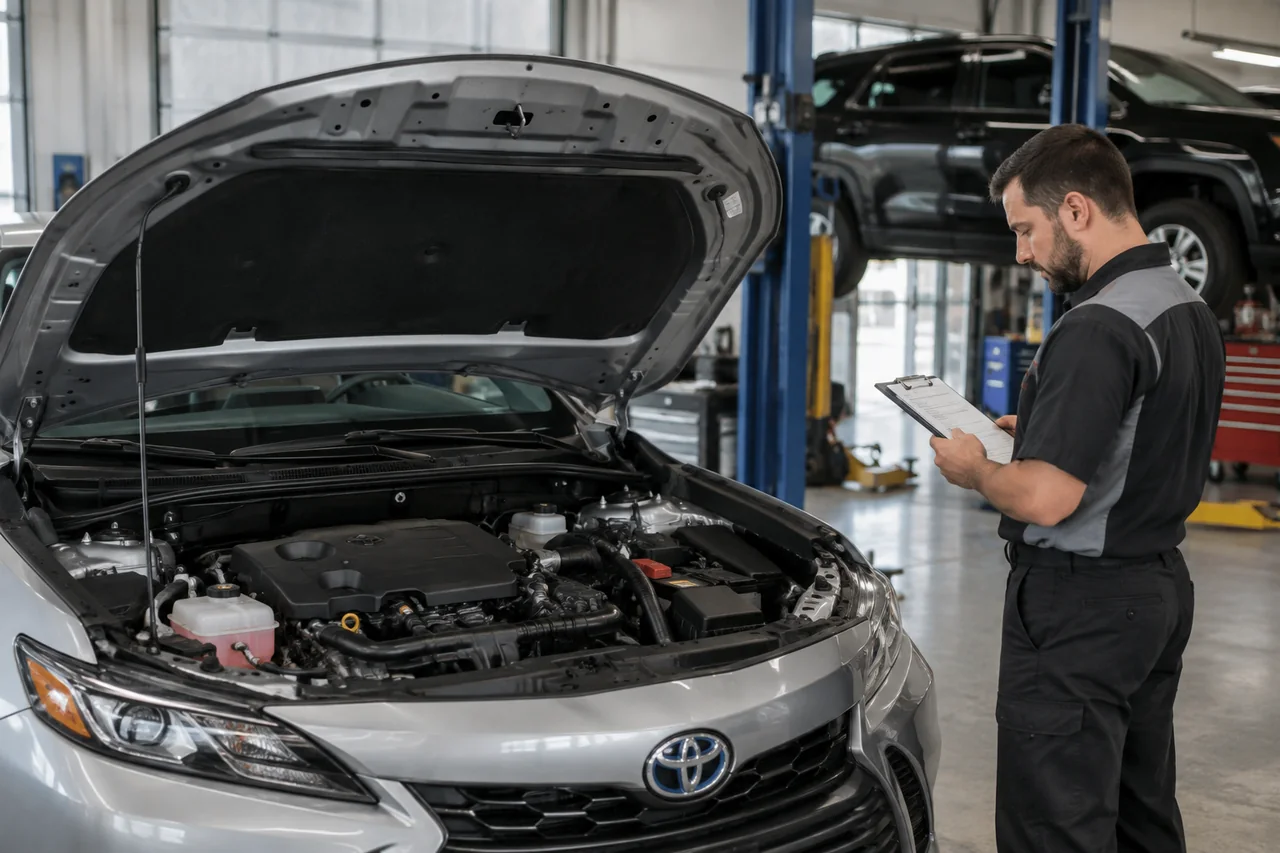
Changing a timing belt on a Toyota starts with confirming whether the engine uses a belt or a chain, then matching the maintenance schedule. Model year, engine code, and market decide the timing drive, so a RAV4 quote is useful only after that check. Owners comparing timing belt replacement cost, including Toyota RAV4 figures, still need vehicle-specific confirmation.
Identify Your Toyota’s Timing Drive Before Planning Service
A Toyota timing belt change depends on the specific engine rather than on the nameplate. The same model can use a belt in one model year and a chain in another, and engines sold in different markets can diverge even when the badge matches. Engine family and displacement, plus the engine code on the underhood label or in the service records, are more reliable than the model name. Before planning service, match those details to the vehicle-specific maintenance documentation rather than assuming a belt is present.
The visible accessory belt only drives accessories and sits outside the timing cover, so it cannot establish whether the engine uses a timing belt. The camshaft drive remains hidden behind that cover. VIN and build data help a shop confirm the exact powertrain, which is the right next step when the owner's manual language is generic or the engine has been swapped. Without year, engine identification, and market confirmation, a labor estimate for changing a timing belt on a Toyota can describe the wrong engine entirely.
Confirm the Replacement Schedule and Service History
Locate the timing belt interval in the maintenance schedule for that engine, not in a generic Toyota chart. Some applications list both a mileage figure and an elapsed-time limit, so calendar age can trigger service even when miles are modest. Other Toyota engines use a timing chain and have no belt interval at all. Because those rules differ by engine code and market, one replacement interval cannot be copied from a neighbor's car or an earlier generation of the same model.
Useful evidence of a prior timing belt change includes a dated invoice, the recorded mileage at service, and an itemized parts list that names the belt and related hardware. Sticker notes in the engine bay help only when they match those documents. Missing service records warrant a maintenance review rather than a guess based on how quietly the engine runs. Smooth idle and relatively low mileage do not establish remaining belt life, because deterioration can proceed without obvious warning to the driver.
Check RAV4 Generation and Engine Before Requesting a Quote
Toyota RAV4 timing belt replacement cost only becomes a meaningful figure after the generation, model-year range, engine, and market are confirmed. Timing-drive design can change between generations and, in some cases, within a generation when a different engine is offered. Treat the model name as a starting filter, then verify the engine identification against that vehicle's maintenance schedule. A quote written for a belt job on one RAV4 engine does not transfer to another RAV4 that uses a timing chain.
If the RAV4 is confirmed as chain-driven, ask for chain, tensioner, or related diagnostic assessment instead of a timing belt replacement estimate. The belt quote does not apply. When requesting a labor estimate, give the shop the VIN, model year, engine code, mileage, known service history, and whether the request is scheduled replacement or a noise or leak investigation. Those details keep the RAV4 estimate tied to the correct engine and prevent a starting price from describing the wrong service.
Understand What Shapes a Toyota Timing Belt Estimate
The cost to replace a timing belt on a Toyota is driven less by the belt itself than by access, local labor rates, parts selection, taxes, and related work performed while the timing cover is off. Some engines require more disassembly than others, which changes hours even when the belt is inexpensive. Aftermarket, original-equipment, and kit contents also move the parts line. An advertised starting price often omits the water pump, tensioner, fluids, alignment, or shop supplies, so the total can rise once those items appear on the invoice.
Read the parts and labor breakdown as a checklist: which components are included, which hours are quoted, and which taxes or environmental fees sit outside the headline figure. Timing belt replacement cost for a Toyota, including a RAV4, only makes sense with a confirmed engine, a shop location, and a defined service scope. Ask for a written estimate that separates scheduled belt replacement from diagnosis, towing, or engine repairs that follow a failed belt. Mixing those jobs into one number hides whether you are paying for maintenance or for damage.
Review Tensioners, Pulleys, and Related Work
The belt tensioner keeps the timing belt at the designed load, and idler pulleys guide its path. Worn bearings, seized rollers, or a weak tensioner can shorten a new belt's life, so the applicable service requirements for that engine should be checked for tensioner and pulley replacement at the same time. Follow those requirements rather than adding hardware by habit. If a pulley is noisy, leaking grease, or out of specification, replacing it during the same access window avoids paying twice for timing cover removal.
Water pump replacement belongs on the estimate only when the pump is driven by the timing belt, sits in the same work area, shows leakage or play, or is called out in that engine's maintenance guidance. Shared labor is a reason to discuss it, not an automatic add-on. Oil or coolant seepage near the timing drive deserves assessment because contamination can damage a new belt, yet seal replacement is not mandatory on every Toyota. Keep completion records that name installed parts, service date, mileage, warranty terms, and the next maintenance requirement for that engine.
Recognize Symptoms That Need Professional Assessment
Unusual engine-area noises, leaks, hard starting, or rough running can come from accessories, ignition, fuel delivery, or a timing chain as easily as from a timing belt. Those symptoms cannot confirm a belt fault on their own. Owners should note dashboard warnings, overdue service records, and any coolant or oil visible with the engine off. Leave timing cover removal, belt inspection, and camshaft timing checks to trained technicians. Guessing from sound alone can send a Toyota in for the wrong repair.
If a timing belt does fail, some engines suffer bent valves or other internal damage and others may not, so the outcome depends on that specific engine rather than on a universal rule. After a sudden stop, a no-start, or a suspected timing failure, pull over safely, avoid repeated restart attempts, and arrange professional assessment. Cranking again can add damage if pistons and valves are already out of time. A diagnostic code, if stored, is evidence to interpret with the vehicle's data, not proof that the belt has failed.