Toyota Tacoma Lift Kits: Choosing a Compatible Suspension Upgrade
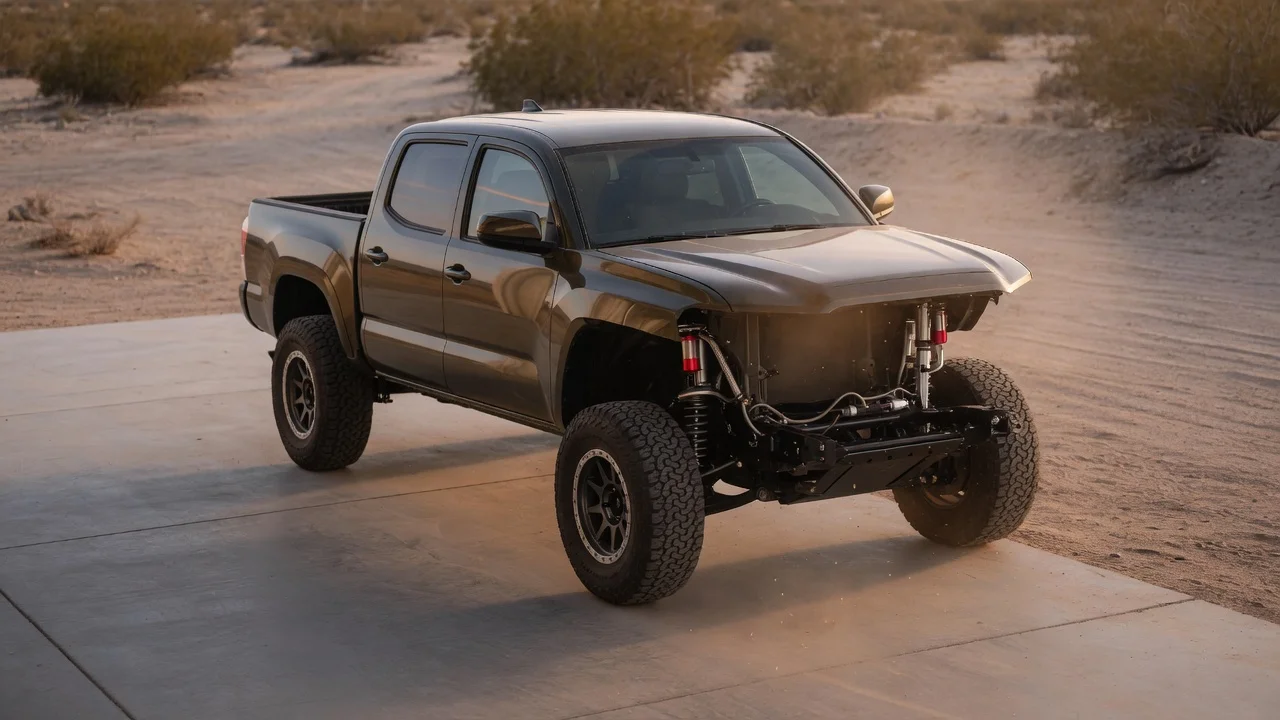
What to know before choosing a Tacoma lift kit
A lift kit changes ride height, suspension geometry and load handling, so the answer depends on how the truck will be used. A basic spacer lift is usually the least expensive way to gain clearance for larger tires and a taller stance. For off-road travel, towing or carrying heavy accessories, a full suspension lift with replacement coilovers, leaf packs or add-a-leaf springs tends to provide better ride quality and more controlled load support, but it costs more and usually requires more involved installation.
Check compatibility before buying
Fitment is tied to the model year, market, trim, cab configuration and powertrain, and some kits are specific to two-wheel drive or four-wheel drive. Confirm that the kit lists the exact Tacoma generation and drivetrain, because control arms, coilover mounting points and rear spring packages can differ. If the truck has a factory load-leveling or adaptive suspension option, verify that the lift components are designed to work with it; some electronic systems may require additional brackets, recalibration or deletion parts.
Lift height and supporting parts
Small spacer or leveling kits usually raise the front by roughly one to two inches. Larger lifts, particularly those beyond about three inches, can change front-end geometry enough to justify longer control arms, an adjustable track bar, extended brake lines or a driveline correction component. A taller tire can also require trimming or a different wheel offset. Selecting a kit that includes or explicitly supports these parts can prevent alignment problems and premature component wear.
Compare lift types on shared criteria
Lift type | Typical approach | Strengths | Trade-offs; Spacer or leveling kit | Adds spacers above the front coilover; may include rear blocks | Lower parts cost; preserves most factory components | Limited travel gain on some designs; ride and geometry can change; Full front coilover lift | Replaces the front shock and spring assembly with an adjustable or taller unit | Better damping and ride-height control; stronger fit for off-road use | Higher cost; wheel alignment and supporting parts may be needed; Rear spring or add-a-leaf upgrade | Replaces or reinforces the rear leaf pack | Reduces sag under load; can lift the rear without blocks | Ride can become firmer, especially when the truck is unloaded; Complete suspension system | Replaces front and rear suspension, often with control arms and hardware | Most integrated geometry and performance benefit | Highest cost and installation complexity
Ownership and installation costs
The advertised price of a kit is not the total cost. A complete job may also include alignment, new hardware, control arms, brake line brackets, tire mounting and, if using a shop, several hours of labor. Advertised prices should not be read as completed installed prices. When comparing quotes, ask whether the figure covers the kit only or installation, alignment and any required extras, and note the market, date and currency.
Conditional recommendations by use case
Daily driving and a mild appearance change: a quality spacer or leveling kit is often the simplest value pick, provided the resulting ride and alignment meet expectations. Occasional dirt roads and moderate off-pavement travel: a front coilover lift paired with a rear add-a-leaf or leaf pack upgrade offers a better balance of clearance, damping and load control. Heavy accessories, towing or frequent off-road use: a complete suspension system with matching control arms, rear springs and required hardware is usually the more durable choice, despite the higher installed cost. Taller tires as the primary goal: work backward from the intended tire diameter and wheel offset, then select the minimum lift and supporting parts needed for clearance.
Checks that could change the decision
Confirm the exact year, trim, cab, bed length, drivetrain and any factory suspension option before ordering. Check whether the kit is a complete package or a front-only, rear-only or component-level upgrade. Ask whether the stated height is measured on a comparable stock truck and whether the claimed clearance assumes a specific tire and wheel combination. Determine whether installation will require cutting, welding, recalibration or non-reversible changes. Verify that the alignment can be brought into specification with the included or available adjustment parts. Review expected changes in ride quality, towing behavior and payload support for the way the truck is actually used.
Where fitment, pricing or performance details are not stated for the specific truck and market, treat them as gaps to confirm rather than assumptions. A lift kit that fits another Tacoma configuration may not fit yours, and the cheapest kit is not necessarily the lowest-cost installed solution.