Toyota Tacoma Brake Pedal Goes to the Floor: What It Means and What to Do
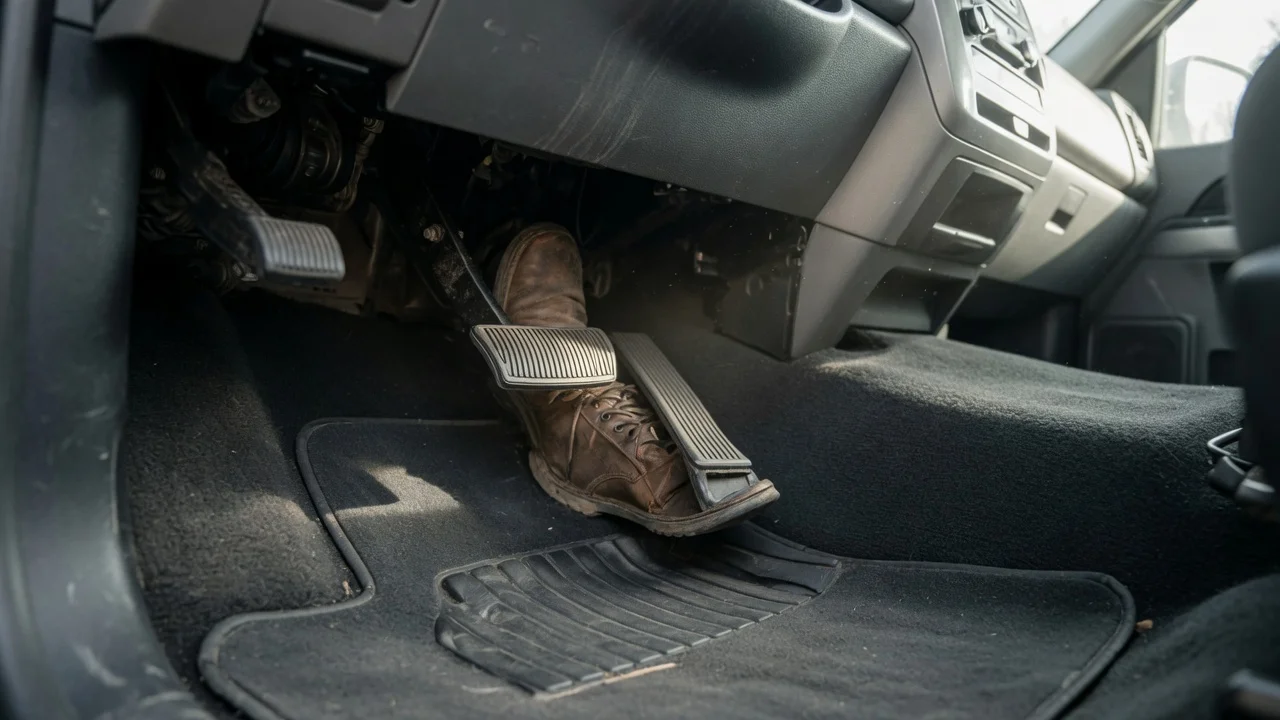
The short answer
A brake pedal that sinks to the floor on a Toyota Tacoma means the hydraulic brake system is not holding pressure. This is a safety-critical fault. The truck should not be driven until the cause is found and repaired. If it happens while moving, use the parking brake gradually, downshift to slow the truck, and pull off the road when it is safe to do so.
The usual causes are a brake fluid leak, a failing master cylinder, or air in the brake lines. Those are general hydraulic-brake causes, not findings specific to the Tacoma. No model-year recall data, technical service bulletin data or failure-rate data was available for this guide. That means it cannot say whether any particular Tacoma generation, trim or powertrain is more prone to the problem. Check for open recalls on your specific truck using its vehicle identification number (VIN).
Why the pedal loses resistance
Pressing the brake pedal pushes a piston inside the master cylinder. The master cylinder is the component that converts pedal force into hydraulic pressure. That pressure travels through brake lines and hoses to the calipers or wheel cylinders at each wheel, which press the pads or shoes against the rotors or drums. Brake fluid does not compress, so a healthy system gives a firm pedal. When the pedal keeps traveling, either fluid is escaping, pressure is bypassing a seal inside the master cylinder, or a compressible gas such as air is present in the lines.
Common causes
Brake fluid leak: a damaged or corroded brake line, a split rubber hose, or a leaking caliper or wheel cylinder lets fluid escape. You may see a low reservoir level and wet spots near a wheel or under the truck. Failing master cylinder: worn internal seals let fluid slip past the piston. Typically the pedal sinks slowly under steady foot pressure, with no visible external leak and a reservoir that stays full. Air in the brake system: this often follows brake work, a line replacement or a reservoir that was allowed to run dry. It usually produces a soft, spongy pedal that may firm up when pumped. Very low fluid level: worn pads and leaks both lower the reservoir level. If the level drops far enough, air can be drawn into the system. ABS hydraulic unit fault: less common, but an internal problem in the anti-lock brake system's hydraulic unit can also affect pedal feel. This needs professional diagnosis.
Quick checks before calling for help
These checks can help you describe the problem to a technician. They do not replace a repair, and none of them makes the truck safe to drive.
With the engine off, open the hood and find the brake fluid reservoir on the driver's side near the firewall. Note whether the fluid level is below the minimum mark. Look for fluid on the inside of each tire and wheel, on the ground under the truck, and around the base of the master cylinder. Brake fluid is usually clear to amber and feels slippery. Check whether the brake warning light is on in the instrument cluster. Note how the pedal behaves. Does it drop suddenly or sink slowly under steady pressure? Does it firm up when pumped? Did the problem start right after brake work?
Some pedal movement with the engine running is normal, because the power brake booster adds assist once vacuum or pressure is available. A pedal that keeps sinking toward the floor is not normal under any condition.
What to do next
Have the Tacoma towed to a repair shop instead of driving it. Topping up the fluid may temporarily raise the pedal, but it does not fix a leak or a bypassing master cylinder, and the pedal can fail again without warning. After any repair that opens the hydraulic system, the brakes must be bled to remove air, and the pedal should be firm before the truck returns to the road.
Information gaps
This guide does not include repair cost estimates, parts specifications, recall or service bulletin details, or brake fluid specifications for individual Tacoma model years, because no such data was supplied. Your owner's manual, a Toyota dealer or a qualified technician can confirm the correct fluid type and any campaigns that apply to your truck's year and configuration.