Toyota Super Long Life Coolant: Pink vs Red and What Your Toyota Needs
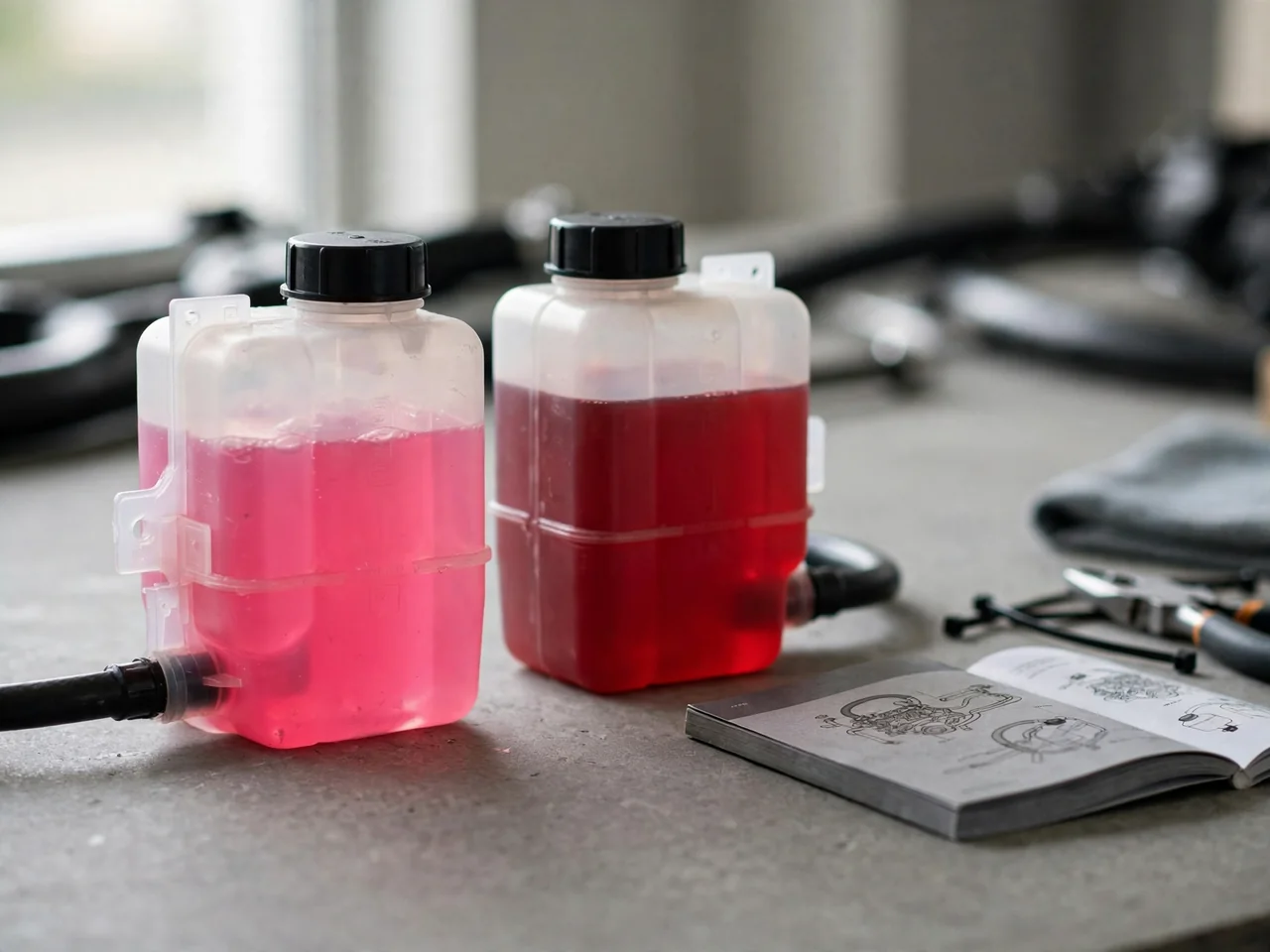
Toyota designs its cooling systems around a specific coolant chemistry. The right one protects aluminum parts, water pumps and heater cores for years. This guide explains what Super Long Life Coolant is and how the pink formula differs from the older red Long Life Coolant. It also covers how to read Toyota's maintenance schedule, what Camry owners should check, and which warning signs call for professional testing.
What Toyota Super Long Life Coolant (SLLC) Actually Is
Super Long Life Coolant, shortened to SLLC on Toyota labels and in owner's manual coolant specifications, is the ethylene glycol antifreeze Toyota puts in new vehicles at the factory. Many coolants on store shelves are concentrates, but genuine SLLC is sold pre-diluted. It is already mixed with water at a fixed ratio chosen by Toyota. That matters when you top up. Pouring in extra water thins the mixture and weakens both freeze protection and the corrosion inhibitors, so only add water if the container says the product is a concentrate.
The chemistry is a phosphate-based organic acid inhibitor package, sometimes called phosphate organic acid technology. In plain terms, the additives are chosen to protect the aluminum in Toyota engines, radiators and heater cores and to stay stable over long service periods. On newer vehicles, the pink formula replaced the older red Long Life Coolant as the factory fill, but the year of the switch varies by model. Color alone does not prove what is in the system. Confirm the specification in the owner's manual or on the reservoir label.
Pink Super Long Life vs Red Long Life: How the Two Formulas Differ
The most practical difference is packaging. Pink SLLC comes ready to use. The older red Long Life Coolant was usually sold as a concentrate that had to be mixed with distilled water before it went into the system. If you top up a red-coolant vehicle with straight concentrate, or add water to pre-mixed pink, the ratio moves away from what Toyota intended. The two formulas were also designed for different replacement intervals, so use the interval printed in your own maintenance schedule rather than general assumptions.
Toyota dyes the two products different colors so they are easy to identify. The color does not show how much protection is left, and coolant with a healthy pink color can still be worn out. With the engine fully cold, you can check a few useful things through the see-through coolant reservoir. Look at whether the level sits between the marks and whether the fluid is clear or shows debris, cloudiness or an oily film. Owners of older red-fill vehicles often ask about switching to pink. Confirm that for your exact model and year with Toyota documentation or a dealer instead of assuming.
Choosing Coolant for Your Toyota: Genuine, Approved Equivalents and What to Avoid
Before buying any antifreeze, find the coolant specification for your Toyota. The owner's manual lists the required type, and there is often a label near the reservoir or radiator cap. A dealer can also confirm the factory specification from the vehicle identification number. Genuine Toyota bottles show the product name, the part description and whether the contents are pre-diluted. For vehicles that call for SLLC, the genuine product matches the factory-fill chemistry, so there is no guesswork about compatibility. Meeting the specification is what should decide the purchase, not brand marketing.
Aftermarket coolant can be an option, but the label should clearly state that it is compatible with Toyota's pink SLLC or red LLC specification. Be cautious with vague 'all makes, all models' wording, because it does not tell you how the additives will react with the coolant already in your system. Mixing unrelated chemistries can make additives drop out of solution. That can show up as gel, sludge or a muddy color in the reservoir. If the wrong product went in, a shop can flush the system and refill it with the correct coolant before deposits block narrow passages.
Service Intervals: Reading Toyota's Schedule Instead of Guessing
Toyota publishes coolant replacement intervals in each vehicle's maintenance guide. The figures vary by model, year and coolant formula, so no single number covers the whole lineup. Many schedules set one interval for the first replacement after the factory fill and a different one for later replacements. Which one applies depends on your vehicle's history. A car that has already had a coolant service may now be on the later schedule. The guide may also list special operating conditions, such as towing or extreme climates, that change the recommended timing.
During a coolant service, a technician typically drains the old fluid and inspects the hoses, clamps and radiator cap. They then refill with the specified coolant and bleed out trapped air, which prevents hot spots and erratic temperature readings. This explains what the service covers. It is not a do-it-yourself guide, because air bleeding differs between vehicles and hybrids need extra steps. Keep a record of the coolant type and service date with your maintenance paperwork. That way, future top-ups and services use the same formula instead of whatever is on hand.
Toyota Camry Coolant: Model-Specific Points to Check
The coolant a Camry needs depends on its model year and engine, so the nameplate alone does not tell you whether it needs pink SLLC or the earlier red formula. Check the coolant section of the owner's manual and any label on the reservoir or radiator cap. Hybrid Camry models may have a separate inverter cooling circuit with its own reservoir. Both circuits use the coolant Toyota specifies for that vehicle, and the inverter circuit needs the same attention as the engine circuit.
Any capacity, interval or compatibility figure for a specific Camry should come from that car's own documentation or a dealer, not from general advice. Some signs mean the car should be inspected by a professional. These include a reservoir level that keeps dropping, a sweet smell after driving, a temperature gauge climbing above its usual position, or weaker heat from the vents on cold days. Weak heat can mean low coolant or air trapped near the heater core, but it has other possible causes too. Let a technician confirm the cause before any parts are replaced.
Safe Checks, Warning Signs and When to Get Professional Testing
Check coolant only when the engine is cold. Read the level against the reservoir marks without opening any pressurized cap. Never remove a radiator cap on a warm engine, because hot coolant under pressure can spray out and cause serious burns. A low level tells you coolant is escaping, but not where it is going. The cause could be as minor as a loose hose clamp or as serious as a failing head gasket, so don't guess beyond what you can see. Visible drips, crusty residue around hoses and fittings, or repeated overheating all mean the car should go to a shop.
Coolant in the oil, oil in the coolant, or coolant that looks brown, rusty or dirty also needs professional diagnosis. A pressure test can find external or internal leaks. A combustion gas test checks whether exhaust gases are getting into the cooling system, and freeze-point or pH checks measure how much protection is left. These tests answer questions that color and level cannot. Ethylene glycol is also toxic to people and pets, and its sweet taste makes it attractive to animals. Wipe up spills promptly and take used coolant to a recycling or disposal site, never down a drain.