Toyota Sienna Hybrid Battery: Location, Replacement, and Cost
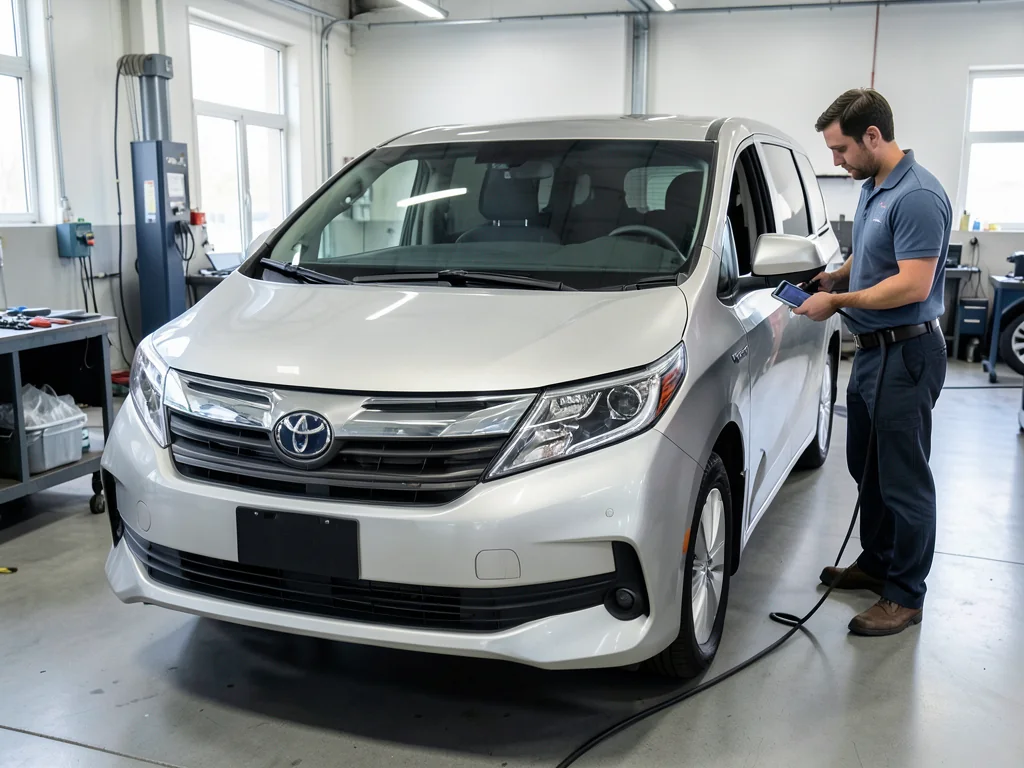
Owners searching for Toyota Sienna hybrid battery replacement usually need three answers at once: which battery is involved, where the hybrid pack sits, and what shapes replacement cost. The focus is the high-voltage traction battery that supplies electric drive, while treating the 12-volt auxiliary battery as a separate system. Confirm model year and vehicle details before relying on location, coverage, or estimate guidance, because hybrid battery diagnosis and replacement planning are vehicle-specific.
Identify Which Sienna Battery Needs Attention
The Toyota Sienna hybrid battery that most replacement questions concern is the high-voltage traction battery, the pack that stores energy for electric propulsion. A Sienna also uses a 12-volt auxiliary battery for lighting, computers, and conventional starting support. Those two batteries can fail independently, and a dead-battery description from an owner does not identify which one lost charge or which control system is at fault. Hybrid battery diagnosis has to separate traction-pack issues from ordinary 12-volt problems.
Before anyone quotes a Toyota Sienna hybrid battery replacement, the facility needs the model year, trim, and other vehicle identifiers that affect pack design, coverage, and parts. Location, warranty language, and labor steps change across generations, so a description that only says hybrid battery is not enough. Bring the VIN, in-service date, and current mileage so the shop can confirm which battery assembly applies. Until those details are verified, treat location, coverage, and cost comments as general orientation rather than a work order.
Confirm the Hybrid Battery Location for Your Model Year
Confirm Toyota Sienna hybrid battery location in documentation written for that model year rather than assuming every generation uses the same layout. Once the applicable source is verified, shops typically describe the traction battery relative to cabin or body landmarks such as the rear seating area, cargo floor, or underbody structure. Those landmarks help an owner understand where technicians will work. They are not an invitation to remove seats, trim, or battery covers, which can expose high-voltage parts.
Some Sienna hybrids have a documented owner-accessible cooling intake that supplies the battery cooling system. If the owner's manual or service information identifies that intake, look for leaves, cargo, or floor mats blocking airflow without taking the intake apart. Restricted cooling can raise pack temperatures and trigger warnings even when the cells themselves are still serviceable. Knowing where the pack sits still does not make its connectors or high-voltage components safe to touch; isolation and access belong to trained technicians with the correct equipment.
Symptoms That Call for a Battery Evaluation
Hybrid warning messages, reduced electric assist, limited ready mode, or unusual shifts between gasoline and electric operation are reasons to schedule an evaluation, not proof that the traction battery has failed. A stored fault code is evidence to interpret, not a verdict that a part must be replaced. Record the exact warning text, the speed and temperature when it appeared, and any recent starting problems so the shop can compare those notes with scan data. Manufacturer-dependent codes still require vehicle-specific confirmation.
Battery condition, battery cooling system problems, 12-volt auxiliary battery faults, and other hybrid control issues can produce overlapping symptoms. Professional testing is what distinguishes a weak traction pack from a cooling blockage, a low auxiliary battery, or a communication fault. If the vehicle displays a stop instruction, follow it and do not keep driving to see whether the message clears. Smoke, unusual heat, or a burning odor around the pack area calls for leaving the vehicle and seeking assistance rather than inspecting high-voltage hardware.
What Hybrid Battery Replacement Involves
Replacing a Sienna high-voltage traction battery is a professional sequence, not a parts-swap at the curb. Technicians first confirm the fault with diagnosis, then identify the correct replacement assembly for that model year and configuration. Installation follows only after isolation procedures the owner should not attempt, and the job is not complete until the system is verified under the shop's test conditions. High-voltage isolation, pack opening, electrical testing methods, and removal steps remain shop-only work because they are unsafe for untrained owners.
Ask the shop to confirm fitment of the proposed battery and to state whether it is new, remanufactured, or used, because condition affects both expectation and replacement-part warranty. Vehicle-specific confirmation matters even when the label says Sienna hybrid, since pack revisions can differ by year and equipment. Discuss parts availability, expected downtime, and any additional work that diagnostic findings actually support, such as cooling repairs. Do not approve extra components solely because they are near the pack; the estimate should track the tests already completed.
What Shapes a Sienna Hybrid Battery Replacement Estimate
An estimate for Toyota Sienna hybrid battery replacement cost depends on model year, the specific battery assembly, whether the part is new, remanufactured, or used, local replacement labor rates, and the time spent on diagnosis. There is no single current price that applies to every Sienna hybrid. A written quote tied to the VIN is the only figure that reflects the vehicle in front of the shop. Ask for that document before comparing shops or authorizing work.
Request an itemized breakdown that separates the battery, labor, diagnosis, taxes, applicable shipping, and any core charge for returning the old pack. Cooling-system repairs or related components should appear only when inspection supports including them, not as automatic add-ons. If a line item is unclear, ask whether it is required by the diagnostic findings or optional. That conversation keeps the estimate honest and prevents a generic hybrid-battery price from hiding work the vehicle does not need.
Check Coverage and Replacement Warranty Terms
Hybrid battery warranty coverage is verified with the VIN, model year, in-service date, mileage, and the warranty documents that apply to that Sienna. Federal, state, and manufacturer terms can differ, so an online summary is not a substitute for checking the actual coverage on the vehicle. Confirm remaining hybrid battery coverage with an authorized service provider before approving a paid replacement, without assuming the claim will be accepted. Eligibility depends on those records, not on how the symptoms feel to the driver.
If the replacement will be paid work, ask about the replacement-part warranty duration, mileage limits, whether labor is included, what is excluded, and how a later claim is handled. The invoice should identify the installed battery, list the diagnostic checks completed, and document arrangements for returning or recycling the old pack so the core charge can be resolved. Keep those papers with the vehicle records. They are the proof of what was installed if a later hybrid battery diagnosis raises questions about the recent repair.