Toyota Sienna Brake Fluid Flush: What Owners Need to Know
The Short Answer
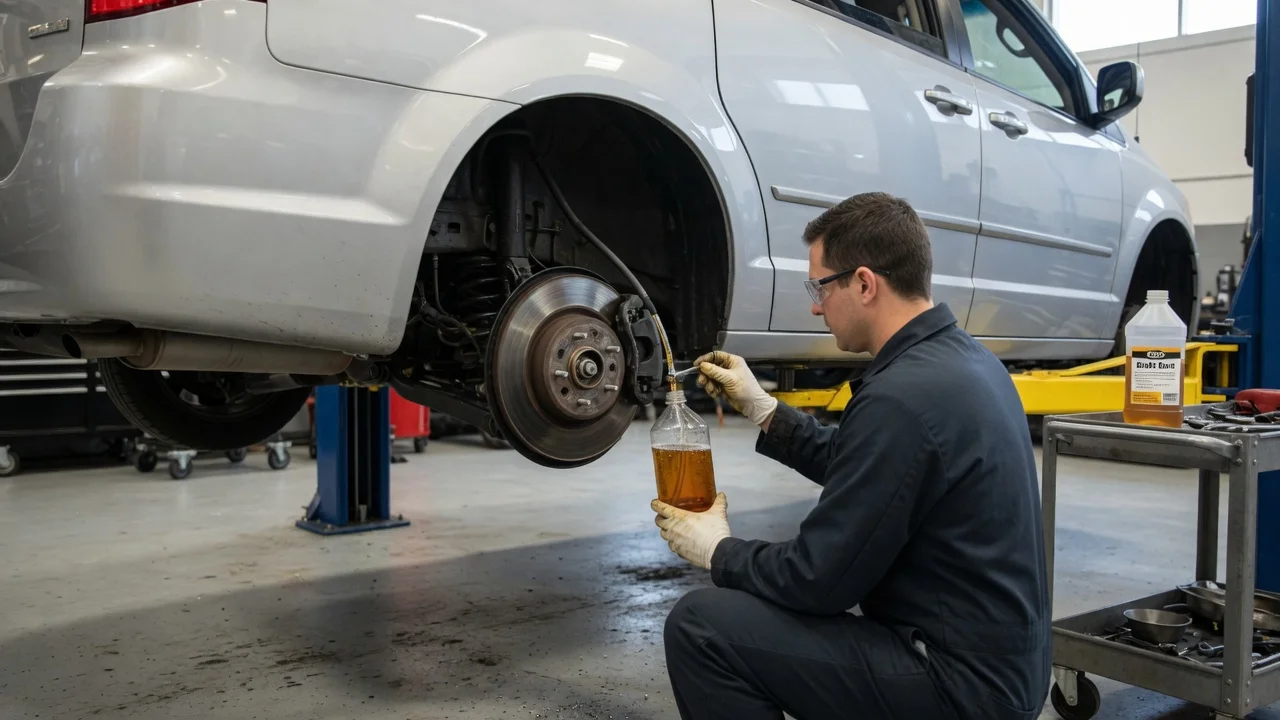
A brake fluid flush on a Toyota Sienna replaces the old hydraulic fluid in the brake system with fresh fluid of the grade Toyota specifies. It is routine maintenance, but how it should be done depends on the Sienna's generation. Older gasoline-only Siennas use a conventional hydraulic brake system that most shops can flush with standard equipment. The current generation, sold as a hybrid only from the 2021 model year, uses an electronically controlled brake system. On that system, the correct procedure may require steps or diagnostic equipment beyond a basic bleed.
The fluid grade, the service interval and the exact procedure for a particular van should come from that vehicle's owner's manual, the brake fluid reservoir cap or Toyota's service information. This guide does not provide model-year-specific specifications, because none were supplied for it.
What a Brake Fluid Flush Does
Brake fluid carries the force from the brake pedal to the calipers at each wheel. Most automotive brake fluids are hygroscopic, which means they absorb moisture from the air over time. Absorbed water lowers the fluid's boiling point and can contribute to internal corrosion. A flush pushes the old fluid out through the bleeder valves at each wheel and refills the system with new fluid. It also removes air from the lines, which keeps the pedal feeling firm.
A flush is different from topping off the reservoir. A low fluid level often reflects normal brake pad wear or a possible leak, and adding fluid does nothing about moisture already in the system.
How the Answer Changes by Generation
Sienna variant | Brake system type | Flush considerations; Pre-2021 gasoline models | Conventional hydraulic system with ABS | Standard bleeding methods generally apply; confirm the sequence in the service manual; 2021 and later hybrid models | Electronically controlled brake system on the hybrid platform | Toyota's procedure may require disabling the system before work and using a scan tool to cycle the actuator; confirm in the service manual before starting
For hybrid Siennas, the main caution is that an electronically controlled brake system can pressurize itself when a door opens or the brake pedal is pressed, even if the vehicle is not in Ready mode. Toyota's service information describes how to put the system in a safe state for brake work. Owners planning to do this job at home should check that procedure, and any scan-tool requirement, against the repair manual for their exact model year before opening a bleeder valve.
Fluid Type and Service Interval
Toyota publishes the required brake fluid specification in the owner's manual, and it is usually printed on the reservoir cap. Use only that specification, and do not mix fluid types unless Toyota confirms they are compatible. Silicone-based DOT 5 fluid, for example, should not be put into a system designed for glycol-based fluid.
Toyota's recommended interval differs by market and by maintenance schedule, and some schedules call for inspection rather than replacement at a fixed mileage. No interval figures were supplied for this article, so the maintenance guide for the specific Sienna is the authoritative reference. Editorially, it is reasonable to flush sooner than a long or unspecified interval if the van is used for towing, frequent mountain driving or heavy loads, or is kept in a humid climate. A moisture or boiling-point test on the fluid can help decide.
Signs the Fluid May Need Attention
Fluid in the reservoir that looks noticeably darker than new fluid, although color alone is not a reliable test; A soft or spongy brake pedal, which can also point to air in the lines or other faults that need diagnosis; A failed moisture or boiling-point test on the fluid; A brake or ABS warning light, which calls for diagnosis and not just a fluid change; A long time since the last documented brake fluid service
DIY or Shop Service
On older, conventional Siennas, a brake fluid flush is a common do-it-yourself job for owners who have basic tools, a bleeding method they trust and the correct fluid. On 2021-and-later hybrid models, having a Toyota dealer or a shop with Toyota-capable diagnostic equipment do the work is often the more practical choice, because the procedure may depend on that equipment. Whoever does the job should follow the bleeding sequence in the service manual, keep the reservoir from running dry, and test the pedal feel before the van returns to normal driving.
Information Gaps
This guide does not give fluid capacity, pricing, labor time, a specific mileage interval or a step-by-step bleeding sequence, because no verified data for those points were supplied. All of them vary by model year and market, so they should be confirmed in the van's own documentation or with a Toyota service department.