Toyota RAV4 Torque Converter Shudder Diagnosis
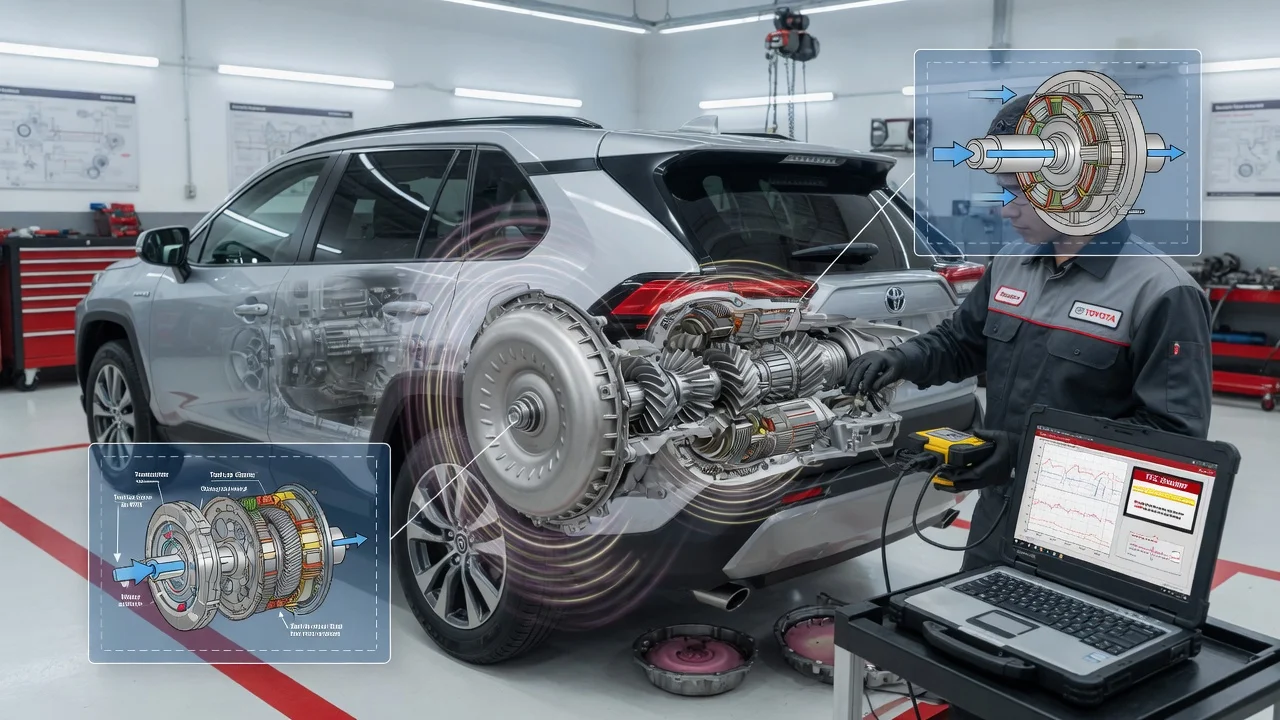
A RAV4 shudder that feels like driving over rumble strips at a steady speed is often blamed on the torque converter. Engine misfires, worn mounts and driveline parts can produce a very similar feeling. This guide explains how to describe the symptom accurately, separate the competing causes, run checks in a sensible order and decide what to do next without replacing expensive parts on a guess.
Establish the symptoms
Start by confirming which transmission your RAV4 has, because the diagnostic path depends on it. Recent gasoline models use an 8-speed automatic, the previous generation used a 6-speed automatic, and older models used 4-speed or 5-speed units depending on engine. RAV4 Hybrid and Prime models use an electronically controlled continuously variable drive unit without a conventional torque converter, so a shudder in those vehicles needs a different diagnosis. Your model year, engine, drivetrain and VIN identify the exact transmission type, fluid specification and service procedures.
Next, record exactly when the vibration happens. Torque converter clutch shudder typically appears when the lockup clutch is applying or holding at light, steady throttle, such as gentle acceleration or cruising on a flat road, and it often fades when you accelerate harder or lift off. Note the road speed, gear if displayed, engine temperature, whether it happens cold or only after warming up, and whether it repeats at the same speed every time. A vibration that follows road speed regardless of throttle points away from the converter.
Write down associated signs as well: a check engine light, flashing or steady; rough idle; harsh or delayed shifts; engine speed flaring between gears; noises; and any fluid leaks. Recent changes matter just as much. A fluid service with the wrong fluid, new tires, suspension or axle work, a battery disconnect, or a software update can all change shift behavior or introduce a new vibration.
Distinguish plausible causes
A slipping or grabbing lockup clutch inside the torque converter is the classic cause. It is supported by a shudder that occurs only within the lockup range, changes with very small throttle movements, and disappears the moment the lockup releases. Degraded or incorrect fluid can cause the same behavior because the clutch depends on the fluid's friction properties, so fluid condition and service history are part of this explanation rather than a separate one. Control issues, such as lockup solenoid faults or calibration behavior, can also produce shudder without the converter itself being damaged.
An engine misfire under load is the most common impostor. It can feel identical at light throttle in a high gear, especially with weak ignition coils or spark plugs. Misfire is supported by misfire codes, a flashing check engine light, roughness that also appears under load at other speeds, or a vibration that persists when the lockup is released.
Driveline and chassis causes form the third group. Worn engine or transmission mounts let normal engine pulses reach the cabin, and they usually make the shudder worse when shifting into gear or under acceleration. Worn front axles, and on all-wheel-drive models the rear propeller shaft and coupling, tend to vibrate under acceleration at particular speeds. Tire balance or wheel problems follow road speed and are present while coasting, which weakens the converter explanation.
Checks in a useful order
Begin with safe observations any owner can make. Read stored and pending diagnostic codes with an inexpensive OBD-II scanner, noting transmission codes such as torque converter clutch performance codes as well as any engine misfire codes. Gather the service history, including when the transmission fluid was last serviced and what fluid was used. On a safe, empty road, notice whether a very light touch of the brake pedal, which releases the lockup clutch on many vehicles, makes the shudder stop immediately. Look under the vehicle for fresh leaks and check tire condition.
The next checks need tools and specifications. A capable scan tool can show lockup command status alongside engine speed and transmission input or turbine speed; a fluctuating slip value while lockup is commanded is strong evidence of clutch shudder. Misfire counters per cylinder help confirm or exclude the engine. Most recent RAV4 automatics have no conventional dipstick, so fluid level is checked through a fill and overflow procedure at a specified fluid temperature, which typically requires a lift and a scan tool to read that temperature. Guessing the level on these units can leave it overfilled or underfilled.
Leave some steps to a qualified technician or a Toyota dealer: a road test with recorded data, inspection of mounts and axles under load, line pressure testing, and checking the VIN for software updates or technical service bulletins that address shift quality or shudder. A dealer can confirm whether any such update applies to your specific vehicle.
Interpret the findings
If the vibration stops immediately when lockup releases and data shows erratic slip while lockup is commanded, the torque converter clutch circuit is strongly implicated. That still does not distinguish between degraded fluid, a control or calibration issue and a damaged converter. Misfire counts climbing during the event point to the engine instead, and the misfire should be repaired before judging the transmission. A vibration that continues with lockup released, or that tracks road speed while coasting, points to the driveline, mounts or wheels.
Before replacing a converter, confirm the fluid is at the correct level, is the specified type, and is not burnt or heavily contaminated, and that any applicable software update has been applied. Some cases improve after a correct fluid service, but a change in fluid will not repair mechanical damage, and debris found in the pan or fluid suggests internal wear that needs further evaluation. Diagnostic codes describe a condition the computer detected, not a confirmed failed part, so a lockup code alone does not prove the converter must be replaced.
Urgency and next action
Stop driving and arrange inspection if the check engine light flashes, the transmission slips or flares between gears, engagement becomes harsh or delayed, the vehicle enters a reduced-power mode, you smell burning fluid, or you see an active leak. A flashing light usually indicates a severe misfire that can damage the catalytic converter. A mild shudder that stays the same may allow careful driving to a shop, but nobody can promise a safe remaining mileage, and continued slipping can contaminate the fluid and spread wear to other parts of the transmission.
Bring the information a technician needs to work efficiently: VIN, model year, engine, front-wheel or all-wheel drive, mileage, any stored codes with freeze frame data, a clear description of the speed, throttle and temperature conditions that trigger the shudder, and the fluid service history with the fluid used. Repair options typically range from a software update or correct fluid service through torque converter replacement to transmission repair or replacement, and parts fitment should be confirmed by VIN. Ask the shop which test result supports their recommendation before approving a major repair.