Toyota Prius Spare Tire: Availability and Options
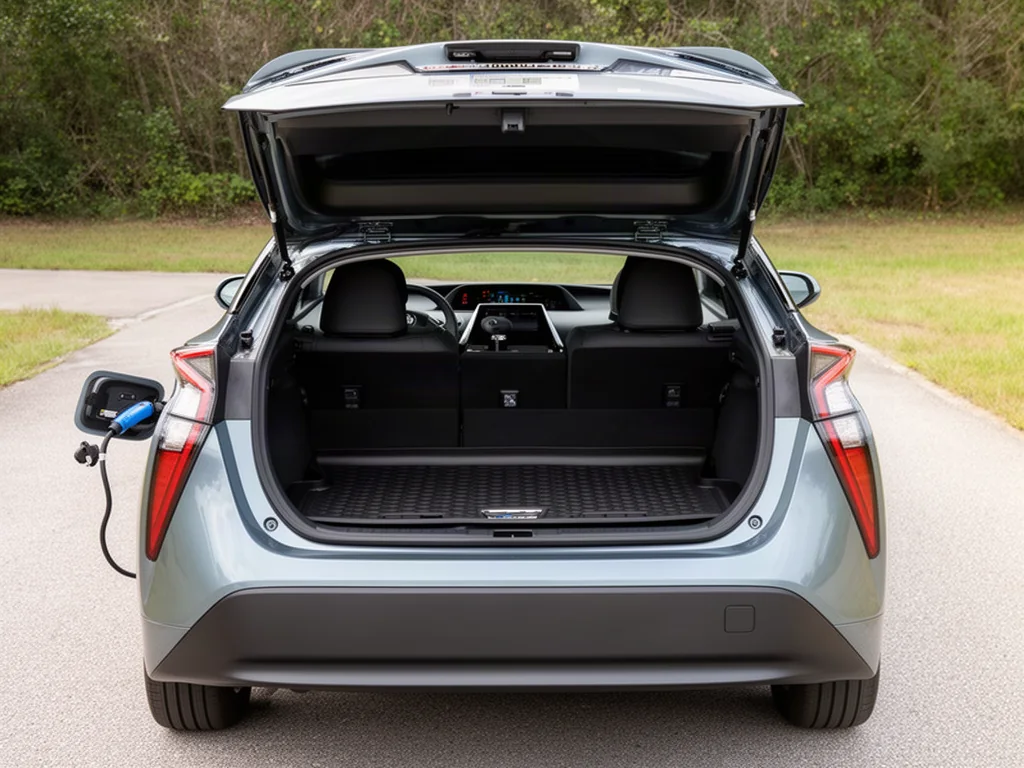
A Toyota Prius spare tire is not a given. Whether a spare tire for Prius owners is in the cargo well depends on generation, trim, market, and equipment, so the nameplate alone does not settle it. Some cars carry a compact spare tire; others leave a tire repair kit, sealant, and a portable tire compressor instead. Confirm what your vehicle actually has before you need it.
Does Your Toyota Prius Have a Spare Tire?
The spare tire a Prius may carry cannot be assumed from the model name alone. Toyota Prius spare tire equipment has varied with model year, generation, trim, market, and option packages, so two cars that look similar may leave the factory with different emergency setups. A compact spare tire appears on some configurations, while others substitute a tire repair kit. Checking the original equipment list for that exact vehicle, rather than assuming a family-wide standard, is the only reliable starting point.
Verified availability has to be read by generation and year, with trim and market qualifications kept in view. A Prius, Prius Prime, Prius c, and Prius v can each be specified differently, so mixing those labels hides important equipment differences. On a used car, the original spare tire for Prius cargo storage, or the kit that replaced it, may have been removed, never replaced, or swapped for something unofficial. Factory information still matters, but it needs a physical check of what is actually in the vehicle today.
Where to Check for a Spare and Emergency Equipment
Park on level ground away from traffic before looking for emergency equipment. Many Prius layouts place cargo floor storage under the rear load floor, but the owner's manual is the map for the intended well, cover, and any fasteners on that specific vehicle. Lift only what the manual describes and keep the hatch area stable while you look. The storage area may hold a spare, a kit, tools, or a molded insert, and the manual's diagrams prevent searching the wrong panel or assuming every hatch hides the same well.
What you find can include a spare tire, a tire repair kit with tire sealant, a portable tire compressor, a tool kit, or only a storage insert that fills the well. An empty recess does not prove the car never had a spare, and a loose wheel sitting in cargo does not prove it was original equipment. Missing straps, unmatched hardware, or leftover foam only show the present state. Uncertain details should be confirmed in the owner's manual and vehicle-specific documentation rather than inferred from a vacant tray or an unlabeled wheel.
What the Prius Tire Repair Kit Can Handle
A tire repair kit is meant for limited puncture situations described in its own instructions, not for every flat. Tire sealant with a portable tire compressor is typically aimed at a small tread puncture within the kit's stated limits. Sidewall damage, a major cut, or a tire that has separated from the wheel can put the situation outside kit use. Those limits exist because sealant cannot restore structure the tire no longer has, and forcing mobility after that damage is not the kit's purpose.
Before an emergency, check whether the sealant has expired, whether bottles, hoses, and the compressor are complete, and whether the printed instructions still match the kit in the car. Temporary mobility after a kit attempt still depends on those limits, not on a guarantee that the tire is restored. A tire professional must inspect the damaged tire afterward; a successful roadside fill does not mean the casing is safe. Treat the kit as a short-term way to leave a hazardous spot when the damage fits the instructions, not as a completed repair.
Choosing a Spare Tire for Your Specific Prius
Choosing a spare tire for Prius use starts with the exact vehicle, not a family resemblance. A suitable compact spare tire needs confirmed wheel and tire specifications, brake clearance, load capacity, and manufacturer guidance for that model year and trim. Appearance, diameter, or bolt pattern alone is not enough, because offset, brake hardware, and load rating can still be wrong. Documented wheel fitment confirmation for the specific car should come before anyone buys a spare assembly, and unverified marketplace claims should not substitute for that check.
Compatible emergency tools also have to match the vehicle and the spare you intend to carry. The spare's labeled speed, distance, and inflation restrictions apply even when the wheel physically bolts on, and those labels are operating limits rather than optional advice. A spare taken from another Prius model or generation should not be assumed to fit; Prius, Prius Prime, Prius c, and Prius v hardware can differ, and even same-generation cars may not share confirmed compatibility. Until fitment is verified for that VIN or documented specification, treat any borrowed assembly as unproven.
Storing and Maintaining an Added Spare
An added spare needs a storage arrangement that keeps it from shifting under braking or in a collision. Cargo straps, a well that actually supports the assembly, or a purpose-built carrier should restrain the wheel so it cannot become a projectile in the cabin or hatch. Not every Prius has a usable factory spare well, so cargo-floor support and clearance have to be checked on the vehicle you own. An ill-fitting wheel that sits on a thin floor panel or against hybrid components is not a storage plan, even if the spare itself is the right size.
Emergency equipment still has to stay reachable without blocking components or access points the owner's manual identifies. A spare that traps the compressor, hides the sealant, or covers a service opening trades one problem for another. Check the spare's condition and inflation against its own label and the vehicle's guidance; a compact spare tire often carries a different pressure than the road tires. Inspect for cracking, damage, and pressure loss whenever you review the rest of the emergency kit so the spare is ready if it is needed.
When a Flat Tire Requires Roadside Assistance
If a tire goes flat, stop in a safe location away from moving traffic before anyone inspects equipment. A shoulder with poor sight lines, a narrow lane, or darkness with no buffer can make even a simple kit check unsafe. Call roadside assistance for severe tire damage, missing equipment, uncertain spare fitment, or surroundings that are not safe for work beside the car. Staying in the vehicle with hazard lights, or moving farther from traffic when that is safer, takes priority over diagnosing the wheel on the spot.
Driving on a deflated tire can damage the casing, the wheel, and nearby components, so mobility is not the first goal. Tire sealant or a temporary spare does not establish that normal driving is safe; both are limited stopgaps with their own restrictions. Follow the vehicle-specific recovery guidance in the owner's manual, including any notes about hybrid systems and towing. When the car reaches a tire shop, tell the technician if sealant was used so they can handle the tire accordingly. A professional inspection decides whether repair, replacement, or further chassis checks are required.