Finding the Correct Toyota Hilux Brake Proportioning Valve
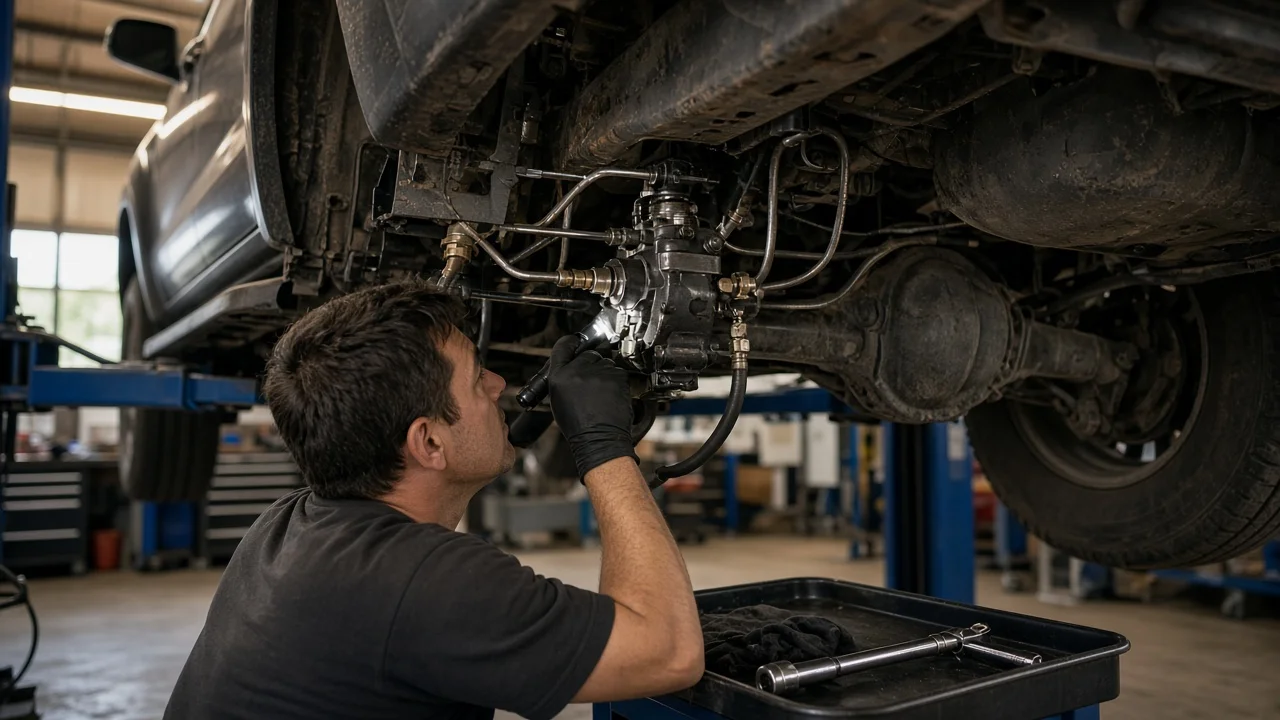
On many Toyota Hilux pickups, a load sensing proportioning valve on the frame above the rear axle controls the rear brakes. To get the right replacement, you can't just match the name on the box. The generation, drive type, braking system and even suspension height decide which valve fits and how it must be set. This guide explains how to identify the correct part, what affects fitment and when the job belongs with a brake professional.
The short answer
The correct valve is the one Toyota specifies for your exact truck. Identify it by the VIN, not by model year. The Hilux was built in many generations and market variants. The valve differs with chassis code, two- or four-wheel drive, cab and bed type, rear spring rating and whether the truck has ABS. The most reliable method is to read the part number on the old valve or its tag. Then confirm it against your VIN with a Toyota parts department or an electronic parts catalog. Some trucks with ABS and electronic brake-force distribution have no mechanical proportioning valve at all, so check before you buy one.
If you can't match the number, don't substitute a valve from a similar-looking truck. A valve with the wrong pressure characteristics can make the rear wheels lock early or leave the rear brakes doing too little work. You may not notice either problem until an emergency stop.
How the load sensing valve works
A Hilux carries very different weights over the rear axle depending on what's in the bed. When the truck is empty, the rear tires have little grip, so full hydraulic pressure at the rear brakes would lock them before the fronts. When it's loaded, the rear can do much more of the braking. The load sensing proportioning valve, often called the LSPV, sits on the frame and connects to the axle housing through a spring and lever. As you load the bed, the frame settles toward the axle. That changes the spring tension on the valve, and the valve lets more pressure through to the rear brakes.
Inside the valve, a piston and spring limit how quickly rear pressure rises once line pressure passes a set point. Below that point, front and rear get the same pressure. Above it, rear pressure rises more slowly. The valve doesn't create braking force itself; it only splits the master cylinder's pressure between the axles. Worn brake pads, glazed friction material or contaminated brake fluid can cause symptoms that look like a valve fault.
What decides which valve fits
Generation and chassis code come first, because mounting points, line fittings and internal calibration changed over the years. Drive layout matters too. Two-wheel-drive and four-wheel-drive trucks sit at different heights and may use different valves or brackets. Cab style, bed length and rear spring rating affect the expected axle load, so heavy-duty or cab-chassis versions can use a different part. Market also counts, since trucks sold in different regions weren't always built to the same specification.
The braking system makes the biggest difference. On trucks with ABS, the valve may be omitted, kept alongside the ABS unit, or replaced by electronic brake-force distribution handled by the ABS actuator. With electronic distribution, there's nothing mechanical to buy, and rear-brake balance problems point to sensors, the actuator or the basic brake parts. Suspension modifications also change the answer. A lift kit, add-a-leaf, airbags or heavier springs change the distance between frame and axle. The original valve may still fit, but unless you reset its linkage, it may read the truck as always empty or always loaded.
Signs the valve may be at fault
Watch for the rear wheels locking easily when the truck is empty or weak braking when the bed is loaded. Another sign is a pedal that feels normal while the truck takes longer to stop. Fluid weeping around the valve body is also a warning. A seized linkage is common on trucks exposed to salt, mud or water crossings. If the lever no longer moves freely, the valve is stuck at one setting regardless of load.
Wear patterns can also help. If the front brake pads and brake rotors wear much faster than expected while the rear brakes barely change, the rear may be under-braked. If the rear friction material wears quickly instead, the rear may be getting too much pressure. Treat these as clues, not proof. A sticking caliper, a rear drum out of adjustment or a leaking wheel cylinder can cause the same pattern.
What the owner can do
First, confirm what your truck has. Look along the frame rail near the rear axle for a small valve body with brake lines and a lever or spring running down to the axle housing. Note any part number cast or stamped on the body or on an attached tag. Photograph the linkage and its bracket before you touch anything. Write down the VIN, production month, drive type and any suspension changes. A parts counter will need all of them to confirm vehicle fitment.
A genuine Toyota valve matched to your VIN is the safest choice. Aftermarket valves exist for some generations, but make sure the listing names your exact model range and configuration, not just a broad fit. Used valves are cheap but may have internal corrosion from old brake fluid that you can't see from outside. Whatever you buy, inspect the rest of the rear brakes at the same time. Check pads or shoes against their wear limits, rotor or drum condition, caliper and wheel cylinder seals, flexible hoses and fluid age.
Installation, adjustment and bleeding
Replacing the valve itself is simple: unbolt it, move the lines over with flare-nut wrenches and refit the linkage. The setup afterward is what makes it work correctly. Toyota's service information gives an adjustment procedure for each model. It usually involves setting the linkage or spring position with the truck at a specified load and ride height. Some manuals also call for a pressure check with gauges at the front and rear lines. Without that procedure and the correct values for your truck, you're only guessing at the valve's position.
Once the lines have been opened, bleed the system in the order given in the service manual. Some valves have their own bleeder screw. Trucks with ABS may need a scan tool to cycle the actuator during bleeding. Use the brake fluid grade shown on the reservoir cap or in the owner's manual. Test the brakes at low speed in a safe area before driving normally.
Limitations and next step
This guide covers general principles. It can't confirm which valve your Hilux uses or give its adjustment values. Those details come from the factory service information for your VIN and model code. If a parts lookup gives conflicting results, ask the parts department to check the build data instead of relying on a catalog's year range.
Brakes are a safety system. If the pedal is low or spongy, the truck pulls, the rear locks unexpectedly or fluid is leaking, stop driving it and have a qualified brake technician inspect it. A professional is also the right choice if you don't have the gauges to check pressure or the tools to bleed an ABS system. The same goes for a lifted truck whose valve linkage needs to be relocated.