Toyota Highlander Spark Plug Replacement Guide
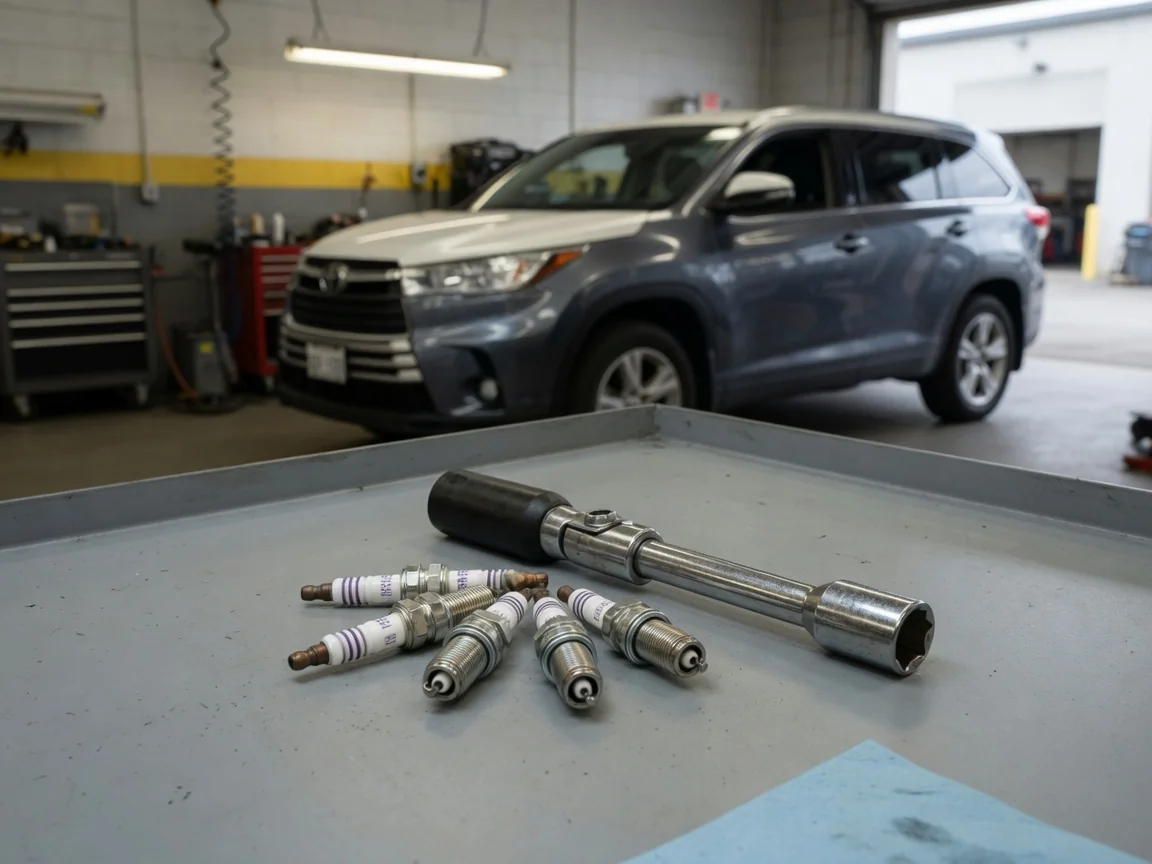
Selecting spark plugs for Toyota Highlander service starts with the engine that is actually installed, not with a generic plug list. Highlander spark plugs vary by model year, gasoline or hybrid layout, and cylinder count, so the same shopping phrase can point to more than one specification. Confirm the engine first, then use the maintenance schedule, the documented plug type, and realistic access notes for that powertrain.
Identify Your Highlander’s Engine Before Selecting Plugs
Toyota Highlander spark plugs are specified to a particular engine family, not to the nameplate alone. A later gasoline V6, an earlier four-cylinder, and a hybrid powertrain can each carry a different spark plug specification, plug quantity, and service path. Model year is only a starting filter. The underhood emissions label, the owner's manual engine listing, and a VIN-based parts lookup confirm which engine identification actually applies before any plug is ordered.
Treat the installed engine as the source of truth for how many plugs the job needs and how they are reached. A V6 has two cylinder banks and more ignition coils than a four-cylinder, and rear-bank work can involve intake manifold access that a front-only layout never requires. Hybrid Highlanders add high-voltage precautions around the same ignition hardware. Ordering spark plugs Toyota Highlander shoppers often see in a catalog is useful only after that engine match is verified.
Find the Applicable Spark Plug Replacement Interval
The replacement interval for Toyota Highlander spark plugs belongs in that vehicle's maintenance schedule, not in a one-size figure applied to every generation. Look up the schedule for the specific model year, engine, and market, then note both the documented mileage interval and any time limit the schedule lists. Previous replacement records matter as much as the calendar. If the last plug service is already logged, plan the next one from that date and odometer rather than from the in-service date of the vehicle.
Missing service history is a reason to review the file, not a reason to assume the plugs are overdue. Dealer invoices, independent shop records, and any owner log can show whether a plug replacement already occurred. If nothing turns up, a technician can inspect condition during a scheduled maintenance visit without treating the interval as expired. Driveability problems still deserve diagnosis even when the schedule has not yet called for new plugs, because an engine misfire can originate in coils, fueling, or air leaks rather than electrode wear.
Choose Plugs That Meet the Engine’s Specification
Choose spark plugs for Toyota Highlander engines from vehicle-specific parts information, not from a visual match in a parts bin. Confirm the specified plug part number and any documented replacement number for that engine. Electrode material, heat range, thread diameter and pitch, reach, and seat design are fitment requirements, not optional upgrades. Spark plug gap is part of that specification as well. A plug that threads in but uses the wrong reach or seat can seat incorrectly and damage the cylinder head.
Iridium spark plugs belong on a Highlander only when the applicable engine specification calls for that electrode design or lists an approved iridium replacement. They are not a universal upgrade for every Highlander engine. Fine-wire iridium and similar precious-metal tips are easy to bend, so any gap check must follow plug-maker and vehicle guidance rather than a generic feeler-gauge habit. If the documentation says the plug is pre-gapped and must not be adjusted, leave the electrode alone and confirm only that the received part matches the specified number.
Understand Rear-Bank Access on V6 Engines
On a transverse V6, the rear cylinder bank faces the firewall, which leaves little working room around the ignition coils and plug wells. That layout is why rear-bank access is a planning issue rather than a minor extra step. Some Highlander V6 engines require intake manifold access or other upper-intake disassembly to reach those plugs; others may not. Verify the procedure for the particular engine and year instead of assuming one access method covers the entire Highlander V6 range.
Access requirements change labor time and parts. If the applicable service procedure removes intake components, expect the estimate to include any gaskets or seals that procedure replaces rather than reuse of crushed or distorted sealing surfaces. This is planning information, not a workshop walkthrough. When rear-bank work involves substantial disassembly, or when a hybrid Highlander adds high-voltage system precautions a home mechanic has not been trained to follow, professional service is the safer choice.
Recognize Symptoms Without Assuming the Plugs Are at Fault
Rough idle, hesitation, difficult starting, and misfire warnings are reasons to inspect the ignition system, not proof that Toyota Highlander spark plugs have failed. An engine misfire can come from ignition coils, weak fuel delivery, unmetered air leaks, or mechanical problems that look similar at the driver's seat. A stored fault code is evidence to interpret with a scan tool and vehicle-specific confirmation; manufacturer-dependent codes do not by themselves identify a worn plug. Treat the code as a starting point for diagnosis.
Useful observations include when the symptom appears, whether it is cold-start only or load-related, how warning lights behave, and what maintenance was done recently. Record those details before parts are replaced. A flashing check-engine light or severe shaking is not a continue-to-drive condition; stop safely and arrange professional assistance, because a continuing misfire can overheat a catalytic converter. Steady warning lights still justify a diagnostic visit, but they do not authorize guessing that the plugs are the failed part.
Plan the Service and Confirm the Result
A written estimate for spark plugs Toyota Highlander work should name the verified plug specification, the quantity required for that engine, the labor associated with front and rear access, and any seals or gaskets the procedure requires. Correct tightening matters because cylinder-head threads are easy to damage with a cross-threaded or overtightened plug, yet there is no universal torque figure that covers every Highlander engine. Use the tightening specification published for that engine and handle threads and plug wells carefully rather than following a generic shop-floor number.
After the job, record the installed part number, the service date, and the mileage so the next maintenance schedule review has a clear starting point. Post-service checks should include smooth idle, normal acceleration, and the absence of new warning lights. If the original hesitation or misfire remains, the plugs were not the complete cause and further diagnosis is required. Keep the paperwork with the vehicle file; that record is more useful than memory when the next interval or a later engine misfire investigation comes up.