Toyota Highlander Hybrid Battery: Location, Lifespan, and Replacement
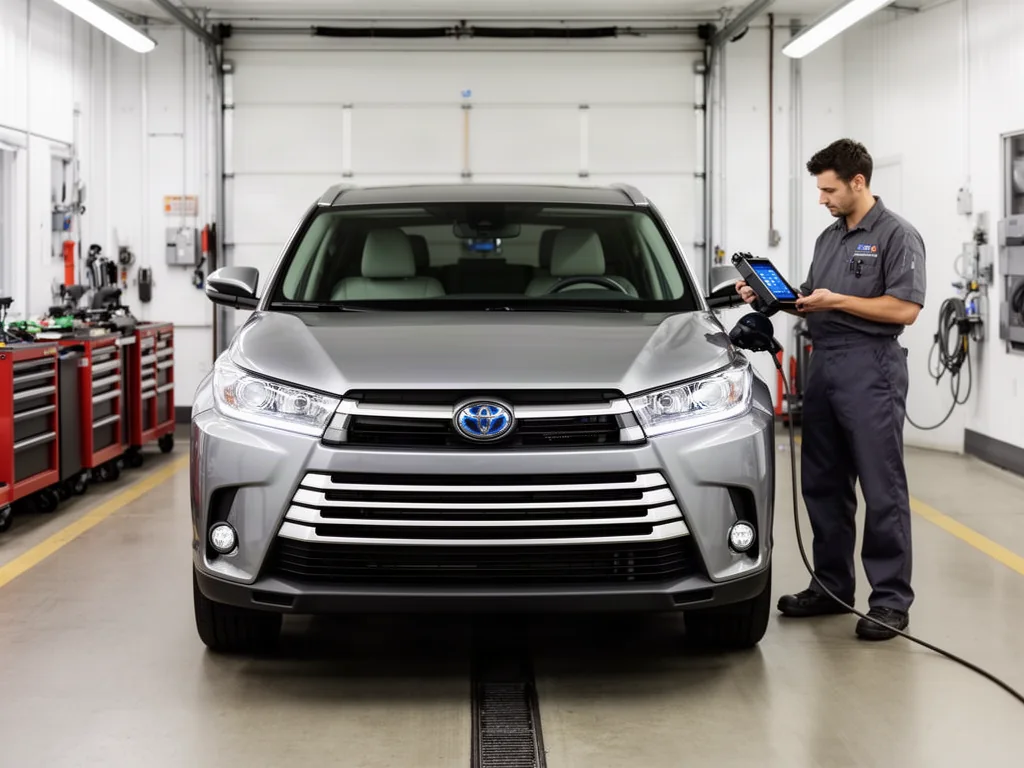
A Toyota Highlander Hybrid battery question often starts with a warning light, a starting complaint, or a request for a replacement battery. The Highlander Hybrid battery that usually drives replacement cost and ownership planning is the high-voltage traction battery, not the 12-volt auxiliary battery. Year, VIN verification, and a clear installed replacement estimate keep the diagnosis and the quote aligned with the vehicle that actually needs work.
Identify Which Highlander Hybrid Battery Needs Attention
The battery most Highlander Hybrid owners mean is the high-voltage traction battery that supplies electric drive assist. A separate 12-volt auxiliary battery supports starting, computers, and accessories. A shop quote for a battery for Toyota Highlander Hybrid work should name which pack is being diagnosed. A starting complaint can point to the auxiliary battery, while hybrid-system warnings more often involve traction-pack data. Mixing those roles leads to the wrong parts order.
A battery-related warning or a no-start condition alone does not establish which Highlander Hybrid battery needs service. Other charging, control, or cooling faults can produce similar messages. Before contacting a shop, gather the model year, VIN, mileage, and the exact wording of any warning. Keep the service conversation on traction-battery ownership and Toyota Highlander Hybrid battery replacement, and name the auxiliary battery only when that distinction prevents a misdirected estimate.
Confirm Battery Location for the Exact Model Year
Toyota Highlander Hybrid battery location is year-specific, so the owner's manual for that model year is the first place to confirm where the traction pack sits and whether any cooling vents are owner-accessible. Battery cooling airflow matters because blocked intakes can raise pack temperature and affect battery health assessment later. A location that applies to one generation should not be treated as universal for every Highlander Hybrid. Confirm the year before using any diagram or service description.
Identifying Toyota Highlander Hybrid battery location still leaves the enclosure and high-voltage connections unsafe to open. Limit owner observations to visible vents, cabin labels, and checks the manual allows, such as keeping intake paths clear of cargo or debris. Trim removal, connector probing, and pack access belong with qualified hybrid technicians. A location check is useful for cooling-airflow conversation and for matching a service estimate, not for do-it-yourself electrical work on the traction system.
Battery Identification for 2006, 2007, and 2008 Models
For a 2006 Toyota Highlander Hybrid battery, including the shortened 06 model-year wording, year and VIN verification come before any specification claim. The same rule applies to a 2007 Toyota Highlander Hybrid battery and a 2008 Toyota Highlander Hybrid battery. A battery for 2006 Toyota Highlander Hybrid service is not automatically interchangeable with a battery for 2007 Toyota Highlander Hybrid or a battery for 2008 Toyota Highlander Hybrid vehicles, even when photos look similar.
A replacement listing must say whether it concerns the high-voltage traction battery or the 12-volt auxiliary battery. Documented fitment for the individual VIN is the standard, not an inference from a nearby model year or a similar product photo. Shops should confirm the pack identification against the vehicle before ordering. Without that match, an installed replacement estimate can describe the wrong Highlander Hybrid battery configuration and delay the repair.
What Determines Highlander Hybrid Battery Service Life
How long a Toyota Highlander Hybrid battery lasts cannot be read from age or mileage alone, and there is no universal replacement threshold that applies to every vehicle. Temperature exposure, operating history, battery cooling airflow, and current pack condition all influence remaining service life. A Highlander Hybrid battery that spent years in heat with restricted intake paths can age differently from one with documented cooling care. Remaining capacity is a measured condition, not a calendar promise.
Documented service history and a professional battery health assessment can show present imbalance, cooling-system condition, and stored hybrid data, but those findings still do not predict the exact day a pack will fail. Warranty coverage has its own eligibility terms, duration, and mileage limits, and a replacement pack warranty does not define expected lifespan for an original pack. Coverage should be checked against the VIN rather than assumed from a general Highlander Hybrid battery conversation.
Symptoms That Call for Professional Battery Testing
Warning messages, unusual displayed charge behavior, a drop in fuel economy, or a cooling fan that runs more often than expected are observations worth reporting. None of those signs, by itself, proves the traction pack has failed. Other vehicle faults, driving conditions, accessory loads, and even a weak 12-volt auxiliary battery can change the same displays. A Toyota Highlander Hybrid battery complaint needs context: when the message appeared, what the vehicle was doing, and whether the warning returned after a restart.
Professional assessment typically reviews diagnostic codes, live battery data, cooling-system condition, and auxiliary-battery health together. A stored code is evidence to interpret, not proof a module has failed, and manufacturer-dependent codes require vehicle-specific confirmation. Follow the owner's manual for urgent warnings. Do not open the pack, probe high-voltage connections, or attempt module repairs. Those steps can create shock risk and can also erase the data a qualified shop needs for a battery health assessment.
Replacement Pack Options and What the Quote Should Specify
A replacement battery for Toyota Highlander Hybrid traction service may be described as new, remanufactured, refurbished, or used. Supplier terminology is not standardized, so the quote should spell out pack condition, included modules, sensors, and whether cooling parts or covers come with the unit. Written confirmation of vehicle fitment, the scope of installation, and any programming or post-install checks belongs in the estimate. Vague rebuilt or refurbished labels without that detail make comparison unreliable.
Replacement pack warranty details should include duration, mileage limits, labor coverage, exclusions, and who handles a claim if the pack fails after installation. A qualified hybrid service provider should confirm the diagnosis before the order, complete the installation checks required for that vehicle, and arrange proper pack return or recycling. Core-charge paperwork belongs with that return process so the original unit is accounted for. Ask who performs the work and where the pack is sourced before authorizing Toyota Highlander Hybrid battery replacement.
What Shapes the Installed Battery Replacement Cost
Cost of Toyota Highlander Hybrid battery replacement depends on model year, verified pack specification, pack condition, supplier, and local labor rates, so an installed replacement estimate should be vehicle-specific rather than copied from a generic Highlander figure. The cost of a hybrid Highlander battery replacement can include diagnosis, the replacement pack, installation labor, taxes, shipping, and any documented extra work such as cooling-fan service. That replacement cost is an assembled total, not a single catalog line.
A core charge may appear on the invoice until the original pack is returned in the required condition, and refund terms should be written down before work begins. Ask whether return shipping or disposal is included. Check applicable warranty or service-contract coverage before authorizing replacement, without assuming the VIN is eligible. Toyota Grand Highlander Hybrid battery replacement cost needs its own vehicle-specific estimate; Highlander pricing and fitment must not be carried over to that model.