Toyota Glow Plug Relay Selection: Fitment, Features and Limits
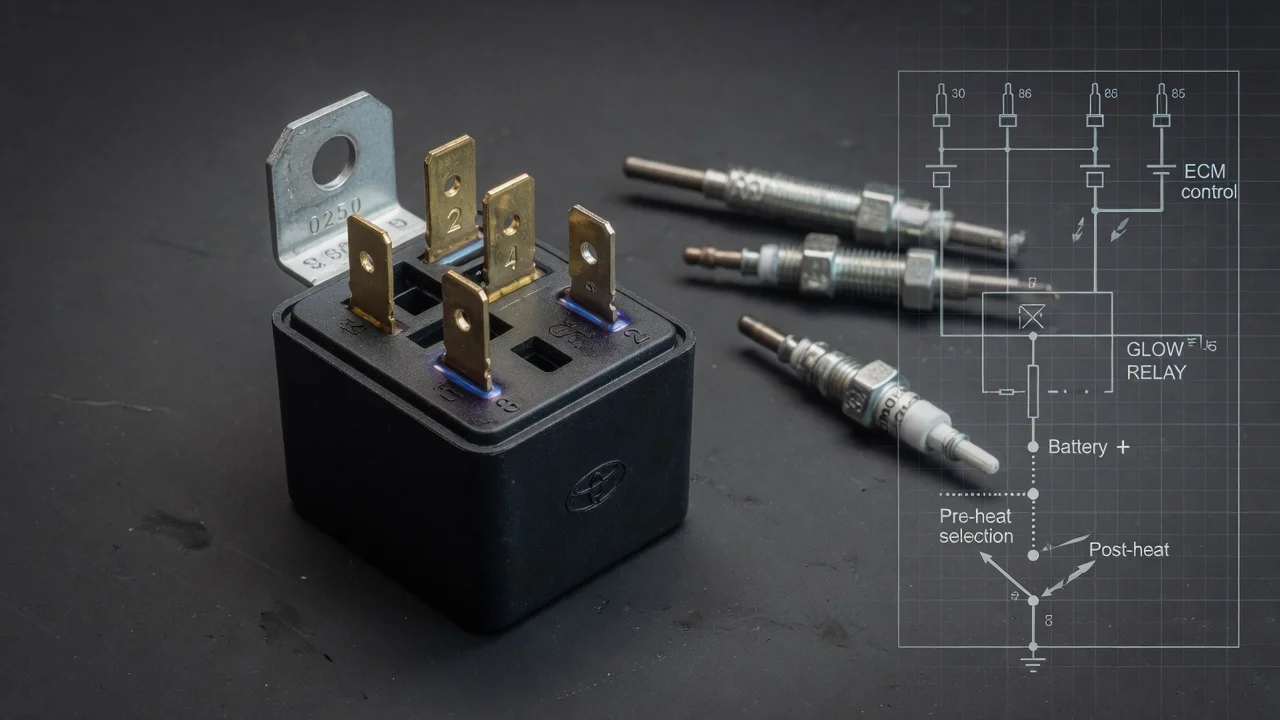
A glow plug relay is a small part with a big job on a Toyota diesel. It switches heavy current to the glow plugs so the engine can start cleanly when it is cold. Choosing a replacement is mostly about fitment, but a few details separate a relay that lasts from one that leaves you stranded on a frosty morning. This guide covers what to check before you buy.
Define the job the product must do
Start with fuel type, because it settles the question quickly. Only diesel engines have glow plugs and glow plug relays. A gasoline Toyota uses spark ignition and has no glow circuit, so a hard cold start on a gasoline model is diagnosed through fuel pressure, fuel trim and ignition data instead. On a diesel Hilux, Land Cruiser, HiAce or similar model, the relay sits between the battery feed and the glow plugs. A low-current signal from the glow timer or engine computer energizes the relay coil. The relay contacts then carry the heavy current the plugs draw while they heat. Older indirect-injection engines depend heavily on this preheat. Newer common-rail engines still use it for cold starts, a smoother idle and less smoke right after start-up.
Before ordering, make sure the relay is actually the problem. Typical relay faults include a wait-to-start lamp that works normally while the plugs never warm, no click from the relay when the key is turned on, or the opposite fault, where the plugs stay powered and burn out. A long crank in cold weather can also come from a weak battery, failed glow plugs, a faulty coolant temperature signal, air in the fuel, a clogged or water-contaminated fuel filter, a struggling lift pump or a leaking injector. A simple check with a test light or multimeter at the relay output during preheat tells you whether the fault is electrical or a fuel delivery issue. On common-rail engines the rail runs at extremely high pressure, so never loosen injector lines or fittings to check for fuel. Use the fuel pressure readings on a scan tool and a visual leak check instead.
Check compatibility
The most reliable reference is the part number printed on the relay you are removing. Cross-check it against the vehicle identification number and engine code. Toyota has used different glow control layouts over the years. Some older engines use a main relay plus a second relay and resistor that lowers the voltage after an initial fast heat. Others use a single relay commanded by the engine computer, and some later designs replace the simple relay with an electronic glow controller. A part that looks similar but was built for a different layout may click normally and still leave the plugs underpowered or overheated.
Beyond the part number, compare the physical and electrical connections. Check the coil voltage: most models run 12 volts, but some heavy-duty and export diesels use 24-volt systems. Match the number and layout of the terminals, the connector or stud type for the heavy feed and output cables, and the mounting bracket. Also check the contact current rating, which must cover the combined draw of every plug in the engine with some margin. Engine configuration matters here, because a four-cylinder and a six-cylinder diesel put very different loads through a relay that may look identical from the outside. If any of these details differ from the original, treat the listing as unconfirmed rather than close enough.
Features that affect the choice
Genuine Toyota relays and reputable original-equipment suppliers offer the clearest fitment and the most predictable contact life, usually at a higher price. Aftermarket units vary widely in quality. Useful evidence of a good replacement includes a stated contact current rating, specific cross-referenced part numbers, a housing that keeps out water and road salt, and terminals that match the original design. Labels such as heavy duty, upgraded or performance mean nothing on their own unless the seller backs them with a rating you can compare against the original part.
Consider where the relay is mounted. In the engine bay, near the fender or firewall, it is exposed to heat, vibration and spray, so a well-sealed body and a solid bracket matter more than claims on the packaging. If your engine uses a separate timer or controller, confirm whether the replacement has its own timing logic or relies on the existing module. A mismatch can keep the plugs energized too long. A warranty is a reasonable tiebreaker, but it does not make up for incorrect ratings.
Limitations and ownership costs
A new relay only restores the switching path. It cannot repair failed glow plugs, a corroded bus bar, a melted fusible link, a broken harness, a faulty temperature sensor or an engine computer fault. It also will not fix fuel problems such as a restricted fuel filter, an air leak, a weak fuel pump or a dripping injector. If hard starting continues after the swap and the scan tool shows abnormal fuel pressure or injector correction values, follow that lead instead of buying more electrical parts. Fuel additives are not a proven fix for any of these faults.
Installation is usually simple. Disconnect the negative battery cable first, note where each cable goes, clean the terminals, and tighten the nuts snugly without twisting the studs. Budget for possible extras: a fusible link, new terminal ends, a little dielectric grease for the low-current connector, and a glow plug resistance check. A relay that failed with its contacts stuck closed may already have damaged the plugs. After installation, confirm that the plugs receive voltage during preheat and that the voltage drops off as designed. Apart from occasional checks for corrosion, the relay needs no routine maintenance.
Build a practical shortlist
Use a short checklist to narrow the options. Confirm the engine is a diesel and record its engine code, model year and VIN. Copy the part number from the old relay and verify it against the vehicle. Note the coil voltage, terminal layout, connector style and mounting bracket, and whether a separate timer or controller is involved. Compare the contact current rating with the original rather than relying on marketing labels. Finally, check the housing seal, the warranty terms and the seller's return policy in case of a fitment mistake.
Once you have two or three candidates that pass every check, the decision comes down to price versus confidence. A genuine or original-supplier part suits a vehicle you depend on in a cold climate. A well-documented aftermarket relay can make sense for an older truck with glow plugs you know are good. Whichever you choose, confirm the fault before buying and test the circuit after installation, because the relay is only one link in the cold-start chain.