Toyota Engine Air Filter Replacement Guide
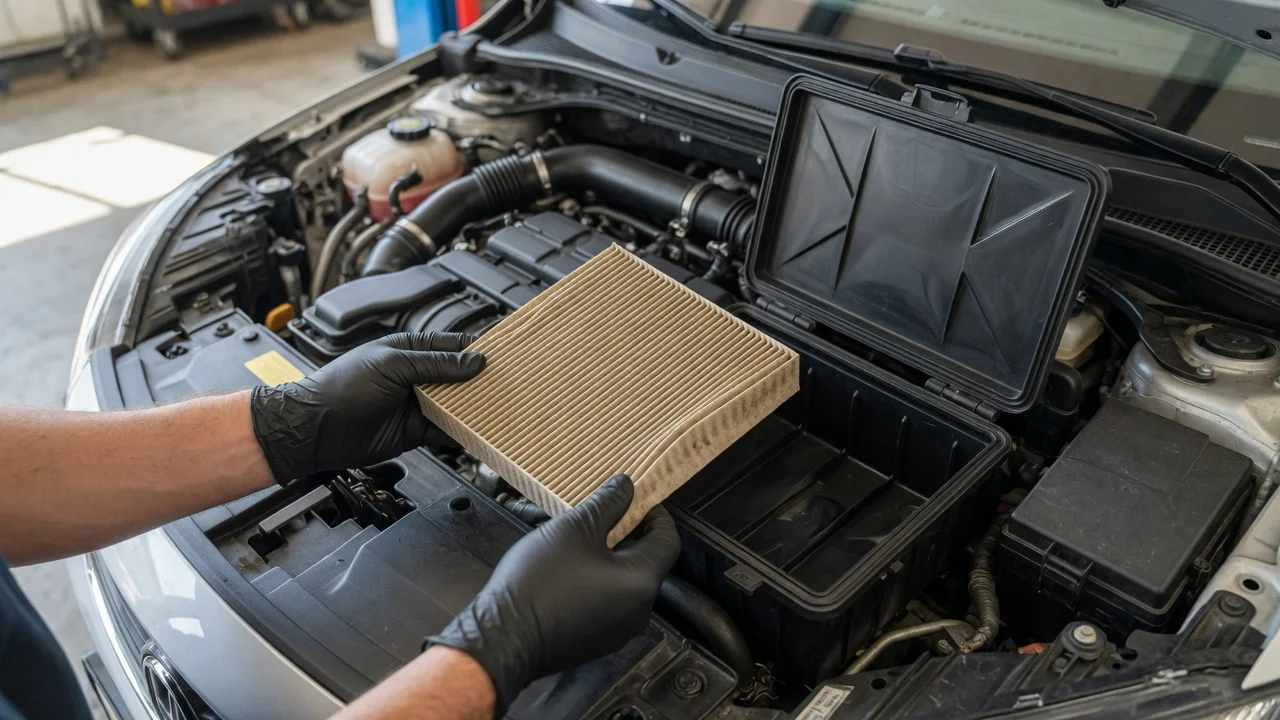
What replacement involves
Replacing a Toyota engine air filter means removing the used filter element from the engine air-intake housing and installing a new element that matches that vehicle. The filter sits in a plastic air box in the engine bay, usually connected to a snorkel or duct, and traps dust, leaves, insects, and grit before they reach the engine. On most current petrol, diesel, hybrid, and turbocharged Toyotas the element is a dry paper or synthetic panel (or, less often, a round cartridge) that is discarded rather than washed and reused.
The work is typically a lid-off visual service: open the air box, note how the old element sits, lift it out, seat the new one so its seal is fully in the groove, and refasten the lid. Interval, filter shape, lid clips versus screws, whether a mass-airflow sensor sits in the duct, and whether the car also has a separate cabin filter all depend on model, model year, engine, and market. A clogged, wet, or collapsed element can cut power, raise fuel use, and, in dusty use, let debris into the intake. Exact service mileage, part number, and housing layout are not universal; they belong in the owner’s manual or the parts listing for that year, model, and engine.
When it needs changing
Toyota maintenance schedules generally call for inspection at routine services and replacement when the element is dirty, torn, crushed, oil-soaked, or water-logged. Unpaved roads, construction dust, pollen-heavy seasons, and frequent short trips shorten life. A filter that still looks clean can stay in service until the next inspection; one that is grey through the pleats, packed with debris, or deformed should be changed regardless of the calendar. Do not treat a cabin (pollen) filter interval as a substitute, and do not assume a single kilometre or mile figure applies across the range. If the manual for that vehicle is unavailable, a dealer or independent shop can read the schedule from the model year and engine code.
Finding the right filter
The engine air filter lives under the bonnet in a dedicated air-cleaner box, often a black two-piece housing with a large inlet hose. The cabin filter is a different part, commonly behind the glovebox or under the cowl, and does not feed the engine. Confirm the replacement by year, model name, engine, and, where trims differ, the specific air-box design. Aftermarket catalogues that list only a model name without an engine code can point to the wrong panel. Bring the old element or its markings if the housing type is unclear. Some older or specialised Toyotas used oil-bath or foam cleaners; those are serviced differently from a dry panel and should not be replaced with a paper element unless the housing was designed for one.
How to replace the element
Park on level ground, switch the engine off, and let it cool. Open the bonnet and locate the air box. Release the lid clips or remove the lid screws, then lift the lid only as far as the ducting allows. Note which face of the filter is up and how the rubber seal sits in the trough. Lift the old element straight out so debris does not fall into the clean side of the housing or the intake tube. Wipe loose dirt from the box with a cloth; avoid blasting dust toward the throttle body or mass-airflow sensor. Set the new filter in the same orientation, press the seal into the groove all the way around, and refit the lid so every clip or screw is engaged and the inlet hose is fully seated. A lid that will not close usually means the element is upside down, the wrong size, or not nested in the seal.
Engine off and cool; bonnet open. Identify the engine air box, not the cabin-filter housing. Unclip or unscrew the lid and note filter orientation. Remove the old element; keep debris out of the intake. Install the matching new element with the seal fully seated. Close the lid and confirm hoses and fasteners are secure.
Limits and a sensible next step
A filter swap does not fix a cracked air box, a loose intake hose, a contaminated mass-airflow sensor, or an illuminated malfunction indicator. Those need diagnosis. Hybrid and turbo models still use an engine air filter, but covers, ducts, and sensor placement differ, so follow the layout in front of you rather than a generic photo. If the housing is damaged, the new element does not match the old one, or performance does not return after a clearly dirty filter is changed, stop and have the intake inspected. For the correct interval and part, use the maintenance schedule and parts data for that Toyota’s year, market, and powertrain.