Toyota DOT 3 Brake Fluid: Specifications and Compatible Options
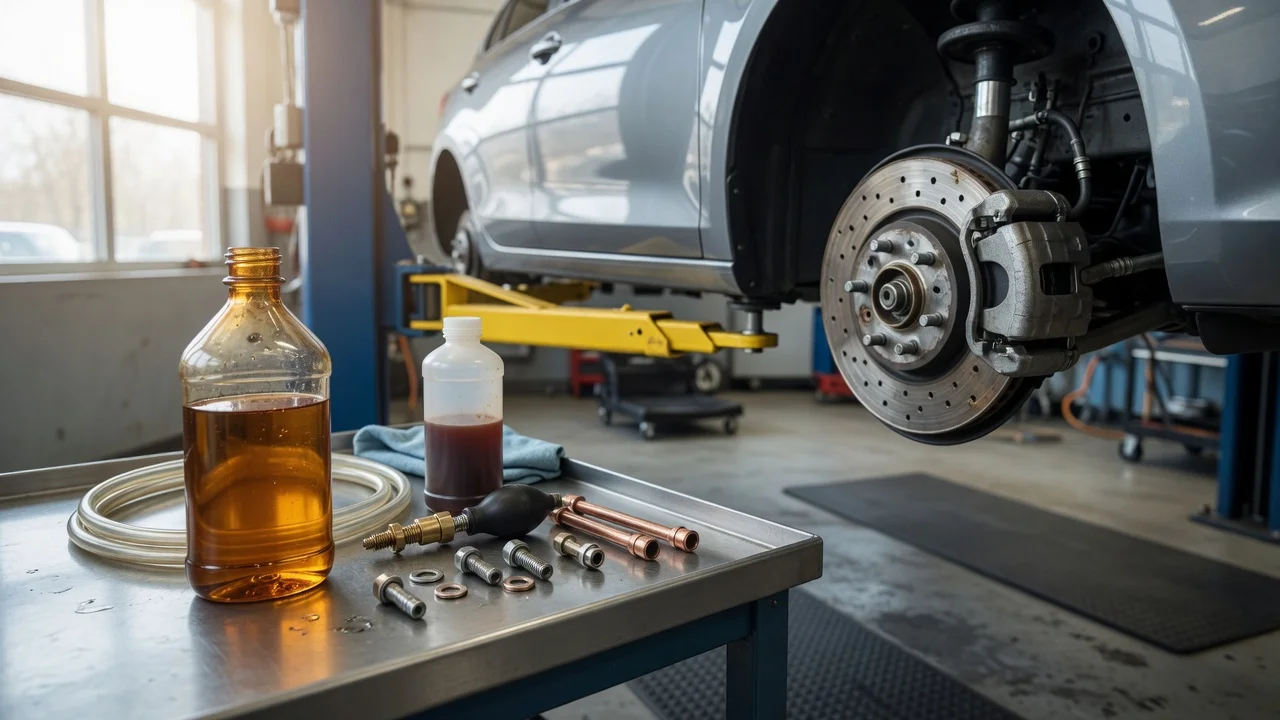
What Toyota DOT 3 Brake Fluid Means
Toyota DOT 3 brake fluid is a hydraulic brake fluid meeting the DOT 3 specification commonly listed for many Toyota cars, trucks and SUVs. The label does not identify a single proprietary formula. It indicates that the fluid must satisfy the Federal Motor Vehicle Safety Standard requirements for DOT 3, including minimum dry and wet boiling points. The exact factory fill can vary by model, market and production date, so the most reliable reference is the specification shown on the reservoir cap or in the owner's manual for the specific vehicle.
DOT 3 and DOT 4: A Practical Comparison
DOT 3 and DOT 4 are closely related glycol-based brake fluids. Both are used in hydraulic brake systems, but DOT 4 is formulated with a higher minimum boiling point. This gives DOT 4 more resistance to heat-related vapor formation during repeated hard braking. DOT 3 remains completely suitable for normal street driving in systems designed for it because the vehicle's braking hardware and service schedule are matched to that specification.
Criterion | DOT 3 | DOT 4; Fluid base | Glycol-based | Glycol-based; Minimum dry boiling point | 205°C / 401°F | 230°C / 446°F; Minimum wet boiling point | 140°C / 284°F | 155°C / 311°F; Typical use | Older or standard road vehicles | Higher thermal demand and many modern systems
The listed boiling points refer to common FMVSS 116 minimum values and are useful as a general reference, but a specific product may exceed them. Check the individual container for the exact certified values.
Which Option Better Fits Your Priorities
For most owners, the better option is the fluid specification that the vehicle manufacturer calls for. If the brake fluid cap or manual says DOT 3 on a standard road-driven Toyota, a high-quality DOT 3 fluid is the straightforward choice. It is compatible with the seals and hardware used in that system and delivers the expected performance under ordinary conditions.
Choose DOT 3 when the vehicle specification and cap label require it, and the vehicle is used for normal road driving. Consider DOT 4 only when the manufacturer explicitly permits it, or when the system's modified or heavy-duty usage creates higher brake temperatures and a qualified service manual confirms compatibility. Do not choose a higher DOT grade simply because the number is higher; DOT 4 is not universally required and system compatibility still depends on the vehicle design.
Can DOT 3 and DOT 4 Be Mixed
DOT 3 and DOT 4 glycol fluids can generally be mixed, but mixing is not the same as upgrading. In a system specified for DOT 3, adding DOT 4 usually produces a fluid blend without immediately damaging the system. However, the result is not a guaranteed DOT 4 service fill, and the final boiling point may be lower than fresh DOT 4. The correct practice is to follow the cap label and manual, and to replace the reservoir fluid rather than top off with whatever grade is available.
How to Identify the Correct Fluid for a Specific Toyota
Read the brake fluid reservoir cap. Many Toyota caps show a required grade such as "DOT 3" or "DOT 4."; Check the owner's manual for the brake fluid section. It may list the factory recommendation and the replacement interval. Confirm whether the vehicle has a special system. Some performance, hybrid or region-specific models may have a different requirement than a general Toyota DOT 3 listing. Do not rely only on model name. The requirement can change by year, generation, trim or market, so the cap and manual remain the primary sources.
Inspection and Replacement Basics
Brake fluid absorbs moisture over time, which lowers its wet boiling point and can promote internal corrosion. For that reason, the service interval is based on time or mileage rather than only on the fluid level. A low reservoir level can indicate normal pad wear, but a sudden drop may point to a leak and requires inspection before the vehicle is driven.
Known Gaps
This article does not provide a model-by-model Toyota brake fluid chart, current product pricing, or independent wear test results. Model-year updates, regional market differences and aftermarket product reformulations can change the correct choice, so the reservoir cap and the current owner's manual for the exact vehicle remain essential references.