Toyota Diesel Glow Plug Selection
Short answer
For most Toyota diesel engines, the correct glow plug is determined primarily by the engine code, model year, and whether the vehicle uses a direct-injection or older indirect-injection system. A glow plug that fits one Toyota diesel is not automatically correct for another, even when the engine displacement looks similar. The safe approach is to confirm the engine type and original part specification before purchasing replacements.
What a glow plug does
A glow plug is a heating element installed in each cylinder of a diesel engine. It warms the combustion chamber before and during cold starts so that the air-fuel mixture can ignite more easily. This is especially important at low temperatures, when a diesel engine may otherwise crank for a long time or fail to start.
Older indirect-injection Toyota diesels often rely on glow plugs for a longer preheat period. Many newer common-rail direct-injection engines start more easily and may use shorter glow cycles, but the plugs still support cold-start performance and emissions control.
What to check before buying
Selection should follow the powertrain rather than a general Toyota diesel label. The most useful details are the engine code, model year, market, and fuel-system type. Engine codes such as those found in Land Cruiser, Hilux, HiAce, and older Corolla or Camry diesel models can point to different plug lengths, thread sizes, and voltage ratings.
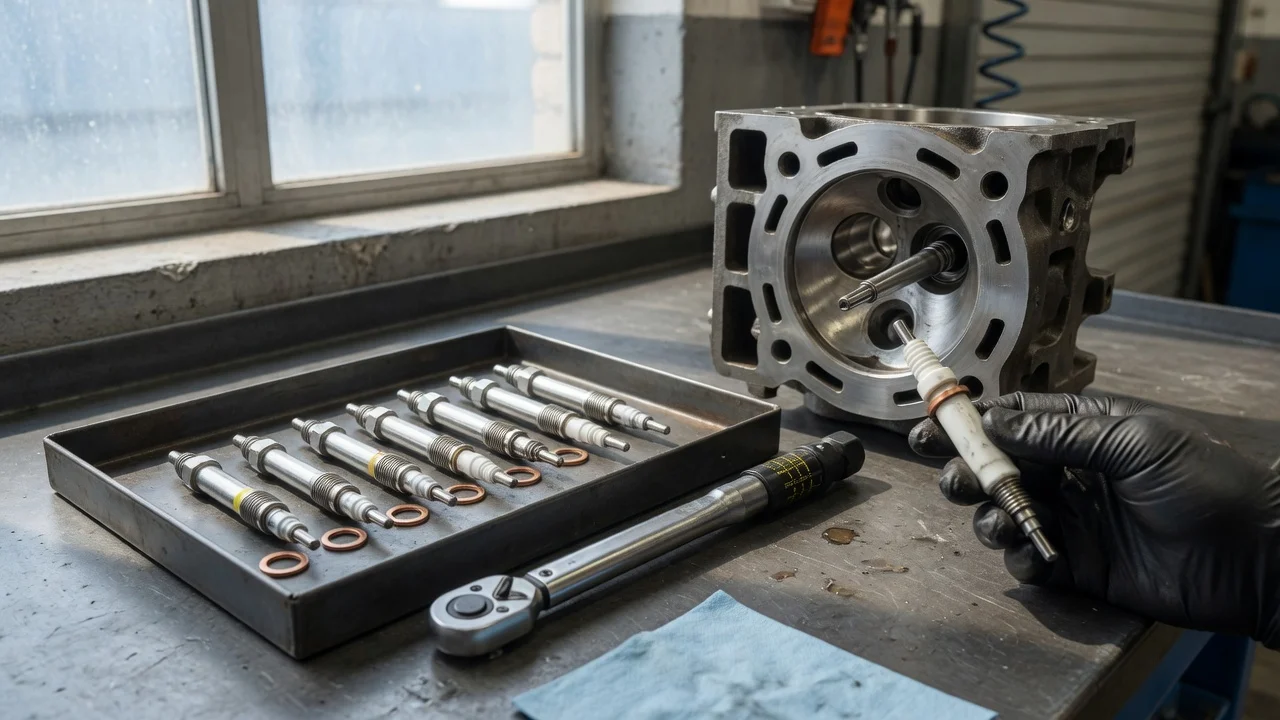
Confirm the engine code from the vehicle, not from a generic online fitment listing. Check whether the replacement is a standard metal plug or a ceramic plug if the original used ceramic. Match the rated voltage, because some Toyota diesels use a lower-voltage fast-heating system. Compare thread dimensions and seated depth against the removed original. Replace the full set unless one plug has only recently been replaced.
Warning signs that glow plugs need attention
Long cranking before the engine starts in cold weather. Rough running or visible smoke immediately after a cold start. A glow plug warning light that stays on or behaves inconsistently. One or more cylinders that take longer to warm up after startup.
These symptoms can also be caused by a faulty glow plug relay, timer, or wiring. Checking the control circuit before replacing the plugs can prevent wasted parts.
Replacement trade-offs
Replacing a full set costs more initially, but it avoids repeating the labor for a second failing plug shortly afterward. Installing one mismatched plug can create uneven cold-start performance and may cause the engine to run roughly until all cylinders warm up.
Ceramic glow plugs can heat faster than conventional metal plugs, but they must be handled carefully during installation. A damaged ceramic tip can break inside the combustion chamber, which may require cylinder-head work.
What the supplied evidence does not cover
No part numbers, exact prices, torque specifications, or model-by-model compatibility tables are supplied in this source material. Vehicle owners should verify the replacement against their vehicle's engine code and original equipment specification before ordering.