Toyota Corolla Transmission Fluid: Specifications and Service Guide
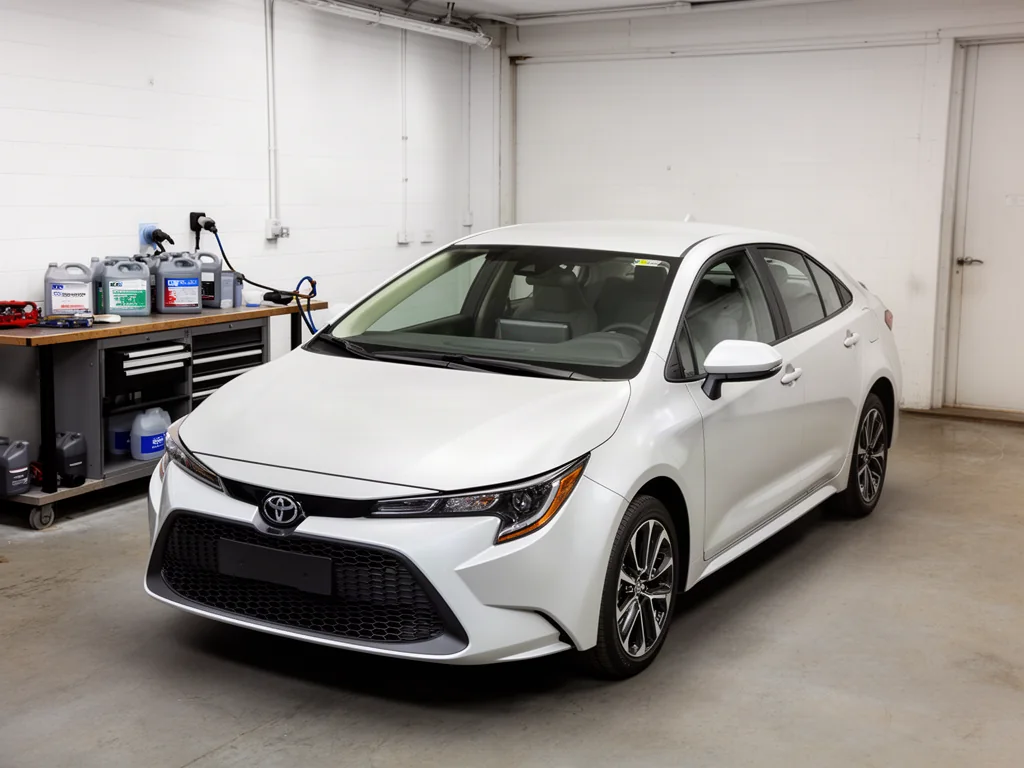
Choosing automatic transmission fluid for Toyota Corolla ownership starts with the vehicle itself, not a generic Corolla bottle. Across generations the nameplate has used conventional automatics, continuously variable transmissions, hybrid transaxles, and manuals, each with its own fluid specification. Transmission fluid for Toyota Corolla service is therefore a documentation task first: confirm the model year, market, and transmission, then match the fluid and the maintenance schedule in the owner's manual rather than assuming one product covers every application.
Identify Your Corolla’s Model Year and Transmission
The Corolla badge has covered decades of powertrains, so the name alone cannot identify the correct transmission fluid Toyota Corolla applications need. Two cars from neighboring model years can use entirely different hardware, and a North American example may not match a vehicle built for another market. Confirm the model year, market, engine or hybrid layout, and the actual transmission type before shopping. A floor shifter that looks like an automatic can still belong to a continuously variable transmission or a hybrid transaxle, so appearance is not a specification.
Transmission identification belongs in the owner's manual, build records, and, when those are incomplete, VIN-based confirmation from a qualified service provider who can read the original equipment coding. Keep conventional automatic, continuously variable transmission, hybrid transaxle, and manual applications clearly labeled in any notes you keep, because mixing those labels is how the wrong fluid specification gets ordered. Do not infer fluid requirements from a PRNDL gate, a sequential mode, or a lack of a clutch pedal. Those controls describe how the driver selects a range, not which hydraulic fluid the unit was designed to use.
Confirm the Required Fluid Specification by Generation
Once the transmission is identified, organize the search by generation rather than by the Corolla name. Each generation can contain more than one transmission application, so split those entries instead of treating a model-year range as a single fluid. Verified boundaries come from the owner's manual and market-specific documentation for that vehicle, including whether the unit is a conventional automatic, a continuously variable transmission, or a hybrid transaxle. Flag any case that still needs additional identification, such as a mid-cycle change or a market variant, rather than filling the gap with a neighboring year's bottle.
Automatic transmission fluid for Toyota Corolla conventional automatics is not interchangeable with the fluid specified for a continuously variable transmission, and a hybrid transaxle has its own documented requirement as well. Do not assume one product suits every Corolla simply because the label mentions Toyota or automatic use. Compare the specification printed on the container with the exact wording in the vehicle's documentation. A broad compatibility claim on the back of a bottle is marketing language, not confirmation. If the printed specification does not match the owner's manual entry, the fluid is not verified for that application.
Find the Applicable Fluid Inspection or Replacement Schedule
The maintenance schedule that applies is the one written for the exact model year and market, not a Corolla-wide interval borrowed from a forum or a neighboring generation. Open the maintenance guide that belongs to that vehicle and read the transmission fluid line as it is printed. An inspection entry asks a technician to assess condition, level, or leaks at a stated mileage or time; a replacement entry authorizes a fluid change. Those are different instructions. Treating an inspection as a mandatory drain, or treating a missing replacement line as permission to ignore the fluid, both misread the schedule.
Documented severe or special operating-condition notes in that same guide can change how a technician discusses service, especially for frequent short trips, heavy traffic, towing where allowed, or high heat. Incomplete service history matters as well: if prior drain and refill work is not recorded, the shop cannot treat the fluid as known-age lubricant. Bring whatever records exist rather than guessing the last change date. The absence of a routine replacement entry does not prove the fluid is healthy, and it does not rule out a leak, contamination, or a transmission fault that needs diagnosis on its own evidence.
Recognize Fluid Concerns and the Limits of Home Checks
Safe observations still have value. Spots beneath a parked vehicle, a dashboard warning, delayed engagement into drive or reverse, unusual noise, or changed driving behavior can all justify a professional look at the transmission fluid in Toyota Corolla service. Those signs do not prove the fluid is low, and they do not identify a failed component. Color on a dipstick or rag is equally limited: darkened fluid can appear in a unit operating as designed, and fluid that still looks clean can hide a leak or a control problem.
Do not treat a dipstick glance as a fluid level inspection until the model-specific checking method is confirmed. Some Corolla applications have no owner-accessible dipstick, and others require a controlled temperature range and professional equipment before a level reading is meaningful. Guessing from a cold overnight park can mislead as easily as overfilling after a short drive. Persistent symptoms deserve prompt assessment by a qualified technician. If there is loss of drive, a substantial leak, or an overheating warning, stop safely, avoid further driving, and have the vehicle recovered rather than attempting a roadside top-off without the specified procedure.
Plan a Fluid Service and Verify the Work
A useful service estimate names the transmission application, the exact fluid specification from the vehicle's documentation, the intended service method, and any model-specific inspection steps. Drain and refill means removing fluid from the pan or drain point and putting a measured quantity back; it is not a complete exchange of every milliliter in the torque converter, cooler lines, or valve body. Total transmission capacity is therefore not an automatic refill quantity. Using the full-system number as a pour target can overfill a unit that still holds residual fluid, so the refill should follow the procedure written for that application.
Any proposed flush, additive, filter, or strainer service needs vehicle-specific support from the maintenance literature or a qualified technician who has identified that hardware on the car. There is no universal Corolla recommendation, and a part that fits another Toyota automatic is not automatically correct for a continuously variable transmission or hybrid transaxle. Correct level setting and a leak check belong in the same visit as the fluid work, not as an afterthought. Keep a record of the fluid specification used and the work completed so later inspection or drain and refill starts from known information rather than a guess.