Toyota Corolla Brake Warning Light: Causes and Checks
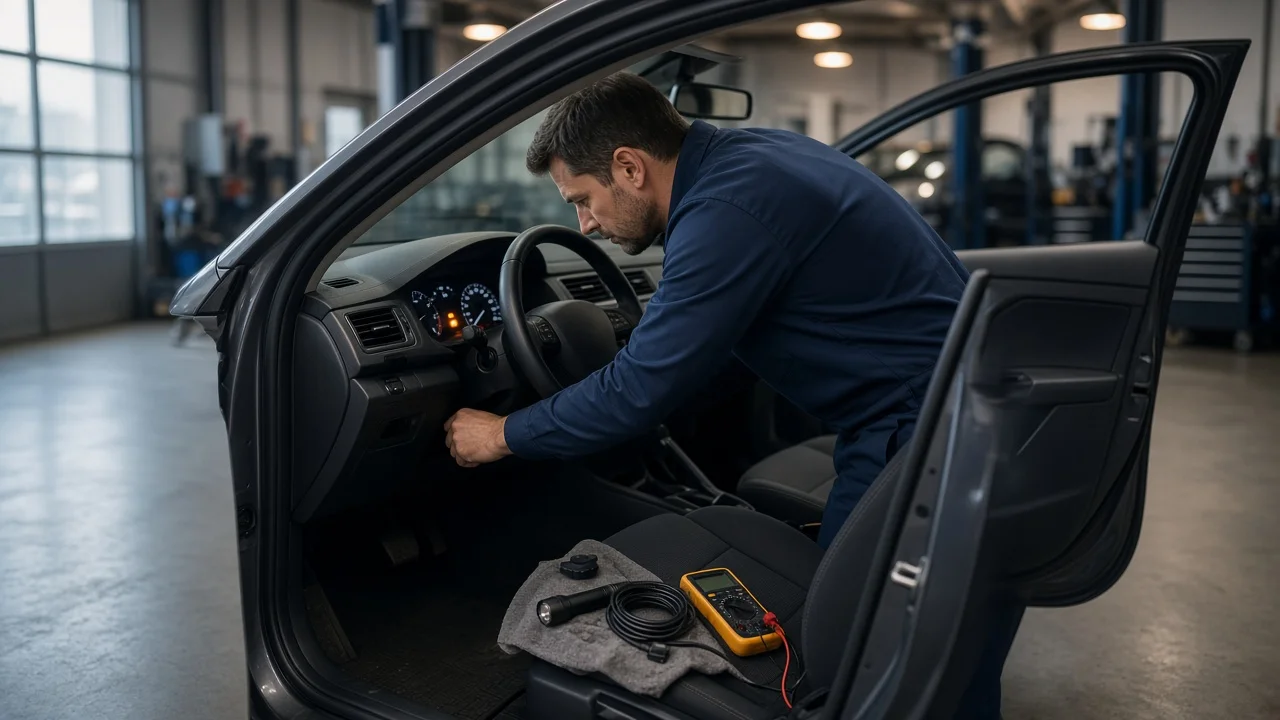
A red brake warning light on a Toyota Corolla deserves immediate attention. Depending on model year and powertrain, it can mean three things: the parking brake is still engaged, the brake fluid level has dropped, or the car has detected a fault in the brake control system. The steps below help you record what you see and separate the likely causes. They also help you decide whether the car should be driven at all before a technician inspects it.
Establish the symptoms
Start by noting exactly how the light behaves. On a healthy car, the brake warning lamp lights briefly as a bulb check when the ignition or power switch is turned on. It then goes out once the system is ready and the parking brake is released. Record whether the light stays on constantly, flickers, appears only in turns or under hard braking, or comes on after the car has been parked on a slope. Also note whether the amber ABS light, a slip indicator or a message on the multi-information display appears at the same time. These combinations narrow the possibilities considerably.
Then think about how the car feels and what has changed recently. Important signs include a pedal that sinks lower than usual, feels spongy or needs more effort. The same goes for grinding or squealing noises, a pull to one side, or a burning smell after driving. Recent work matters too. New brake pads, a brake fluid flush, battery replacement, a jump start or a parking brake adjustment can all relate to the warning. Write down the model year and trim, and whether the car is a hybrid, because brake hardware and warning logic differ across Corolla generations.
Distinguish plausible causes
The simplest cause is a parking brake that is not fully released. If the light goes out when the lever is fully lowered, or when the electronic switch is released with the brake pedal applied, that strongly supports this explanation. If the light stays on with the parking brake clearly off, a misadjusted or faulty parking brake switch is still possible, but a fluid or system issue becomes more likely. Low brake fluid is the next major cause. The reservoir has a level sensor, and the light comes on when fluid falls below its threshold. A level that has drifted down slowly over many miles usually reflects worn brake pads. As friction material wears, the caliper pistons extend and fluid moves out of the reservoir to fill the extra space.
A sudden or large drop instead suggests a leak, which is far more serious. Likely places are a caliper, wheel cylinder, brake line, hose or the master cylinder. Wet residue near a wheel, on the inside of a tire or under the car supports a leak, while a dry system with worn pads weakens that explanation. A third group of causes is electronic. When the red brake light appears together with the ABS light, the car may have disabled electronic brakeforce distribution, which controls how braking force is shared between the front and rear axles. Hybrid Corollas use an electronically controlled brake system, so a warning there can also reflect a hydraulic control or sensor fault that only a scan tool can identify. Some triggers involve no mechanical problem at all, such as damaged wiring, a faulty level sensor connector or low system voltage after a weak battery.
Checks in a useful order
Begin with checks that need no tools. Park on level ground, apply the service brake and confirm the parking brake is fully released. With the engine off and the car cool, open the hood and find the brake fluid reservoir, which is normally marked with minimum and maximum lines. Note where the fluid sits and what color it is. Look around each wheel and along the inside of the tires for wetness, and check the ground where the car is usually parked. Finally, with the engine running, press the brake pedal and judge whether it feels firm and stops at its usual height.
Other checks need tools, specifications or a qualified technician. Measuring pad and rotor thickness against the wear limits in Toyota service information usually means removing the wheels and supporting the car safely. Proper equipment is also needed to inspect calipers, hoses and lines for seepage, test the fluid level sensor, and read stored trouble codes from the ABS and brake control modules. On hybrid models, some brake work requires putting the system into a specific service mode first, so opening the hydraulic system without the correct procedure is not a home job. Do not top up the fluid as a first step, because that can hide how much was lost. If fluid is added later, use only the type specified on the reservoir cap or in the owner's manual.
Interpret the findings
Each result answers a specific question but rarely tells the whole story. If the light clears once the parking brake is released, the cause is settled. A light that later returns intermittently may still point to the switch or its adjustment. Fluid near the minimum line, combined with pads measured close to their wear limits, supports normal wear as the reason for the drop. Fitting new pads pushes the caliper pistons back and raises the reservoir level again, so the reservoir should not be filled to the maximum line beforehand. If the pads still have plenty of friction material but the fluid is low, treat it as a leak until a technician proves otherwise.
A full reservoir with the light still on shifts attention to the sensor, its wiring or the brake control system. A diagnostic code shows which module reported the fault and under what condition. However, it points to a circuit or function rather than to a specific failed part. Confirm the fault with the tests in the service information before replacing sensors, actuators or modules. Also check vehicle fitment for any part by model year, trim and powertrain, since Corolla brake components vary between generations and between gasoline and hybrid versions.
Urgency and next action
Stop driving and arrange towing or mobile service if any of these apply: the pedal sinks toward the floor or feels soft, stopping distances have grown, fluid is visibly leaking, or the reservoir is empty or below the minimum line. The same applies if the red light comes on together with the ABS light and the car brakes differently. A grinding metal sound is also a reason to stop, because it can mean the pads are worn past their friction material and are damaging the rotors. If the only finding was a parking brake that was not fully released, normal use can resume once the light stays off. In every other case, no driving distance can be considered safe until the brake system has been inspected.
When you book the repair, tell the technician the model year and trim and whether the car is a hybrid. Share your notes on when the light appears, which other warnings showed, how the pedal feels, the fluid level you observed, and any recent brake or battery work. Mention whether you added fluid and how much. This shortens diagnosis and helps the shop tell whether the job is pad and rotor service, a hydraulic leak repair or an electrical fault, instead of replacing parts by guesswork.