Toyota Camry Transmission Fluid: Type and Change Guide
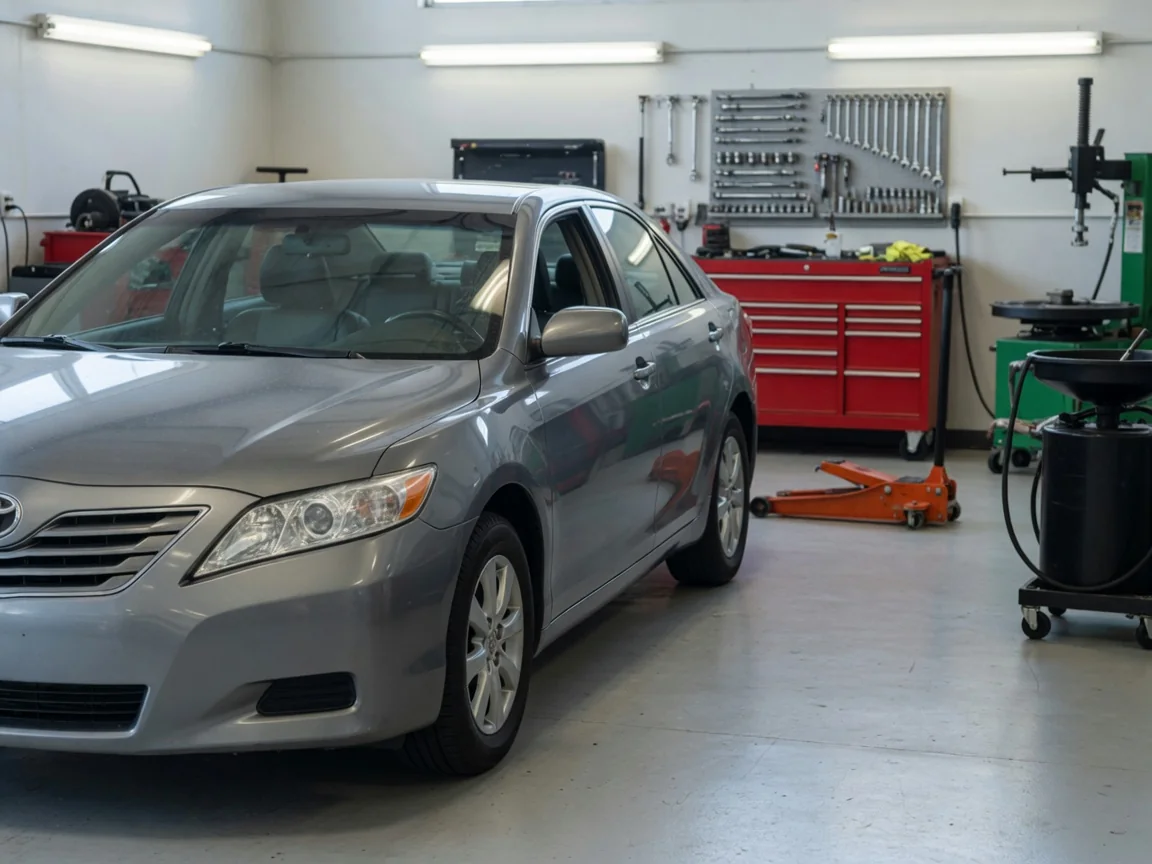
Selecting the right Toyota Camry transmission fluid starts with the vehicle itself, not a generic product label. Model year, engine, hybrid status, transmission identification, and market all influence the specification and how a fluid change is performed. This guide explains how to confirm the installed unit, match fluid to Toyota service information, interpret the maintenance schedule, and understand drain-and-refill service without treating a catalog name as a parts list.
Identify Your Camry’s Model Year and Transmission
The transmission fluid for a Toyota Camry is not one product for every car. Before buying or adding anything, record the model year, engine family, whether the vehicle is a hybrid, the market it was built for, and the transmission identification on the unit or in the service data. Those details decide both the transmission fluid specification and whether the service is a simple drain and refill or a temperature-controlled level procedure. A sales brochure generation name does not replace that identification.
The VIN, owner's literature, and Toyota service information are the practical way to confirm what is installed. Decoding the VIN and matching it to factory application data can show the transaxle code, hybrid versus conventional layout, and the documented fluid requirement for that build. Two Camrys from the same generation can use different transmissions after a mid-cycle change, a market-specific gearbox, or a hybrid transaxle. Relying on a generation label alone can point you to the wrong fluid or the wrong fluid level check method.
Confirm the Fluid Specification for Each Camry Generation
Once the model year and transmission are identified, the next step is to confirm the transmission fluid specification in vehicle-specific documentation, not on a store shelf. Requirements can change by generation, and they can also change within a generation when Toyota used more than one automatic, a remaining manual gearbox, or a hybrid transaxle. Older Camrys with a manual transmission used a different lubricant family than conventional automatics, and hybrid applications are not interchangeable with those conventional units. Any product you consider must state the same specification the service information lists for that exact application.
Compare the bottle or data sheet wording to the factory requirement character for character. A similar Toyota-branded automatic fluid, a universal multi-vehicle blend, or a product that only lists Camry as an application example is not confirmation. Details such as which automatic was fitted in a given model year, which hybrid transaxle is present, and which market the car was sold in are unresolved until the service information for that VIN is checked. Do not purchase or add transmission fluid on a Toyota Camry until that match is documented.
Determine When Transmission Fluid Service Is Due
The applicable maintenance schedule lives in the owner's literature and Toyota service information for that model year and market. Those documents distinguish inspection of the transmission fluid from replacement. One Camry may call for periodic inspection of condition and level, while another lists a drain and refill under a severe-use or time-based plan. There is no single mileage or calendar interval that applies to every Camry, so the printed schedule for the vehicle in front of you is the source, not a general rule of thumb.
Documented operating conditions can change which requirement applies. Repeated short trips, mountain driving, heavy traffic, trailer use where the vehicle is rated for it, or consistently high ambient temperatures are the kinds of conditions schedules often treat differently from light highway use. If the service history is incomplete, that gap is a reason to discuss inspection and possible service with a qualified technician rather than a reason to assume the fluid must be replaced immediately. Changing transmission fluid on a Toyota Camry is a scheduled or condition-based decision, not a default after every oil change.
Recognize Fluid Concerns and the Limits of Visual Checks
Safe observations still matter. Fresh spots beneath a parked Camry, a transmission-related warning message, delayed engagement when selecting Drive or Reverse, or a change in shift quality are reasons to arrange an inspection. Those clues describe how the vehicle is behaving; they do not identify which fluid is in the unit or prove that the fluid caused the change. Color, odor, and driving feel are similarly limited. Dark fluid can appear in a healthy unit that has simply aged, and relatively clean fluid can still be the wrong specification or at an incorrect level.
A fluid level check on a Toyota Camry is vehicle-specific. Some transmissions use a dipstick; many later automatics and hybrid transaxles do not, and the check may require a defined fluid temperature, a particular gear selector position, and access to an underbody port. Do not assume the unit is user-serviceable just because older Camrys were. If you see an active leak, loss of drive, or clearly abnormal operation, stop in a safe location and arrange professional assessment rather than topping off with an unverified product.
Understand the Transmission Fluid Change Process
A professional Toyota Camry transmission fluid change is typically a drain and refill, not a guess at total capacity. The technician confirms the specification for the identified transmission, inspects for leaks, drains what the pan or drain path will release, refills with the documented fluid, and then verifies the level with the method that unit requires. Drain-and-refill quantity and total transmission capacity are different measurements. The amount that leaves the pan is not the sum of the torque converter, cooler, and valve-body volume, so only application-specific service data should set the fill target.
Many later Camry transmissions set level by fluid temperature and vehicle position. Too cold or too hot, or a car that is not level, can make an apparently correct fill too high or too low once the unit reaches operating temperature. Lifting the vehicle, handling hot fluid, running-engine checks, and opening underbody fill or level ports belong with a properly equipped technician. Machine flushing, cooler-line exchange, and filter or pan work are separate decisions justified by the procedure and the hardware, not by a general request to change transmission fluid on a Toyota Camry.
Confirm the Service Scope and Document the Results
The estimate for a Toyota Camry transmission fluid change should name the transmission application, the fluid specification being used, the service method such as drain and refill, and any seals, pan gasket, filter, or related parts that the procedure actually requires. If those items are not identified, the job is not fully specified. Completing the fluid change also does not establish why the unit slips, shudders, or engages late, and it cannot promise to repair those symptoms. Fluid service restores the documented lubricant; it is not a diagnosis of clutch, valve-body, or hybrid transaxle faults.
After the work, the technician should verify fluid level by the vehicle-specific method, inspect for leaks at the pan, cooler lines, and axle seals as the procedure allows, and assess any operating concerns that were reported before the service. Record the date, mileage, fluid specification, quantity used, and the findings. That record becomes the service history the next maintenance decision depends on, especially when prior paperwork is missing. Transmission fluid Toyota Camry applications vary enough that the next shop, or the next owner, needs those notes rather than an assumption that every Camry was filled the same way.