Toyota Camry Timing Belt: Years, Interval and Cost
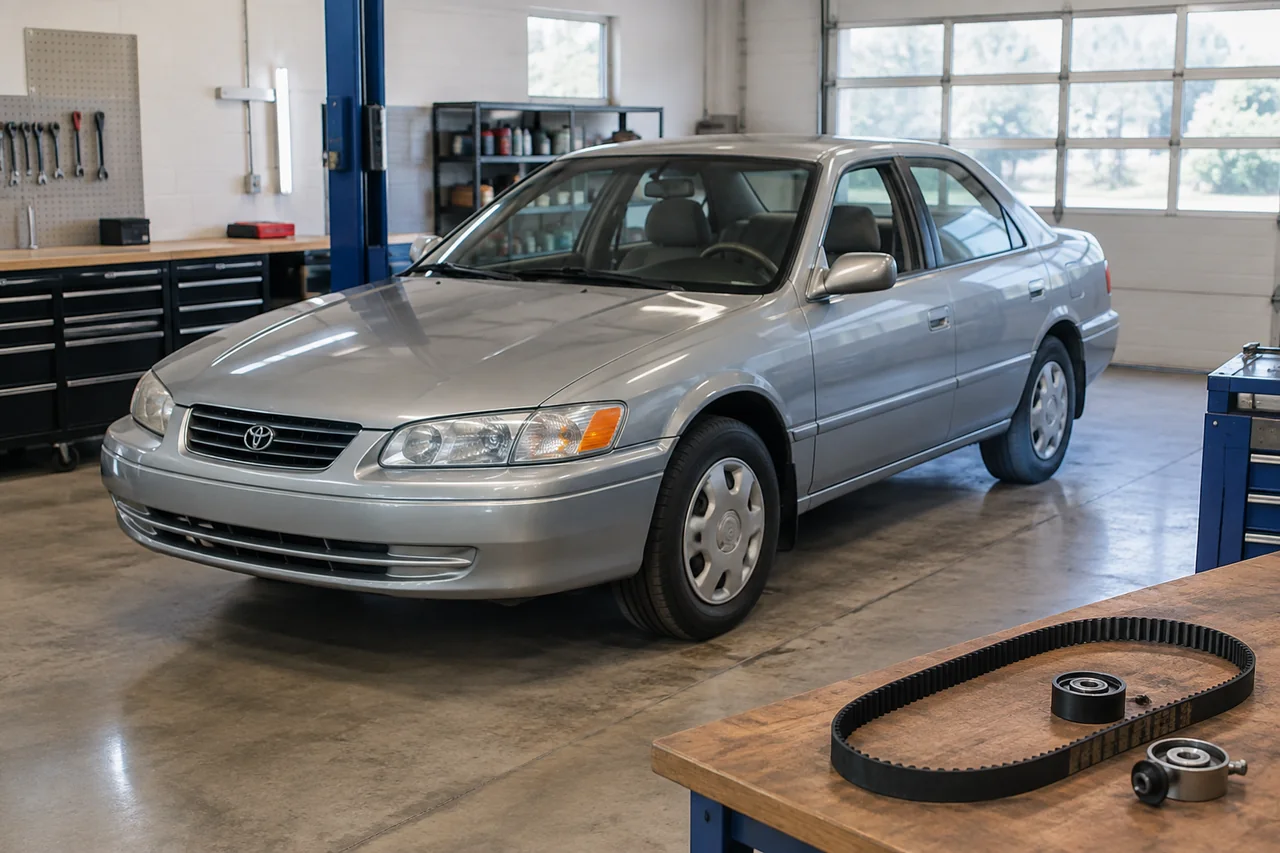
Changing a timing belt on a Toyota Camry is not a one-size service. Some Camry engines use a rubber timing belt that must be replaced on a schedule; others use a chain and follow different guidance. Before you replace a timing belt on a Toyota Camry, confirm the year, engine, and service records. That step also frames interval, parts, labor, and the cost of timing belt replacement for a Toyota Camry.
Identify Camry Years and Engines That Use a Timing Belt
A Toyota Camry timing belt is engine-specific, so model year by itself is not a complete answer. US-market Camrys span years with overlapping displacements and engine codes, and some of those engines drive camshafts with a belt while others use a chain. Identification starts with the owner's manual, underhood labels, and build documentation, then adds the engine code when two engines were offered in the same year. A VIN lookup through a dealer or service provider can confirm what left the factory when paperwork is incomplete or the engine bay looks mixed.
The belt keeps crankshaft and camshaft rotation in step so valves and pistons move in the intended order. Timing belt replacement for a Toyota Camry applies only to engines that actually use a belt; a chain-driven Camry follows different parts and interval rules. A US-market application can also differ from a vehicle sold elsewhere. An engine swap or undocumented rebuild can change what is under the hood, so match visual engine identification to the VIN and records before ordering a timing belt in a Toyota Camry.
Confirm the Timing Belt Application on a 2000 Camry
A 2000 Toyota Camry timing belt job starts with the engine in that car, not the calendar year alone. US-market 2000 Camrys were offered with more than one engine, so a shop should verify belt fitment for the installed engine before quoting parts. Identification for this model year should come from the underhood label, engine code, and VIN rather than a neighboring year's chart. Adjacent years can share a body style with different cam-drive designs, so the timing belt for a Toyota Camry 2000 must be confirmed as a 2000 application.
A parts supplier needs the engine family and whether associated hardware such as a tensioner is being replaced with the belt. Dated invoices and recorded mileage establish replacement history on a 2000 Camry; a seller's verbal claim does not show what parts were installed or at what odometer reading. If records are missing, treat the timing belt on a 2000 Toyota Camry as unverified until a shop confirms documentation and engine identity. Keep those details tied to this model year rather than assuming a later Camry's belt applies.
Find the Correct Replacement Interval for Your Camry
The replacement interval for a Toyota Camry timing belt belongs in the maintenance schedule for that exact model year, engine, and market, not in a generic Camry rule of thumb. When the applicable schedule lists both a mileage limit and an elapsed-time limit, use whichever comes first. A low-mileage car that sits for years can still reach the age limit even if the odometer looks early. Confirm the printed or dealer-provided schedule rather than copying an interval from a summary or from a different engine in the same generation.
Missing service records should not be treated as proof that a timing belt change already happened. Ask a shop for a documented maintenance assessment that compares the odometer, the in-service date, and any invoices that actually name the belt. Quiet, normal driving and low annual mileage do not establish remaining belt life, and they do not cancel an age requirement in the schedule. Rubber ages with heat, oil exposure, and calendar time, so a timing belt change on a Toyota Camry can be due even when the engine still starts and runs without drama.
Understand What a Timing Belt Replacement Includes
Toyota Camry timing belt replacement is more than sliding a new belt onto pulleys. The technician first confirms the engine uses a belt, then replaces that belt, inspects related hardware, and checks that the engine runs in time afterward. Access often requires covering, accessory, and support components to come off, which is why this is billed as substantial labor rather than a quick roadside swap. After the work, a running inspection looks for leaks, unusual noise, and correct idle behavior.
Because those covers are already off, a technician may assess the timing belt tensioner, idler pulley, seals, and water pump for wear or seepage, but only after confirming those parts belong on that engine's cam-drive layout. A written labor estimate should separate scheduled belt replacement, condition-based repairs found during inspection, and optional items that need owner approval. Engine timing, tight packaging, and application-specific locking tools make this a job for a shop with the right equipment and experience. Skipping that distinction on the estimate can hide extra cost after the engine is opened.
Understand the Cost of Camry Timing Belt Replacement
The cost of timing belt replacement on a Toyota Camry is driven by the engine, the local labor rate, billed labor time, the parts chosen, and any associated work you authorize. A four-cylinder layout and a V6 layout do not automatically share the same hours or hardware, and a water pump or tensioner added to the job changes both parts and time. Aftermarket, OEM, and kit contents also differ, so two shops quoting timing belt replacement for a Toyota Camry can still write very different invoices. Location matters because shop rates and taxes are local, not national.
A written estimate should name the belt, related components, labor, applicable fluids, taxes, and shop fees. Confirmed leaks or a worn idler can raise the total, and that extra work should be authorized before it is performed. Timing belt replacement cost for a Toyota Camry cannot be a single national number, because a useful quote needs the model year, engine, location, service history, and a defined scope. Ask the shop what is included in the cost to replace a timing belt on a Toyota Camry and what inspection could add.
Know When Symptoms Need Professional Assessment
A timing belt in a Toyota Camry can reach its replacement deadline with no obvious warning. Sound, visible rubber at the edge of a cover, or a quiet idle cannot establish remaining life. Unusual engine-area noises, hard starting, or a sudden stall are nonspecific; they can come from accessories, ignition, fuel delivery, or other faults, and they are not proof the belt has failed. Those symptoms need professional diagnosis rather than an assumption that changing the timing belt on a Toyota Camry will automatically restore the engine.
Limit owner checks to service records, dashboard warnings, and visible leaks with the engine off. Do not remove timing covers or touch moving components to inspect the belt. After sudden stalling or suspected timing failure, stop safely and arrange professional assessment instead of repeated starting attempts. Whether a mistimed engine can bend valves depends on the verified design of that Camry engine, so damage risk should not be assumed or dismissed until the application is confirmed. A shop can then decide whether the next step is scheduled replacement or a broader diagnosis.