Toyota Camry Engine Oil Grades and Capacities, Including 2007
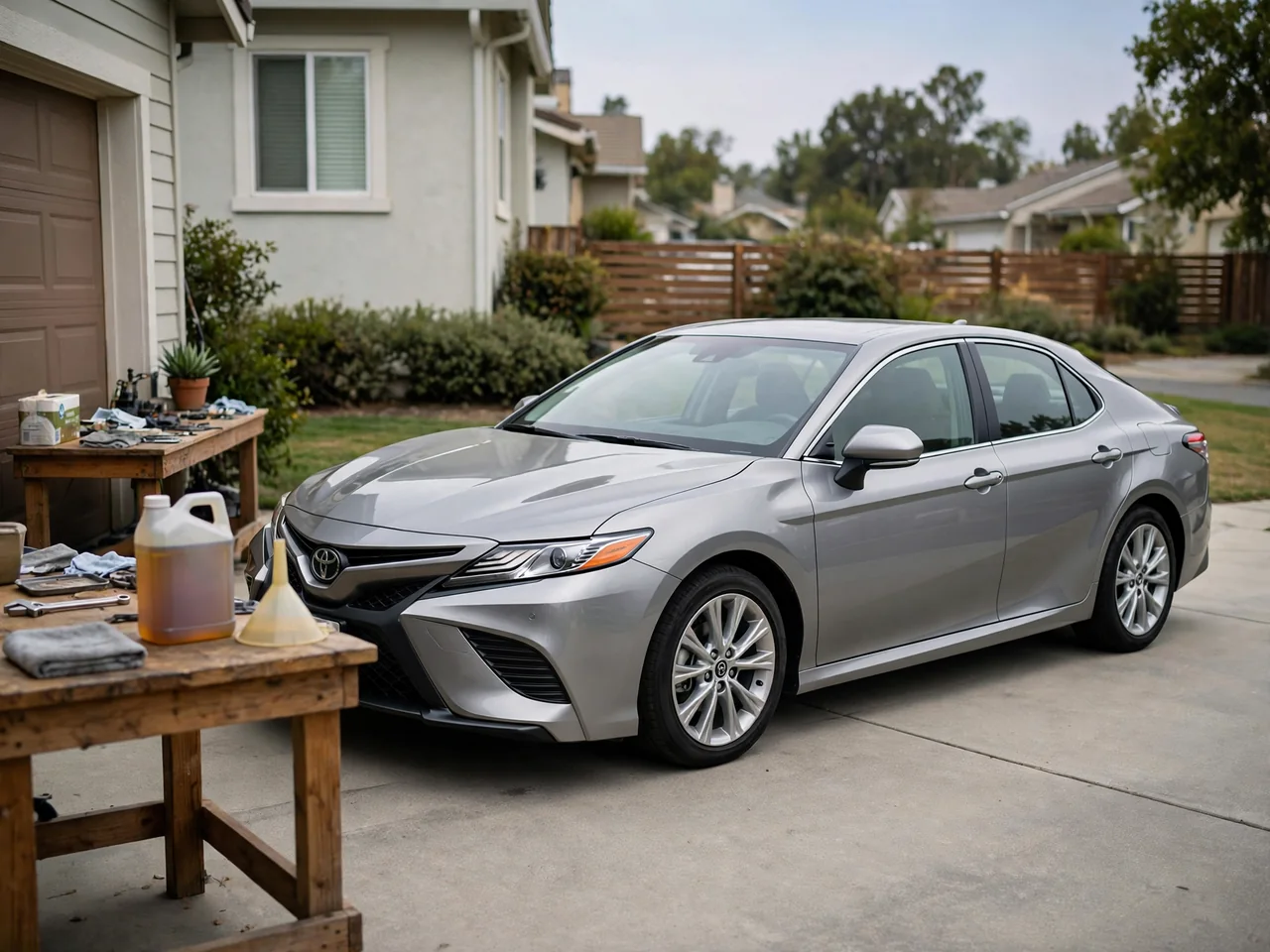
Choosing engine oil for a Toyota Camry starts with the exact car, not just the nameplate. Over the years, Camry models have used different four-cylinder, V6, and hybrid powertrains, and each has its own SAE viscosity grade, quality specification, and oil refill capacity. This guide explains how to confirm those details and read them correctly, and it gives the 2007 Toyota Camry engine oil question its own section.
Identify Your Camry’s Model Year and Engine
Toyota Camry engine oil requirements depend on four things: the model year, the engine, whether the car is a Camry hybrid, and the market it was built for. Toyota has changed its recommendations as engines evolved, and a four-cylinder and a V6 from the same year can call for different grades or quantities. Hybrid powertrains start and stop the gasoline engine often, which can shape how the manual states oil requirements. Sales market matters because climate, fuel quality, and local oil standards led manufacturers to publish different guidance for otherwise similar cars.
The owner's manual for your exact car is the main reference. The maintenance guide and dealer service records can back it up. For engine identification, the VIN on the dashboard and door jamb encodes the vehicle's details. On many North American vehicles, the eighth character identifies the engine, and a dealer can decode it for you. The emissions label under the hood also names the engine family. This article covers US-market cars. Owners of imported or gray-market Camrys should use documentation from the vehicle's original market.
Find the Specified Oil Grade by Camry Generation
A generation name, such as a body code or a broad range of years, is handy shorthand. It can't tell you which engine oil your Toyota Camry needs, though, because specifications can change partway through a generation when an engine is updated or replaced. The owner's manual for that exact model year and engine decides the choice. The SAE viscosity grade appears on containers in a form like 0W-20 or 5W-30. The number before the W describes how the oil performs when cold, and the second number describes its viscosity at operating temperature.
Viscosity is only half the requirement. The API service category, shown in the round API donut symbol on the bottle, means the oil passed a defined set of performance tests for gasoline engines. The ILSAC specification, shown by the starburst mark, adds fuel-economy and deposit-control standards. Your manual may list one or both. Some manuals also allow an alternative grade, often only in certain conditions, such as a temperature range or when the preferred grade isn't available. Some also say to return to the primary grade at the next change. Use an alternative only when your manual clearly allows it.
Read Oil Refill Capacities for the Correct Engine
Toyota lists the oil refill capacity separately for each engine, usually in both US quarts and liters in the specifications chapter of the manual. Read the label on each figure carefully. One number may apply when the oil filter is replaced and a smaller one when it isn't, because the filter holds oil of its own. The numbers vary by engine and year, so the table in your own manual, or specifications from a dealer, is the only figure to trust for your engine.
Service refill capacity is not the same as the dry fill used when an engine is first assembled. After draining, some oil stays in the passages, the oil pump, and the low spots of the pan. How much remains depends on drain time, how level the car is, and oil temperature. Treat the listed amount as a guide, not a guarantee. A sensible approach is to add slightly less than the listed amount and follow the manual's procedure. Then check the dipstick before adding the rest.
Check Oil Requirements for the 2007 Toyota Camry
The 2007 Toyota Camry engine oil question gets its own section because the US lineup that year included a four-cylinder, a V6, and the Camry hybrid. Each one has its own viscosity, oil quality requirement, and capacity with filter. Don't rely on a single figure repeated across websites. Find the 2007 owner's manual or maintenance guide in the glovebox. If it's missing, a Toyota dealer can look up the specifications by VIN. That page is the final word on engine oil for your 2007 Toyota Camry.
Identify the engine before you use any 2007 recommendation. Engine size is often printed on the engine cover, the emissions label names the engine family, and the VIN confirms it. You can usually spot a hybrid by its badges and the hybrid system displays on the dashboard. Parts-store catalogs and oil bottle labels sometimes suggest grades that differ from the manual, especially for older cars, because newer, thinner oils are marketed broadly. When sources disagree, the owner's manual for your exact car wins. A bottle claiming it fits all Toyotas does not override it.
Check the Oil Level and Top Up Safely
Check the oil on level ground with the engine off. Follow the manual on whether the engine should be warm or cold and how long to wait so the oil can drain back into the pan. Pull out the dipstick, wipe it clean, push it all the way back in, and pull it out again. The oil should sit between the low and full marks. If it's near or below the low mark, add a small amount of the specified oil, wait briefly, and check again. Repeat until the level is in range, without going past the full mark.
How much to add depends on what the dipstick shows, not on the service refill capacity. Pouring in the full amount listed for an oil change would badly overfill an engine that is only a little low, and too much oil can foam and cause other problems. The exhaust manifold, radiator, and nearby parts stay hot long after you shut the engine off, so let the car cool before reaching in. Wipe up any spills, because oil can smoke or catch fire on hot parts. If you can't reach the filler cap or dipstick safely, have a shop do it.
Recognize Oil Problems That Need Professional Attention
Two dashboard lights are often confused. The maintenance reminder is a scheduled alert based on time or mileage. It tells you service is due but says nothing about which oil to use. The oil-pressure warning, usually a red oil-can symbol, means the system has detected low oil pressure. That could come from a low oil level, a sensor fault, or a mechanical problem. It doesn't tell you the correct oil grade either. If the pressure warning comes on while you're driving, pull over safely, turn off the engine, and arrange assistance instead of driving on.
If the oil level keeps dropping between changes, you see drips under the car, or you hear new ticking or knocking, keep notes. Write down the mileage, how much oil you added, and when the noise happens, and give those notes to a technician. Symptoms alone don't reveal the cause. A fault code from a scan tool is also evidence to interpret, not proof that a part has failed. Switching to a thicker oil without the manual's approval doesn't diagnose anything. It can hide a real problem, and it goes against the specified grade.