Toyota Camry Check Engine Light: Causes and Diagnostic Next Steps
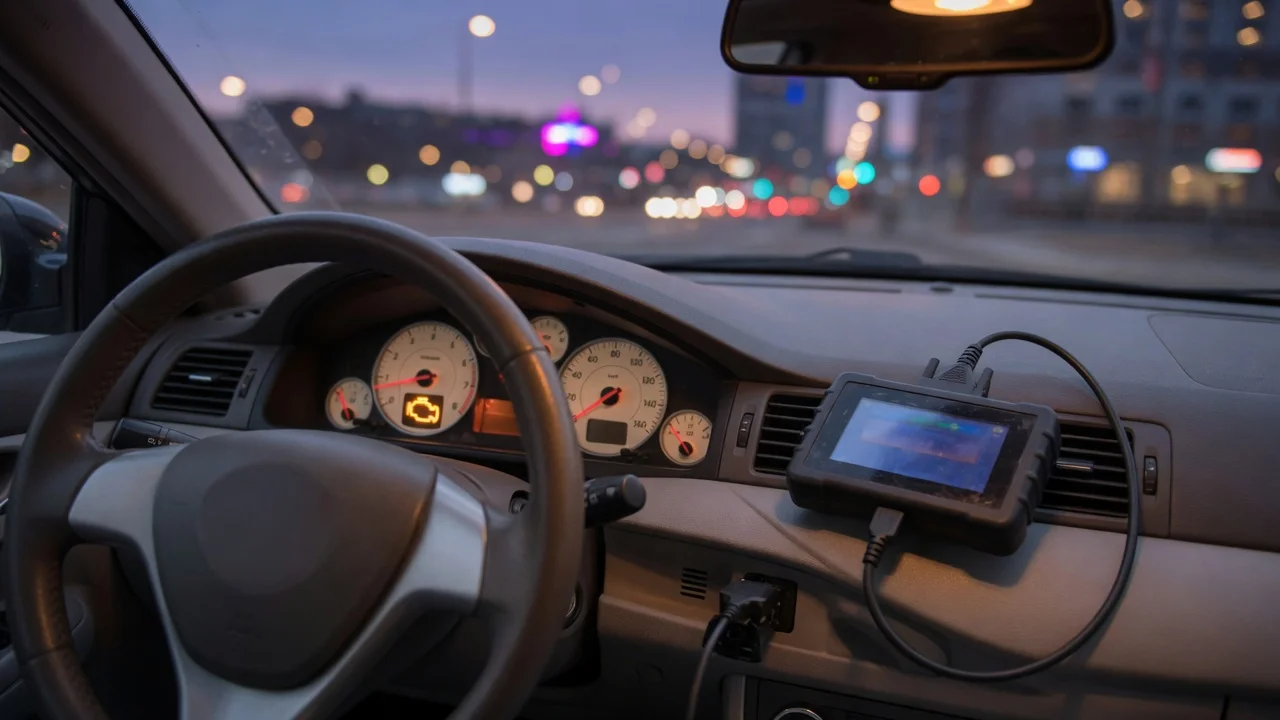
What the check engine light means in a Toyota Camry
The check engine light is the Camry's primary signal that the engine control system has stored a diagnostic trouble code. It does not identify a failed part by itself. The light can indicate a range of conditions, from a loose fuel cap to an emissions or engine performance fault, and the same warning may appear on different Camry generations and powertrains for different reasons. A stored code should be treated as evidence to investigate rather than proof of what needs to be replaced.
How to judge whether the car is safe to continue driving
Camry owners should first distinguish between a steady check engine light and a flashing one. A steady light usually allows continued driving to a repair facility, provided the engine runs normally and no other severe symptoms are present. A flashing check engine light indicates a misfire condition that may be active enough to damage the catalytic converter or create a drivability hazard, and the safest action is to reduce load and have the vehicle diagnosed promptly.
Common check engine light causes in a Toyota Camry
Common reported causes include\n• loose, missing or damaged fuel cap\n• oxygen sensor faults\n• catalytic converter efficiency faults\n• ignition coil or spark plug misfire codes\n• mass airflow sensor faults\n• evaporative emission system leaks\n\nThese are plausible causes rather than a list of certain failures for any one Camry. Model year, engine and market can affect which components are present and how the system reports faults.
Basic checks that require no special tools
• Check the fuel cap: if it is loose, tighten it and continue driving through several complete drive cycles before assuming the fault is still present\n• Listen for rough idle, hesitation or misfire-like behavior\n• Check for recent work near the engine, such as a disconnected or damaged wiring connector\n• Note whether the car is in reduced power mode
Tightening a loose fuel cap does not clear a code immediately. The engine control module may require multiple completed drive cycles, and the drive-cycle criteria vary by model year and fault type, before it can run and pass the relevant monitor and turn the light off. Disconnecting the battery to force a reset can erase readiness monitor data and is not the recommended way to confirm a repair.
Reading the trouble code
A diagnostic scan is the most reliable way to move from a warning light to a supported cause. The scan retrieves the code, its status, freeze-frame data from the moment the fault was recorded, and readiness monitor results. A code such as a rich or lean fuel trim reading points to an observed condition, while the scan data helps show whether the fault is intermittent or present now.
How to use scan results without guessing
• Record the exact code, including any leading letter and all digits\n• Read the freeze-frame data rather than replacing the first component named by the code description\n• Check whether the same code returns after a verified test drive\n• Treat an oxygen sensor code as a possible result of an exhaust leak, misfire or fuel control fault, not only a bad sensor
When to stop using the vehicle
Stop-use or professional-service conditions include a flashing check engine light, severe power loss, strong fuel odor, continuous rough running, rising temperature warning, or any code that suggests a fire, fuel system or catalytic converter risk. For these conditions, continuing to drive may make the underlying fault worse or create a safety risk, and diagnosis should move beyond home inspection.
Professional diagnosis is appropriate when
• the code returns after a verified basic repair\n• the scan points to network, hybrid or transmission system faults beyond basic engine checks\n• the fault requires active component testing or electrical diagnosis\n• removal or replacement involves safety-critical parts or systems
Limitations of this guidance
This guide describes general check engine light diagnosis for the Toyota Camry and does not claim to be a model-year-specific repair manual. Exact code definitions, drive-cycle requirements, component locations and test specifications can differ by generation, engine, trim and market. Apply this guidance as a starting point; use the appropriate service information for the specific car before replacing parts or performing service.