Toyota Camry and Corolla EGR Valve Location and Service Guide
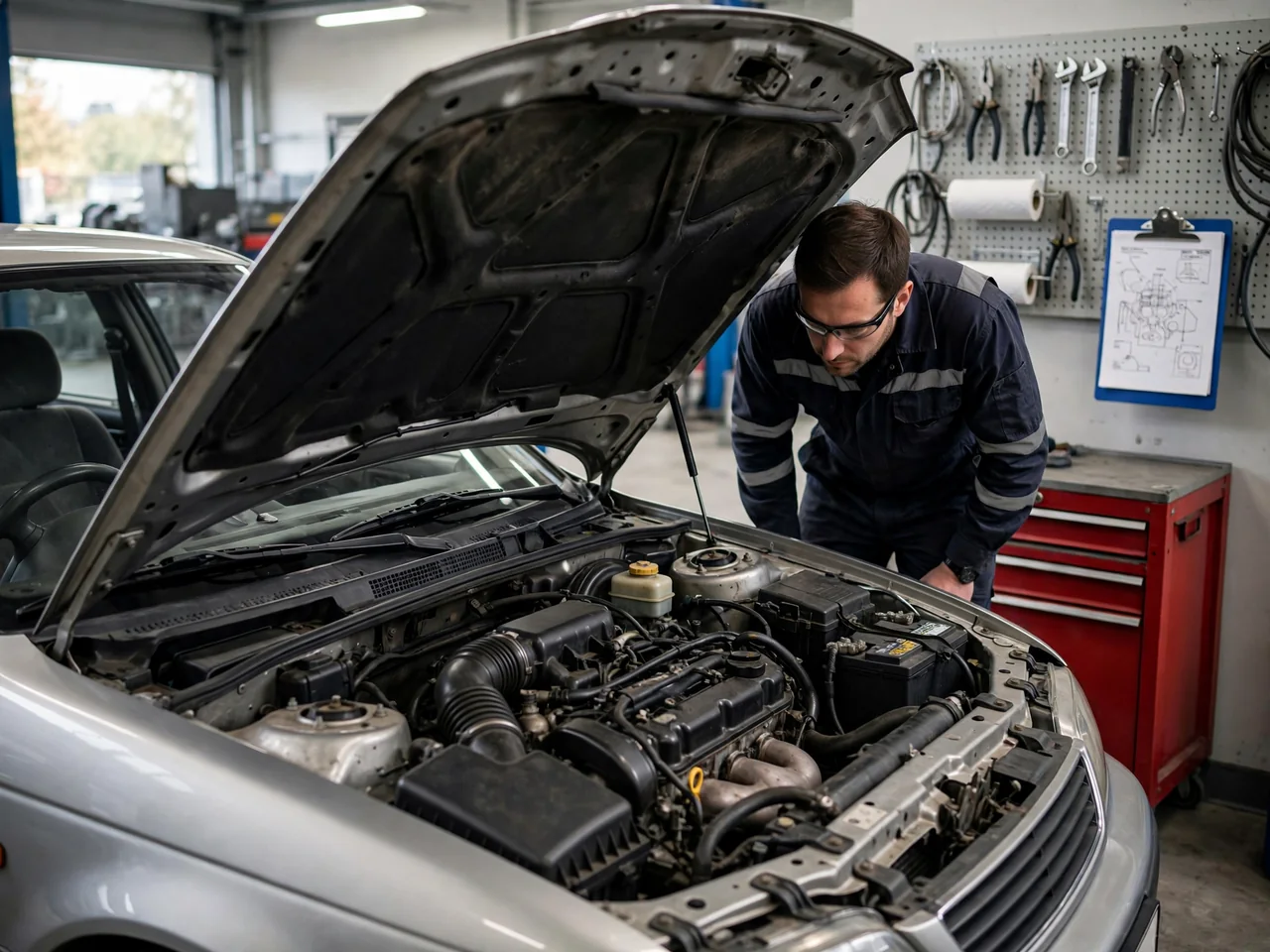
Finding the EGR valve on a Toyota Camry or Corolla depends on engine, market, and emissions configuration, not a year-only catalog listing. Exhaust gas recirculation, when fitted, meters exhaust into the intake to help control nitrogen oxide emissions. A 1999 Toyota Camry EGR valve, a 2000 or 2001 Camry part, a 1996 through 1998 layout, or a Toyota Corolla EGR valve can sit in different places and use different controls.
Identify Your Camry’s Engine and EGR Equipment
When a Camry is equipped with exhaust gas recirculation, a controlled fraction of exhaust returns to the intake so combustion temperatures stay lower and nitrogen oxide formation is reduced. That hardware is not universal across every 1996, 1997, 1998, 1999, 2000, or 2001 Camry. Engine identification, market, and emissions configuration decide whether a discrete EGR valve is present and which vacuum hoses or connectors belong to the system.
Establish the model year, engine, and emissions package before identifying a valve or ordering parts. Use vehicle-specific service information and the underhood emissions label, where readable, to confirm installed equipment. A part labeled only as a Toyota Camry EGR valve cannot establish location or fitment, because similar housings serve different engines and control schemes. The wrong valve leaves EGR passages or vacuum circuits unmatched.
Locate EGR Components on a 1996–1998 Camry
For a 1996, 1997, or 1998 Toyota Camry, locate EGR equipment only after engine and emissions configuration are confirmed, then follow that year’s service diagram. The diagram identifies the valve, exhaust connection, and associated control components. An EGR valve for a 1996 Toyota Camry, a 1997 Toyota Camry EGR valve, or the 1998 Toyota Camry EGR valve can differ in mounting and hose routing even when housings look related.
Inspect with the engine off and cool, from a stable stance, without reaching around hot exhaust parts or moving belts. Trace only the exhaust feed, intake path, and vacuum hoses the diagram assigns to EGR control. If access is unclear or the hardware does not match, stop and have a technician identify components before anything is loosened. Guessing at a nearby sensor or vacuum line can create new drivability problems.
Find the Correct EGR Valve for a 1999–2001 Camry
Treat a 1999 Toyota Camry EGR valve, a 2000 Toyota Camry EGR valve, and a 2001 Toyota Camry EGR valve as separate applications. Confirm engine and emissions details first, because an EGR valve for a 1999 Toyota Camry or an EGR valve for a 2000 Toyota Camry can still belong to more than one engine family. Identify the valve from the applicable diagram and visible connections rather than assuming those three years share one layout.
Verify catalog fitment with year, engine, and emissions data, and compare any readable identification on the existing valve. Year labels, photos, and similar-looking housings do not confirm that an EGR valve for a Toyota Camry 1999, 2000, or 2001 will seal and operate correctly. A 99 Toyota Camry EGR valve still needs those same vehicle details. A look-alike casting can leave the control circuit or gasket unmatched.
Confirm Corolla EGR Equipment Before Looking for the Valve
The Corolla model name alone does not establish whether a separate EGR valve is fitted. A Toyota Corolla EGR valve can belong to engines, markets, and emissions packages that use a discrete valve or manage recirculation another way. Record year, engine identification, market, and emissions configuration, then retrieve matching service information. Those details decide whether an EGR valve location on a Toyota Corolla even applies.
Once the diagram is verified, use it to find the valve and recognize exhaust, intake, and control connections with the engine off and cool. Do not reach around hot exhaust hardware or disturb belts for a better view. A missing or unfamiliar part is not proof that emissions equipment was removed; it may mean a different control method, a relocated assembly, or incomplete identification. Confirm the configuration before assuming the system was deleted.
Recognize Symptoms and Establish What Testing Is Needed
Rough idle, stalling, hesitation, or a check engine light can accompany EGR problems, but they also appear with vacuum leaks, ignition faults, and intake restrictions, so they do not identify a failed valve. Record when the condition occurs, whether the engine is cold or fully warmed, and the driving situation such as idle, light cruise, or deceleration. Those notes help decide whether flow testing, control checks, or inspection of carbon deposits in EGR passages comes next.
Retrieve stored codes and verify each definition against vehicle-specific service information before interpreting them. Manufacturer-dependent codes require that confirmation; a code is evidence to interpret, not proof the EGR valve failed. Professional flow testing, control testing, and passage inspection are needed when symptoms persist or the valve cannot be assessed from outside. If stalling or severe drivability symptoms make continued driving unsafe, stop in a safe location and arrange inspection.
Understand EGR Cleaning Limits
Carbon deposits can restrict a valve or the EGR passages that feed it, disturbing idle quality or recirculation flow. Visible buildup alone does not establish the cause of a symptom, because deposits may be incidental while a control, diaphragm, or electrical fault is the actual problem. Confirm that cleaning is permitted for the identified component under applicable service guidance. Some valves are specified as serviceable; others are replaced as assemblies.
Cleaning cannot correct every mechanical, diaphragm, or electrical failure. A worn pintle, ruptured diaphragm, or open position sensor will still fail after deposits are removed. Do not attempt removal, solvent application, scraping, or bypass work from general advice. When passages are inaccessible or the valve uses delicate electrical or diaphragm components, professional service is the appropriate path. Aggressive scraping can damage gasket faces or leave debris in the intake.
Plan Replacement and Verify the Repair
Replacement should follow testing that identifies the failed component and checks associated controls and EGR passages. A stained valve is not automatically the failed part if a vacuum hose, switching valve, or blocked passage is disrupting flow. Confirm the replacement valve and required sealing parts for the exact application. Do not assume a 1996 part interchanges with a 1999 Toyota Camry EGR valve, or that a 2001 housing will serve a 1998 engine.
Access, seized fasteners, and additional passage work can expand the repair beyond a valve swap after years of heat cycling at the exhaust connection. After the work, check for leaks, restored operation under the conditions that previously caused trouble, recurring symptoms, and returning codes. Clearing a warning light alone does not prove the repair worked, because the monitor may not have run and an unresolved passage or control fault can set the same code again.