Toyota Brake Booster Check Valve: Identifying the Correct Part by Model
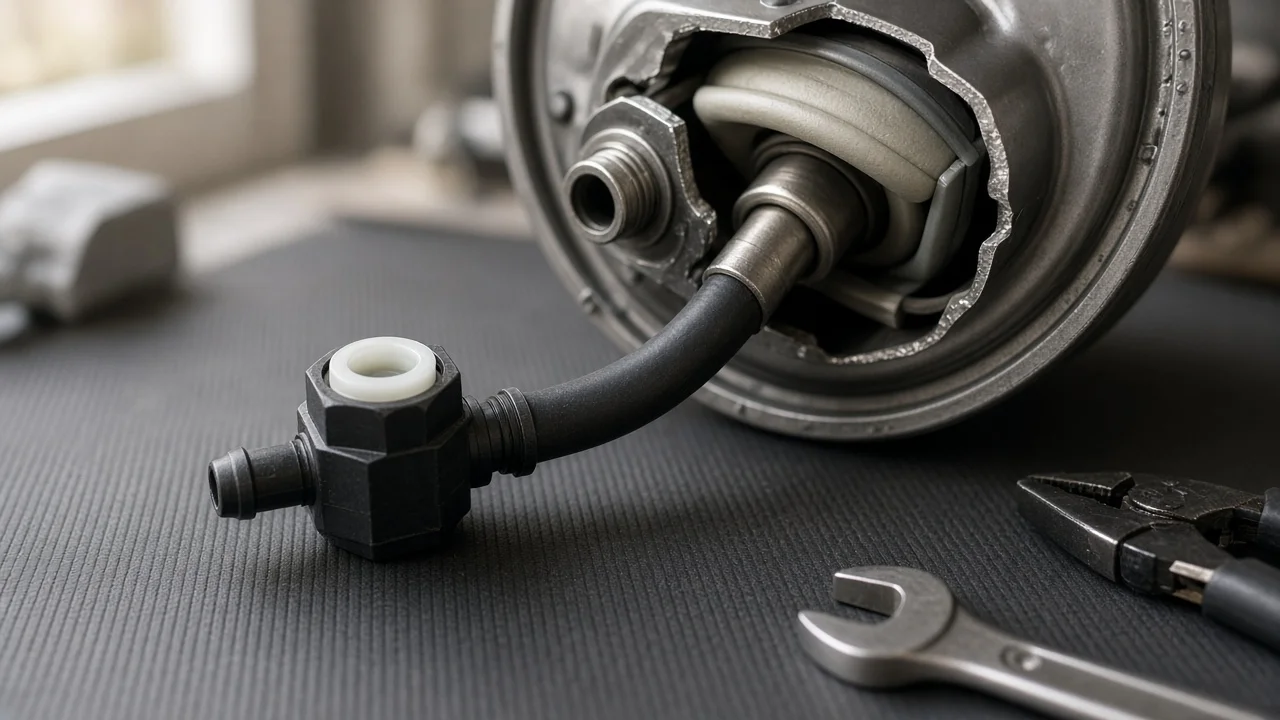
The check valve on a Toyota brake booster is a small one-way valve that lets the engine draw vacuum out of the booster and stops that vacuum from leaking back. When it sticks or leaks, the pedal can feel hard, especially on the first stops after the car has been parked. Valve style, hose size and mounting differ between Toyota models and engines, so confirm the fault and match the part to your exact vehicle before ordering anything.
Establish the symptoms
Start by recording exactly when the pedal feels wrong. Note whether it is hard on the first press after the car sat overnight, hard only for a moment after starting, or hard all the time at idle. Also note whether assist fades quickly after the engine is switched off and whether the problem changes between a cold and a warm engine. A leaking check valve typically lets stored vacuum bleed away, so the first one or two applications after sitting feel heavy until the engine rebuilds vacuum. A valve that is stuck or restricted can make assist slow to build or weak at idle. A hiss near the booster or along the vacuum hose is also worth noting.
Write down any related signs and recent changes. A rough or unstable idle, a lean-condition warning or an idle that dips when you press the pedal can all point to a vacuum leak. Recent engine or intake work, a disturbed vacuum hose, new brake pads or brake rotors, or a brake fluid flush are all relevant. Most important, describe the pedal itself. A hard, high pedal suggests missing assist. A soft, spongy or sinking pedal points toward the hydraulic system, and the check valve is unlikely to be the main cause.
Distinguish plausible causes
A faulty check valve is supported by a hard pedal after the car sits and a quick loss of reserve after shutdown, while the hose and booster otherwise test sound. A cracked vacuum hose, loose clamp or hardened rubber grommet where the valve or hose enters the booster shell produces similar symptoms. These leaks often also cause a hiss under the hood and an unsettled idle. If the valve itself checks out, those leak points become the stronger suspects.
An internal booster leak, such as a torn diaphragm or failed seal, is suggested by a hiss heard from the pedal area inside the cabin, by an idle that drops when the pedal is pressed, or by lost reserve even with a good valve. Low engine vacuum from intake leaks or mechanical problems weakens assist regardless of the valve. Toyota diesels that rely on a separate vacuum pump can lose assist when the pump fails. Many Toyota hybrids use an electronically controlled brake system rather than a conventional vacuum booster. On those vehicles a hard or unusual pedal needs a different diagnosis, usually with warning lights and stored codes as the starting point.
Several hydraulic and friction problems can be mistaken for weak assist. Air in the brake fluid or a bypassing master cylinder gives a soft or sinking pedal. Pads worn toward their wear limits can lengthen pedal travel. Glazed or contaminated friction material grips poorly, so the car needs more pedal force to stop, which can feel like a booster fault. A sticking caliper usually causes a pull, uneven wear or a hot wheel rather than a uniformly hard pedal. None of these is fixed by replacing the check valve.
Checks in a useful order
Some observations need no tools and can be done with the car parked. With the engine off, press the pedal several times until it feels firm, which uses up the stored vacuum. Hold light steady pressure and start the engine. In a healthy vacuum system the pedal should sink slightly as assist arrives. Next, run the engine for a minute or two, switch it off, wait briefly, then press the pedal. You should get assisted applications before it firms up. With the engine idling, listen for hissing around the booster, the hose and the valve. Look for cracked, swollen or oil-soaked hose, loose clamps and a hardened grommet, and check the brake fluid level against the reservoir marks.
Other tests need tools, specifications or a qualified technician. Removing the valve and testing it with a hand vacuum pump shows whether it holds vacuum in one direction and passes air in the other. Note the flow arrow before removal, because the valve must be reinstalled facing the same way. A vacuum gauge on the engine side confirms whether the engine is producing normal vacuum. That comparison requires the specification for your engine. Measuring pads and rotors against wear limits, inspecting calipers and assessing the master cylinder all depend on vehicle-specific service information. Any work that opens the hydraulic system requires correct bleeding afterward. If you lack the equipment or data, leave these steps to a brake specialist.
Interpret the findings
If the pedal did not sink when the engine started and the valve passes air in both directions or blocks flow both ways, the valve is a strong suspect. You still need to confirm that the hose is not collapsed or leaking and that engine vacuum is normal. If the valve tests good but reserve still disappears quickly, the leak is more likely in the booster or its grommet, and a new valve would not cure it. A hiss inside the cabin combined with an idle change when braking points toward the booster itself. A low engine vacuum reading shifts attention to the engine or, on applicable diesels, the vacuum pump.
If the start test and the reserve test both behave normally but the pedal is soft, long or slow to stop the car, the vacuum side has largely been cleared. Look next at brake fluid condition and level, pad and rotor wear, friction material condition and caliper operation. Whatever part you replace, repeat the same pedal tests afterward. A repaired assist path should give a pedal that sinks on startup and holds reserve after shutdown. Without that recheck, you have not confirmed that the repair addressed the actual fault.
Matching the valve to your Toyota
Toyota has used more than one check valve arrangement. On some vehicles the valve sits inline in the vacuum hose. On others it is pressed into a rubber grommet on the booster shell or supplied as part of a hose assembly. The design can vary by model, model year, engine, market and occasionally production date within a single year. That is why a valve described only as fitting a Toyota model name may not match your car. Hybrids with electronically controlled brakes generally do not use this part in the same way. Diesel versions may route vacuum from a pump rather than the intake manifold.
For reliable vehicle fitment, have the parts counter look up the part by your VIN, and compare the result with the part you remove. Check the hose inner diameter at each port, the angle of the connections, the grommet size if the valve plugs into the booster, and the direction of the flow arrow. Some hose assemblies include extra branches for other vacuum devices, and a replacement must match those. A universal valve that only matches hose diameter may not seal or operate as the original did. Replace a hardened or cracked grommet and aged hose sections at the same time, because a new valve in a leaking mount will not restore assist.
Urgency and next action
A hard pedal means the car needs much more force to stop, and stopping distances can grow sharply, particularly in an emergency. Stop driving and arrange towing or inspection if the pedal sinks toward the floor, needs far more effort than normal, loses assist suddenly, or comes with a brake warning light. The same applies to visible fluid leaks, a strong pull to one side, or grinding from the wheels. Do not rely on any estimate of how far the car can safely be driven with a suspected assist fault; the condition can worsen without warning.
When you book the repair, provide the VIN, model year and engine, and say whether the car is a hybrid or diesel. Describe when the hard pedal occurs and the results of the startup and reserve tests. Mention any hissing or idle changes, recent brake or engine work, and any warning lights or stored codes. This lets the technician confirm the cause, source the correct valve or hose assembly for your exact vehicle, and verify the repair with the same tests before the car goes back into regular use.