Toyota and Lexus P3000–P3009 Hybrid Codes: Meanings and Next Steps
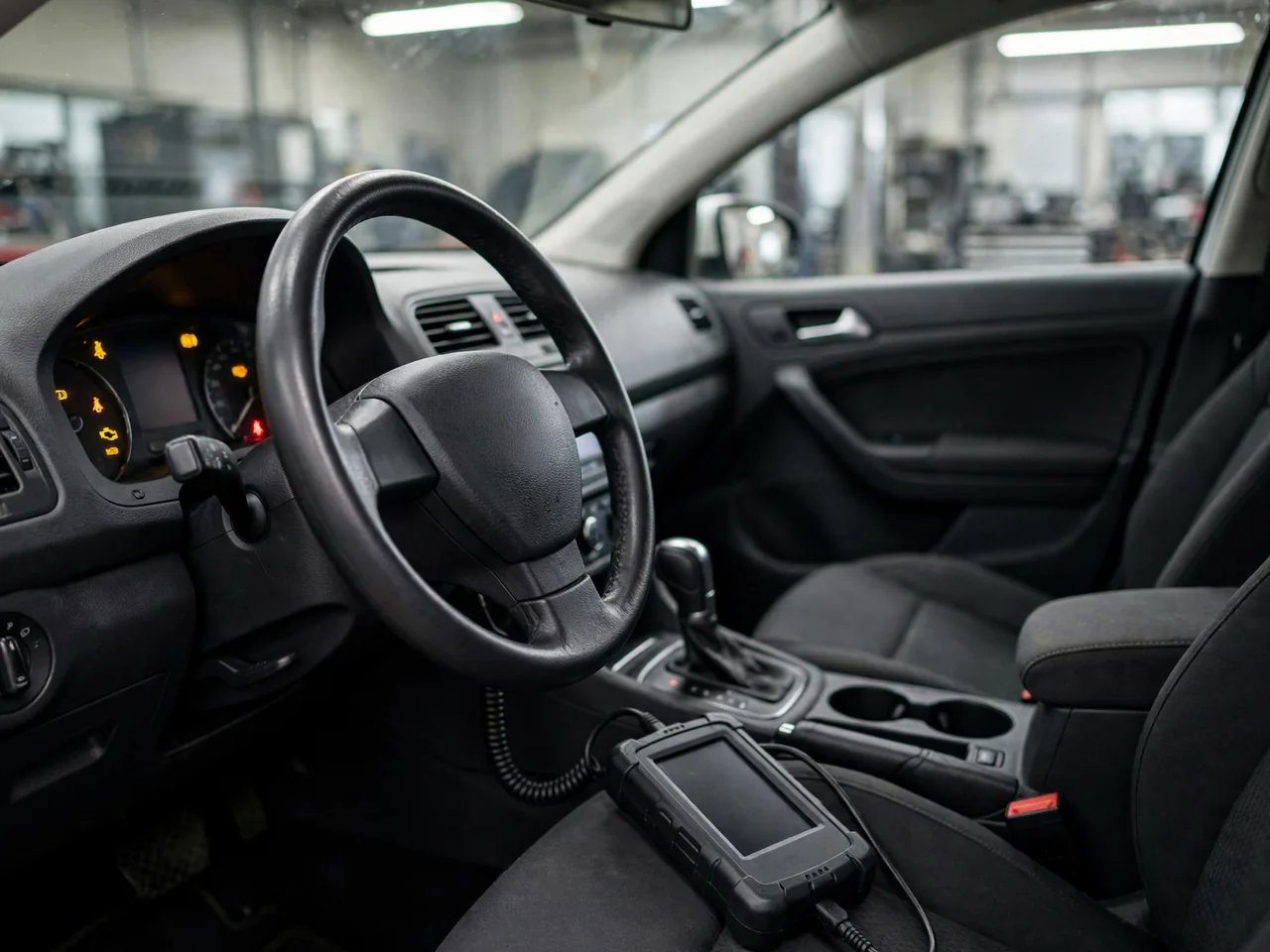
Toyota and Lexus hybrid owners often see a P3000 code or a related P3004, P3001, or P3009 result when the hybrid battery control system stores a fault. These manufacturer-dependent codes can involve the battery ECU, a power cable fault, battery block voltage, or high-voltage isolation, and they may appear with a master warning light and reduced power. Confirm the exact vehicle and reporting module before treating any description as a failed part.
Confirm the Code Meaning for Your Toyota or Lexus
P3000 through P3009 are manufacturer-dependent diagnostic trouble codes. A scanner label for a P3000 code, a P3001 code, or a P3005 code is not a universal definition. Confirm the model, model year, hybrid powertrain, and the control module that reported the fault against the applicable service information before interpreting any result. A consecutive number sequence does not prove that every Toyota or Lexus hybrid uses the same meaning, or that P3002, P3006, and P3008 even apply to the vehicle in front of you.
A master warning light or triangle, hybrid-system messages, reduced power, or a failure to enter READY mode can accompany these codes. Those signs show the hybrid system has limited or stopped operation; they do not identify a failed battery module, battery ECU, or cable. Information codes stored with the primary fault, companion codes from other hybrid modules, and freeze-frame data capture operating conditions a basic scanner description often omits. Record that supporting evidence before any repair decision.
P3000: Establish What the Battery Control Warning Is Reporting
On applicable Toyota and Lexus hybrids, a verified P3000 result is a hybrid battery control warning rather than a single failed part. After you confirm the vehicle-specific definition, treat P3000 as a battery-control flag that can point diagnosis toward information stored by another hybrid-system control module, such as the battery ECU. Associated codes, including a P3004 code or a P3003 code stored at the same time, become essential context instead of optional extras.
P3000 alone cannot establish failed battery modules, a defective battery ECU, or the need for a replacement pack. Aging modules and cooling problems can appear in this family of faults, but the code is evidence to interpret, not proof of deterioration. Record information codes, freeze-frame data, and the conditions when the warning set before clearing anything. Clearing a P3000 code to hide the master warning light erases the trail a technician needs to decide between a control issue, a cable concern, and a battery concern.
P3004: Understand a Verified Power Cable Fault
Where service information supports it, P3004 describes a power cable malfunction in the hybrid battery circuit. Verify that meaning for the exact Toyota or Lexus before treating a P3004 code as a cable problem. A circuit-related result identifies a diagnostic area. It does not prove which power cable, connection, or associated component has failed, and it does not confirm high-voltage isolation damage or a worn battery block.
Warning messages, READY status, companion codes such as P3000, and any recent collision or electrical work help a qualified technician narrow the investigation. Cable inspection, connector handling, and electrical testing inside the high-voltage system require professional service. Owners should not open the battery enclosure, touch orange cables, or probe connections. The useful owner contribution is a clear record of when the P3004 appeared, whether power was reduced, and whether the vehicle would enter READY.
P3001, P3002, and P3003: Check Battery ECU and Control Details
A P3001 code, a P3002 code, and P3003 each need their own vehicle-verified explanation. On some Toyota and Lexus hybrids, these results involve the battery ECU, module communication, or hybrid battery control logic, but those categories must come from the applicable service information, not from their place in the P3000–P3009 sequence. Identify the reporting module and any required information codes for each result. P3001 does not automatically mean the same condition as P3002, and P3003 does not inherit a meaning from either neighbor.
A control or communication description does not by itself justify replacing the battery ECU. Power supply problems, wiring faults, and software or communication interruptions can set similar codes. A technician should confirm module communication, electrical supply, and relevant circuits with the procedures that apply to that vehicle. Those professional checks stay outside owner work. Until the reporting module, companion codes, and freeze-frame data are reviewed, treat P3001, P3002, and a P3003 code as control-system evidence, not as a parts list.
P3005, P3006, P3008, and P3009: Resolve the Exact Fault Category
P3005, a P3006 code, P3008, and P3009 must be resolved one at a time after confirming definition and applicability. The group is not a single battery-deterioration category. Where a verified definition concerns battery voltage imbalance, uneven battery block voltage can indicate a weak block, a connection issue, a sensing problem, or an operating condition that made the readings look uneven. Load, temperature, and supporting tests matter; a snapshot from one drive cycle does not prove the pack must be replaced.
Where a verified definition concerns high-voltage isolation, a fuse, or another electrical fault, that category still does not prove worn battery modules. A P3005 code or P3008 result in that context points to an electrical integrity question, not automatically to aging cells. P3009 follows the same rule: confirm the vehicle definition first. P3007 sits in the P3000–P3009 range, yet without vehicle-specific confirmation its meaning remains unresolved and should not be assumed from nearby numbers.
Safe Observations to Record Before Service
Before service, write down dashboard messages, READY status, reduced power, unusual hybrid-battery fan noise, ambient temperature, and when the warning appeared. Using the owner's manual, check whether luggage or cargo blocks the cabin battery cooling intake. Do not remove trim to reach hidden ducts. A restricted intake can contribute to thermal stress that hybrid battery control monitors, but a blocked vent is only a possible contributor, not a confirmed cause of P3000, P3004, or P3006.
Battery aging and restricted cooling belong in the diagnostic conversation when the verified fault category supports them; they are not established causes of every code in this range. Stop safely if reduced power or on-screen instructions make continued driving unsafe. Arrange professional help for smoke, burning odors, or failure to enter READY. Do not open the battery enclosure, touch orange cables, remove a service disconnect, probe connectors, or clear codes merely to suppress the master warning light.
Use Diagnostic Evidence to Choose a Repair
A useful diagnostic report should state the verified definitions for each stored result, the information codes, relevant measurements such as battery block voltage, the identified fault, and the proposed remedy. When cooling, wiring, a connection, or a control fault is confirmed, a targeted professional repair can be appropriate instead of pack replacement. That is why P3000, P3004, and battery-ECU codes must be interpreted together rather than treated as automatic battery failure.
Evidence of internal battery deterioration may support module repair or pack replacement only after overall pack condition and the scope of diagnosed damage are documented. Ask about replacement-unit condition, vehicle compatibility, warranty coverage, installation scope, and how the shop will verify that the original P3000 or related fault is gone. A cleared warning light is not confirmation. Post-repair checks should show the hybrid battery control system no longer stores the same information codes under comparable operating conditions.