Toyota and Lexus Ignition Coils: Symptoms, Wiring, and Replacement
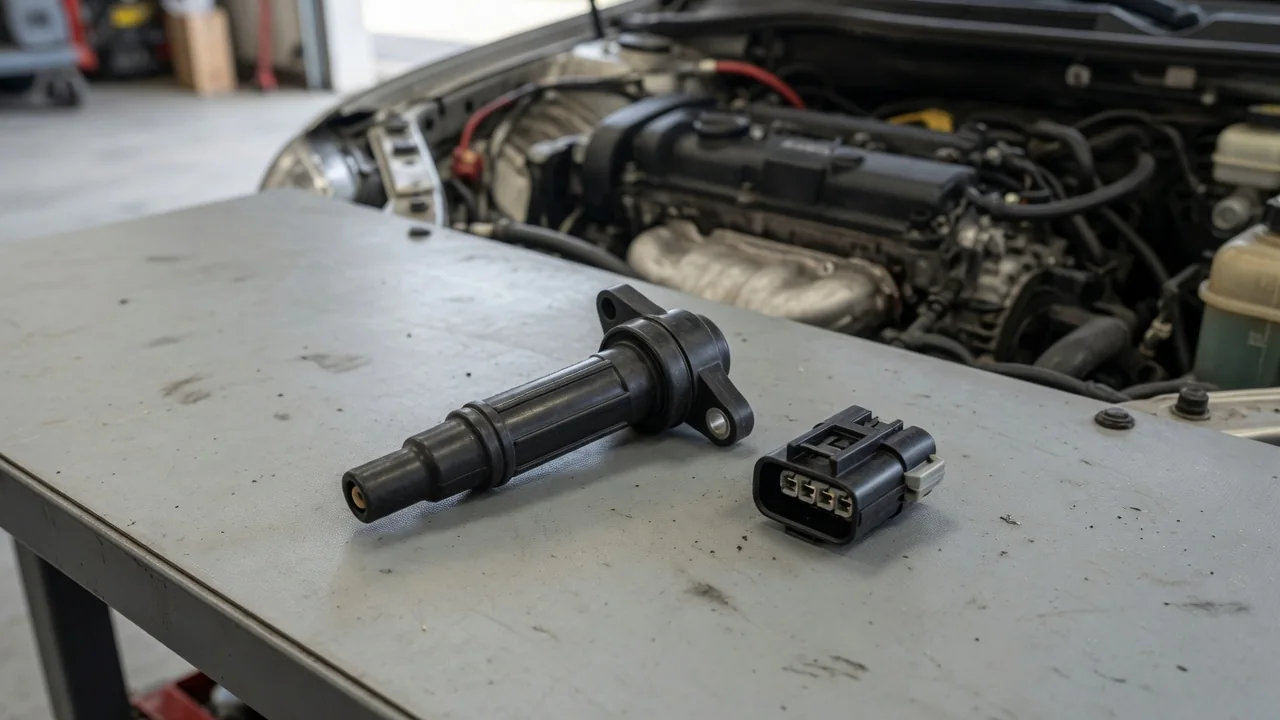
Toyota and Lexus coil-on-plug ignition coils convert battery voltage into the spark that fires each cylinder. When a coil weakens, drivers often notice an engine misfire, rough idle, or a check engine light. This guide covers Tacoma, RAV4, Sienna, Highlander, Avalon, Prius, and Lexus applications, including four-wire connector layout, rear-bank access on V6 engines, and what replacement involves. Camry and Corolla coil service is covered in their own guides.
Identify the Toyota or Lexus Ignition Coil Application
A Toyota ignition coil listing is not a fitment guarantee. Coil-on-plug ignition hardware is matched to a specific engine family, so the same body style can use more than one coil across years. Before diagnosis or ordering an ignition coil for Toyota or Lexus, gather the model year, engine, VIN, and any emissions configuration the parts catalog uses. Those details separate a Tacoma, RAV4, Sienna, Highlander, Avalon, Prius, or Lexus coil from a look-alike that will not fire correctly.
These applications include Lexus vehicles that share Toyota family coil-on-plug architecture. Camry and Corolla coils belong in their dedicated guides because their service notes and part numbers differ. Interest in a Toyota ignition coil or an ignition coil for Lexus does not rank which vehicles fail most often. Without supporting failure data, no model is the default failure case; identify the coil by application, then inspect that vehicle.
Recognize Misfire Symptoms and Know When to Stop Driving
An engine misfire from a failing coil-on-plug unit can show up as rough idle, hesitation on acceleration, a shake at a stop, reduced power, or an illuminated check engine light. Those clues are not proof that the Toyota ignition coil has failed. Spark plugs, harness damage, fuel delivery, and mechanical compression problems can produce the same feel. Record when the roughness appears, keep diagnostic codes and freeze-frame data, and confirm manufacturer-dependent code meanings for the exact vehicle before treating a code as a coil verdict.
A flashing check engine light or violent shaking is a reason to stop in a safe place and arrange assistance rather than continue a trip. An active misfire can dump unburned fuel into the converter and overheat the catalyst. Misfire counters and cylinder identification data help a technician see which cylinder is missing events, but they still do not isolate the coil from the plug, wiring, or injector. Treat stored evidence as a starting map, then verify the cause before replacing parts.
Tacoma and RAV4 Coil Identification and Access
A Toyota Tacoma ignition coil and an ignition coil for Toyota RAV4 must be identified from the exact model year and engine, not from the truck or crossover nameplate. Both lines have used more than one coil-on-plug package, so cylinder numbering and coil location have to be confirmed in the service information for that powertrain. Associating a misfire report with a physical coil is only valid after cylinder identification on that engine is verified. Guessing bank layout from another Toyota model often pulls the wrong unit.
Access for Toyota Tacoma ignition coil replacement or a Toyota RAV4 ignition coil job depends on covers, intake plumbing, and surrounding components documented for that year. Check the correct procedure before assuming a coil is a simple lift-off part. Matching housing appearance or connector shape is not enough to confirm a replacement coil. Pin count, boot length, and primary resistance can differ among parts that look similar, so catalog confirmation against VIN and engine remains the fitment step.
Sienna, Highlander, and Avalon V6 Rear-Bank Access
Sienna, Highlander, and Avalon V6 engines do not share one coil layout. A Toyota Sienna ignition coil, Toyota Highlander ignition coil, or Toyota Avalon ignition coil has to be located from engine-specific service information, including cylinder identification and whether the rear cylinder bank is reachable from above. For a 2008 Toyota Sienna ignition coil concern, confirm the engine first; discuss a 2008 Sienna only after that powertrain and its diagrams are identified. Do not copy coil maps from another year or a different V6.
On applicable V6 packages, rear-bank coils sit behind intake plumbing, so access labor can dominate the job. Whether the intake must come off is an application question, not a family rule. Disturbed seals, gaskets, and reassembly leak checks belong in the estimate when that path is required. Work that involves intake removal or tight rear-bank access should go to a qualified technician. Owners can note which bank the misfire counters flag, but should not force a Toyota Sienna 2008 ignition coil past packaging they cannot see clearly.
Lexus and Prius Coil Diagnosis and Fitment
A Lexus ignition coil is identified by model, year, and engine, not by the Lexus badge or by a related Toyota part number. Family branding does not prove interchangeability between a Lexus ignition coil and a Toyota catalog number that looks similar. Confirm the coil through application-specific catalog data, then use the matching diagnostic procedure. Shared coil-on-plug architecture still leaves differences in connectors, boot length, and control strategy that can strand a mixed-brand swap.
On a Toyota Prius, distinguish planned engine stop-start from a persistent rough idle, warning lamp, or stored misfire. Hybrid READY mode can spin the engine without a conventional key crank, so owner observation belongs on a fully shut-down vehicle. Leave high-voltage components untouched. A Toyota Prius ignition coil concern is still a spark question on the gasoline engine, but diagnosis should follow Prius information rather than a Toyota ignition coil replacement sequence copied from a non-hybrid.
Read a Toyota Four-Wire Ignition Coil Diagram Safely
Four functions commonly appear on a Toyota four-wire coil: switched power, ground, an ignition trigger signal, and an ignition feedback signal. A Toyota 4 wire ignition coil diagram may label the last two IGT and IGF, but those names apply only when the vehicle's diagram confirms them. Terminal numbers, wire colors, and pin functions must not be taken from a generic four-pin sketch. The exact wiring diagram for that VIN and engine is the only safe source for a connector terminal view.
Connector-view orientation matters as much as pin count. Illustrations may show the harness face or the coil face, and the latch shows which way the drawing is rotated. A mirrored view swaps adjacent terminals and can send a probe to the wrong circuit. Visual inspection and stored codes have limits; they do not replace live-circuit work. Leave probing, trigger and feedback measurement, and electrical isolation to a technician following the specified procedure for that Toyota or Lexus coil.
What Toyota Ignition Coil Replacement Involves
To replace an ignition coil on a Toyota, confirm the fault, verify the part against VIN and engine, establish safe access, replace the affected coil, reassemble, and verify operation using vehicle-specific service information. While the coil is out, inspect plug condition, the coil boot, connector terminals, and any oil or moisture in the spark plug well. Those contributing faults can recreate a misfire after a new coil is installed. Clearing codes without a road verification does not prove the repair.
Toyota Tacoma ignition coil replacement access is engine-dependent; some layouts are boxed in by intake or covers. Replacing one confirmed faulty coil does not automatically require a full set. An estimate should include diagnosis, the coil, access labor, and any disturbed seals. Toyota ignition coil replacement on a RAV4, Sienna, Highlander, Avalon, Prius, or Lexus follows the same logic: match the part, correct well and boot issues, then confirm the misfire is gone under the conditions that first set it.