Toyota and Lexus Brake Fluid Requirements by Model
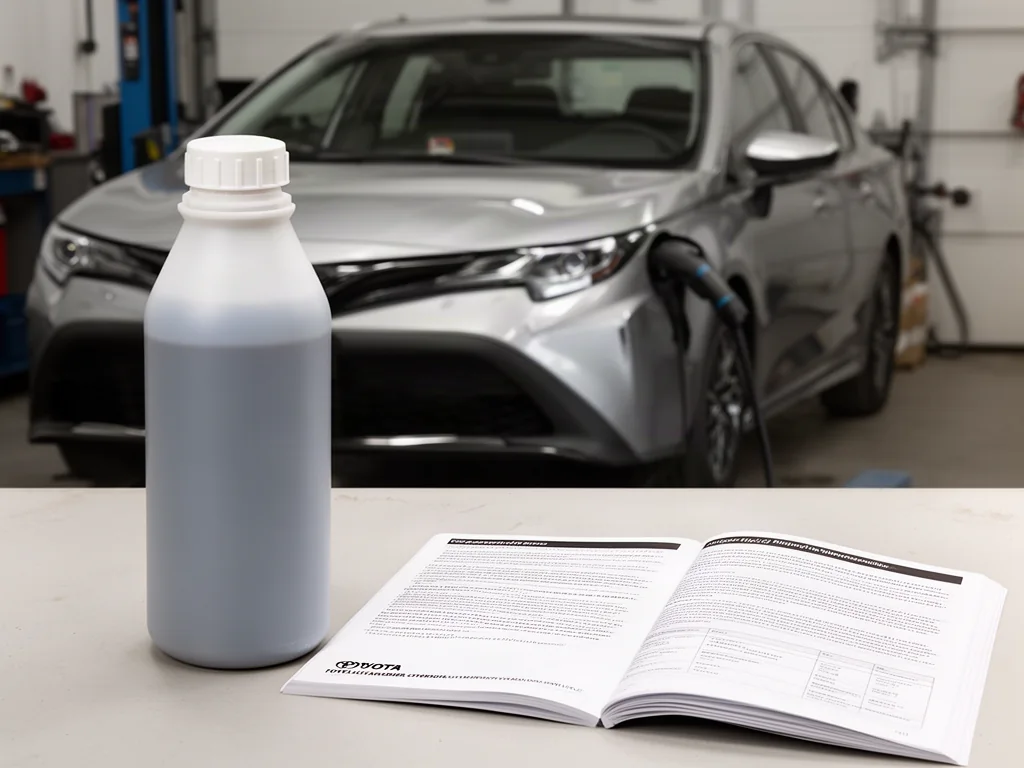
Choosing brake fluid for Toyota and Lexus models starts with the vehicle, not a shared brand bottle. Camry, Corolla, RAV4, Tacoma, Tundra, 4Runner, Prius, Sienna, Highlander, and Lexus applications follow the fluid specification in the owner's manual for that model year, powertrain, and market. Confirm the reservoir cap marking, then match a sealed product to every documented requirement before adding fluid.
Find the Brake Fluid Specification for Your Toyota
The correct Toyota brake fluid is the grade named in the owner's manual that matches your vehicle, not a model nickname. A Camry, Corolla, or RAV4 from different model years or markets can carry different fluid specifications even when the body looks familiar. Gasoline and hybrid powertrains may be documented separately. Use the year, trim, and market edition of the manual that belongs to that vehicle, then read the brake fluid listing rather than assuming a corporate DOT 3 default.
An accessible reservoir cap marking is a useful cross-check, but it does not replace the manual if the lettering is faded, aftermarket, or conflicts with published requirements. Have unreadable or contradictory information verified before adding anything. A bottle marketed as brake fluid for Toyota does not establish suitability for every vehicle. Through a clean, accessible reservoir, look only. Unexplained low fluid, a warning light, or changed pedal feel needs assessment rather than a routine top-off that can hide a leak or brake fluid contamination.
Genuine Toyota DOT 3 and Aftermarket Bottle Requirements
Genuine Toyota Heavy Duty Brake Fluid DOT 3 is a product name, not authorization for every Toyota hydraulic circuit. Suitability still depends on the documented fluid specification for that model year and powertrain. The words heavy duty describe the branded DOT 3 offering; they do not raise the grade or extend the service interval. Toyota genuine DOT 3 brake fluid remains the right choice only when it matches what the applicable owner's manual lists.
An aftermarket bottle can be suitable when its label meets every requirement stated for the exact vehicle, including the DOT grade and any notes in the owner's manual. Some manuals name genuine Toyota DOT 3 brake fluid; others allow an equivalent that satisfies the same specification. That allowance is vehicle-specific, not a brand or warranty claim. Use a sealed container whose contents are known; moisture and mixed leftovers are brake fluid contamination. Do not mix or substitute based only on Toyota branding or a shared DOT 3 number.
Camry and Corolla Brake Fluid Requirements
Brake fluid for a Toyota Camry and brake fluid for a Toyota Corolla are separate lookups. Start with the exact model year and powertrain, then open that vehicle's owner's manual rather than a generic chart. Hybrid Camry and hybrid Corolla variants, where offered, can list the same DOT family or a different note, and both the fluid requirement and service procedure need verification. When the year is unknown, leave the specification unassigned; a Camry listing does not transfer to a Corolla.
If service history is missing, identify the required Toyota Camry brake fluid or Toyota Corolla brake fluid before purchase. Confirm the listing in the applicable manual and the reservoir cap marking. Treat an unknown previous fill as a condition question, not a color match. Dark, cloudy, or mixed fluid is a reason to seek assessment rather than topping off. Only the documented specification for that year and powertrain decides whether DOT 3 belongs in the hydraulic brake system.
RAV4, Highlander, and Sienna Specification Checks
RAV4, Highlander, and Sienna owners should treat fluid choice as three separate lookups by model year and powertrain. A gasoline RAV4, a hybrid RAV4, and a plug-in hybrid RAV4 are not automatically the same listing, and Highlander and Sienna hybrid configurations follow the same rule. Open the owner's manual that matches that crossover or van, including market edition. Until that book confirms the listing, do not assign one specification to every generation.
A familiar reservoir layout or a Toyota-branded bottle does not confirm the required fluid for a RAV4, Highlander, or Sienna. Cap markings can be replaced or misread, and a bottle sold for those models still has to match the documented specification on its label. Replacement timing belongs to the applicable maintenance schedule and a documented condition assessment, not a shared interval for all three nameplates. If the existing fluid's identity is uncertain, identify the required product first and have the system evaluated.
Tacoma, Tundra, and 4Runner Fluid Selection
Truck and SUV owners looking at a Tacoma, Tundra, or 4Runner still need the model year and relevant configuration before naming a fluid specification. Towing, payload, or off-road use does not independently authorize a different-grade substitution. Toyota heavy duty brake fluid DOT 3 may be a branded product truck owners recognize, but heavy duty wording on a bottle does not establish compatibility with a Tacoma, Tundra, or 4Runner. Only the fluid specification in that vehicle's owner's manual does.
Brake fade on a long descent, an unusually soft pedal, or visible fluid loss on a Tacoma, Tundra, or 4Runner is a reason to stop as soon as it is safe and arrange professional evaluation. Those symptoms describe hydraulic brake system behavior, not a confirmed fluid-grade problem, and pouring a different DOT 3 product is not a diagnosis. Identify the leak path, any contamination, and the documented specification before choosing a bottle. Do not keep driving to top off a fading pedal.
Prius and Hybrid Brake System Service Needs
Toyota Prius brake fluid cannot be named from the nameplate alone. Require the Prius model year and variant, then read that owner's manual for the fluid specification and hybrid service notes. Regenerative braking reduces friction-brake use in many conditions, but it does not eliminate the hydraulic brake system or its fluid maintenance. Some electronically controlled brakes can pressurize or apply automatically, so vehicle-specific service procedures are essential on an unknown Prius generation.
Bleeding or fluid replacement on a Prius, and on other hybrids with electronically controlled brakes, may require diagnostic equipment and trained service that follows the correct vehicle procedure. Moisture-laden or mixed fluid still matters because the hydraulic circuit remains the backup. A brake warning or a changed pedal when regenerative braking blends with friction braking cannot establish a fluid fault by itself; those signs need appropriate testing. If the existing fluid's identity is uncertain, have the system inspected rather than treating a warning as proof the fluid failed.
Confirm Brake Fluid Requirements for Your Lexus
Lexus brake fluid starts with the exact Lexus model, model year, powertrain, and market. Use the applicable Lexus owner's manual to establish the fluid specification and any hybrid notes rather than borrowing a Toyota listing. Shared corporate ownership does not make genuine Toyota brake fluid, or genuine Toyota DOT 3 brake fluid, automatically correct in a Lexus reservoir. A Lexus hybrid with electronically controlled brakes follows Lexus service documentation, not a Toyota bottle label.
Check a genuine or aftermarket bottle against every documented Lexus fluid requirement on the label, including DOT grade and extra notes in the Lexus manual. A sealed container with known contents still has to match that listing. Where the Lexus is a hybrid, confirm the fluid specification and whether service involves electronically controlled brakes, and refer that work to a professional using the correct vehicle procedure. Warnings or a changed pedal still need testing; they do not prove the fluid has failed.