Choosing Transmission Cooler Lines for a Toyota 4Runner
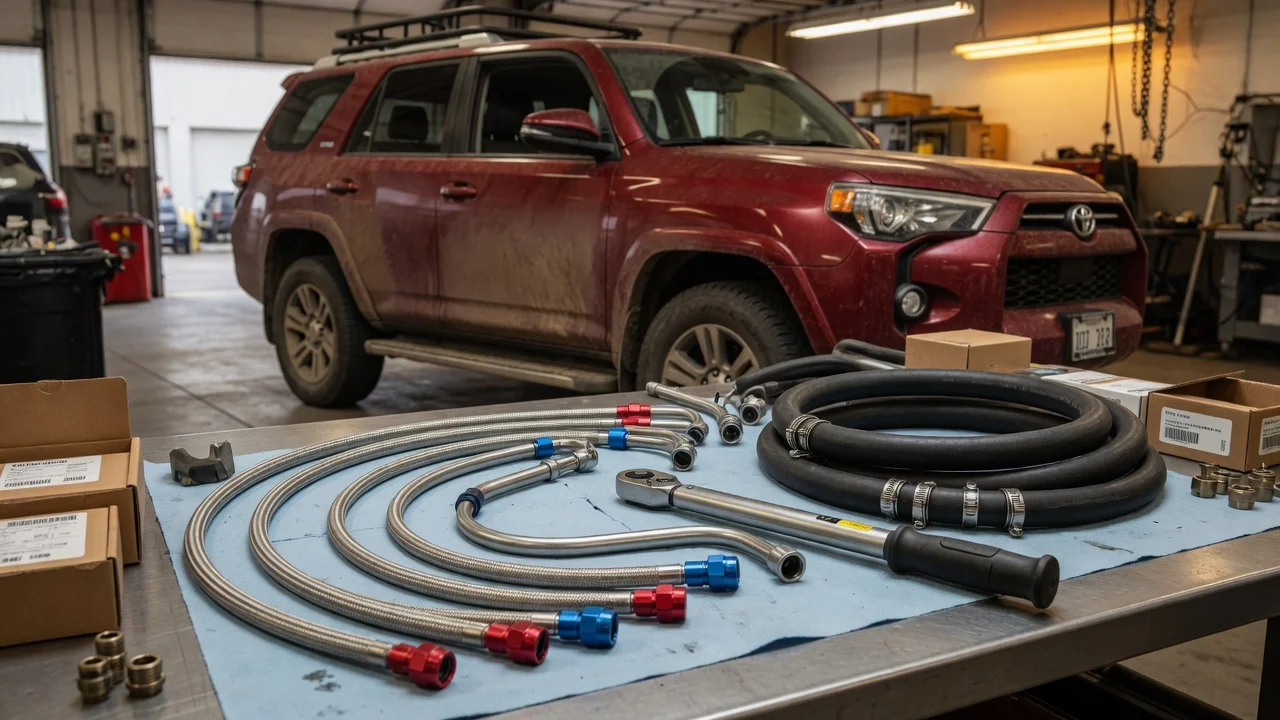
Transmission cooler lines on a Toyota 4Runner carry automatic transmission fluid between the transmission and the cooler. A weeping hose or a rusted steel section can lead to low fluid, poor shift behavior and expensive damage. The right replacement depends on which transmission your truck has, how its cooling circuit is configured and what you need the lines to do. This guide explains how to narrow the options without guessing.
Define the job the product must do
Start with why you are shopping. Most owners are replacing a leaking rubber hose section, a corroded steel line or a damaged fitting. Others are adding or upgrading an auxiliary cooler for towing, off-road crawling or hot-climate driving. These are different jobs. A like-for-like repair should restore the factory routing and capacity. An upgrade may change line lengths, fittings and the path the fluid takes.
Confirm the leak before you buy parts. Fluid near the radiator or along the frame rail may come from the cooler lines, but it can also come from the radiator's internal cooler, the transmission pan, the case connections or power steering components. Clean the area, check the fluid level and color, and trace the wet area to its highest point. A leak or a slipping shift tells you where to look. It does not confirm which part has failed. Also consider your practical limits: whether you are doing the work yourself, whether you can support the vehicle safely, and whether rust on the fittings will make removal harder.
Check compatibility
Fitment begins with the transmission type. Third-generation 4Runners use a four-speed automatic. The fourth generation used both four-speed and five-speed units, depending on engine and model year. The fifth generation pairs its V6 with a five-speed automatic. The newest generation uses a different powertrain with an eight-speed automatic and its own cooling layout. Two-wheel-drive and four-wheel-drive versions can route lines differently, and lines from V6 and V8 fourth-generation trucks should not be assumed interchangeable. The most reliable way to identify the correct part is a VIN-based parts lookup checked against the transmission code in the vehicle's build data.
Next, document the cooling circuit. Many 4Runners send fluid through a cooler built into the radiator tank, and many also have an auxiliary cooler ahead of the radiator, especially trucks equipped for towing. Some configurations also include a thermostatic valve or fluid warmer in the circuit. Count the lines and hoses, note where steel changes to rubber, and record the fitting style at each end: flare nuts, threaded unions, hose barbs with clamps or other connectors. A replacement that matches the steel section but not the end fitting will not seal.
Hose material and fluid also need attention. If you use bulk hose for a repair, choose hose rated for transmission oil cooler service at the correct inside diameter, not fuel or heater hose. Any line repair loses fluid, so plan the refill around the correct fluid specification. Older four-speed units and later five-speed units do not necessarily use the same fluid, and many five-speed trucks call for Toyota WS. Confirm the type in the owner's manual or service information before adding anything.
Features that affect the choice
The main choice is between factory-style preformed lines and repair or upgrade kits. Preformed steel assemblies match the original bends, brackets and fittings, so installation is predictable. However, they can be long and awkward to fit with the radiator in place, and they may cost more. Generic repair kits use compression fittings or splices with sections of hose to bypass a damaged area. They can save money, but every added joint is another possible leak point, and compression fittings must suit the line material and pressure.
Marketing language tends to blur differences in material and construction. Coated steel, stainless steel and braided-cover hoses each have their uses. A braided stainless cover resists abrasion, but it does not make a hose stronger than the core inside it, and AN-style fittings need matching adapters to connect to factory threads. Look for concrete details instead of labels: a stated hose standard or pressure and temperature rating, inside diameter, fitting thread and seat type, included clamps or brackets, and a fitment listing for your exact year, engine and drivetrain.
For an auxiliary cooler upgrade, treat the lines as part of a system. Larger coolers and longer runs add fluid capacity and flow restriction. Bypassing a factory thermostatic device can keep the fluid too cool in cold weather. If you tow heavily or crawl off-road for long periods, choose a kit designed for your 4Runner's configuration rather than adapting a universal cooler with improvised plumbing.
Limitations and ownership costs
Cooler lines cannot fix internal transmission problems. If shifts were harsh, delayed or slipping before you found the leak, or if diagnostic codes are stored, those issues need their own diagnosis. Replacing a line only restores the circuit. If the transmission has already failed and shed debris, contaminated lines and the radiator cooler can send that material into a rebuilt or replacement unit. In that case, many rebuilders require the cooler and lines to be flushed or replaced, and the repair goes well beyond a hose kit.
Budget for more than the part. You will need the correct fluid to replace what drains out, new clamps or sealing washers where they apply, and on rusted trucks possibly penetrating oil, line wrenches and replacement brackets. On many 4Runners, checking the level afterward follows a specific procedure, either with a dipstick or through a fill and check plug at a specified fluid temperature. Skipping that procedure can leave the transmission underfilled or overfilled. Rubber sections age over time, so inspect hoses and clamps during routine service and record the repair in the vehicle's service history.
Build a practical shortlist
Narrow the options with a short checklist. First, confirm the model year, engine, drivetrain and transmission code, and whether the truck has an auxiliary cooler or thermostatic valve. Second, identify exactly which section failed and the fitting type at both ends. Third, compare candidates on stated fitment for your configuration, construction details and ratings, included hardware, and whether they keep the factory routing. Fourth, add the cost of fluid, tools and your time or shop labor.
Most owners end up with two or three realistic candidates. These are usually a factory-style replacement line or hose for the failed section, a quality aftermarket equivalent, or a configuration-specific cooler kit for towing and heavy use. Have a transmission shop inspect the truck before you buy parts if the leak source is uncertain, the transmission shifts abnormally or the service history is unknown. That inspection can keep you from replacing the wrong component.