Toyota 4Runner Sway Bar Links: Fitment Guide
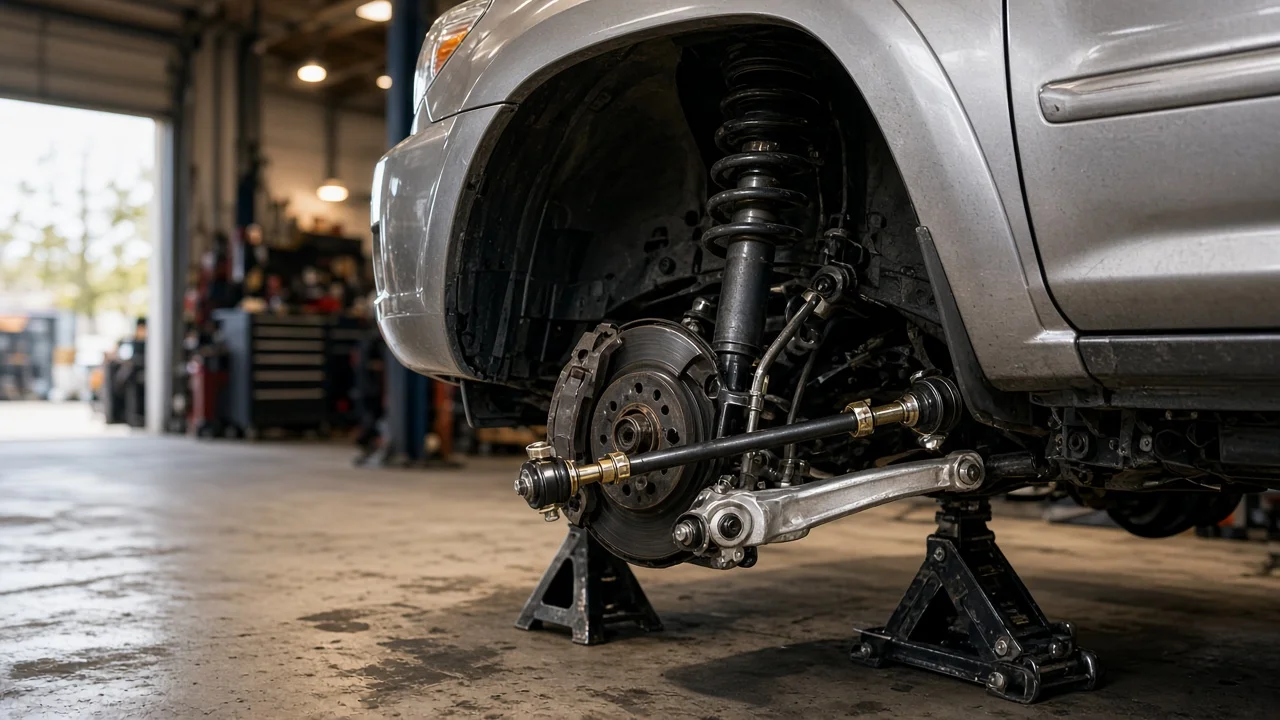
Sway bar links on a Toyota 4Runner are short connectors that tie the stabilizer bar to the suspension, and the right replacement depends on more than the model name. Generation, model year, drivetrain, trim-specific suspension systems and any lift all affect which link fits. This guide explains how to narrow down fitment for front and rear links, what points to a worn link, and when to rely on factory parts data or a shop instead of a generic listing.
The Short Answer on 4Runner Sway Bar Link Fitment
No single sway bar link fits every 4Runner. Front and rear links are different parts, and their design varies across generations and sometimes within one generation. To match a part reliably, start with the exact vehicle configuration: model year, generation, two-wheel or four-wheel drive, trim, and any factory suspension package. Then confirm the part against manufacturer specifications or a VIN-based parts lookup. On a truck with stock suspension height, an OE-equivalent link listed for that configuration is usually the correct choice. On a lifted truck, the link length may need to change so the bar keeps a workable angle.
One exception catches many owners. Certain 4Runner trims are equipped with Toyota's Kinetic Dynamic Suspension System, known as KDSS. It uses hydraulic components connected to the stabilizer bars, so links listed for conventional, non-KDSS trucks may not apply to every mounting point. If you are not sure whether your truck has KDSS or another special stabilizer arrangement, settle that question before ordering anything.
How Sway Bar Links Work
The stabilizer bar, also called a sway bar or anti-roll bar, is a steel bar that connects the left and right sides of the suspension. When the body leans in a turn, one side compresses while the other extends, and the bar twists to resist that roll. The links carry this force between the ends of the bar and the suspension, either at a control arm up front or at the axle or a bracket in the rear. Each link has a joint at both ends, usually a small ball joint or a bushing, so it can move freely as the suspension travels.
The links are loaded whenever one wheel moves differently from the other, so the joints gradually wear. Typical signs are a clunk or rattle over uneven pavement, driveway entrances or potholes, often most noticeable at low speed, along with a looser feel and extra body lean in corners. A broken link usually does not cause a sudden loss of steering, but the bar stops controlling roll on that side, which changes how the truck responds during quick lane changes or emergency maneuvers.
Generation, Drivetrain and Trim Differences
The 4Runner has been built across several generations, and suspension layout, mounting points and link styles differ between them. Later generations pair independent front suspension with a solid rear axle, so the front and rear links are not interchangeable and often use different joint types. Parts suppliers may also split a generation into year ranges because of running changes, which is why the model year matters even when two trucks look identical. Drivetrain can matter as well, since two-wheel-drive and four-wheel-drive versions do not always share every front suspension component.
Trim packages are the other major variable. Trucks with KDSS, and newer trims that may use a stabilizer system designed to disconnect for off-road travel, can require specific parts and procedures. It is also worth confirming that your truck actually has a rear stabilizer bar before shopping for rear links, rather than assuming every configuration matches the one in a catalog photo. The window sticker, build information tied to the VIN, or a dealer parts department can answer these questions.
Lifts, Leveling Kits and Aftermarket Links
Raising the suspension changes the distance between the end of the stabilizer bar and its mounting point. With stock-length links on a lifted truck, the bar can sit at a steep angle, carry preload at rest, or bind and contact nearby parts near full droop or compression. Extended links are made for this situation, but the correct length depends on the lift height and the specific kit, including whether it relocates any brackets. Follow the lift kit manufacturer's guidance rather than guessing from lift height alone.
Adjustable and quick-disconnect links are popular on trail-driven 4Runners. Adjustable links should be set to equal effective length with the truck at normal ride height, so the bar is not twisted when the vehicle is sitting still. Quick-disconnect links allow more wheel articulation off road, but they must be reconnected before returning to pavement. Harsh operating conditions, such as frequent rock crawling, deep water or heavy road salt, generally wear any link faster than mostly highway driving.
What You Can Check and Do
A basic inspection is within reach of most owners. With the truck parked on level ground or safely supported on stands at the correct points, look at each link for torn or missing boots, grease leakage, a bent shaft, cracked bushings, damaged studs or loose nuts. Try to move each link by hand and compare left with right, since noticeable play in one joint is a common sign of wear. Check the stabilizer bar bushings at the frame too, because worn bar bushings can make a similar noise and are easy to overlook.
Before ordering, note the VIN, model year, trim, drivetrain, any suspension package and details of any lift. Use a VIN-based lookup when one is available, and compare the new part with the old one for overall length, stud size and the orientation of each end. Many owners replace links in pairs so both sides wear evenly, although a single failed link can be replaced on its own. Tighten fasteners to the torque values in the factory service information. Many ball-joint style links require holding the stud with a hex or Torx bit to keep it from spinning, and bushing-style links are commonly tightened with the suspension loaded at ride height.
There is no universal replacement interval for sway bar links. Toyota's maintenance schedule calls for periodic inspection of suspension components, and the right timing for replacement depends on condition, mileage and how the truck is used. Recording link replacements and inspection findings in your service history makes it easier to trace future noises and spot repeat failures.
Limitations and Next Step
This guide cannot confirm fitment for a specific truck. Aftermarket listings sometimes cover broad year ranges without distinguishing trims, suspension packages or lift heights, so a part that fits one 4Runner may not fit another from the same year. KDSS-equipped trucks deserve extra caution, because work on that hydraulic system can involve specific procedures to keep the suspension level and functioning correctly. If you are unsure, have a qualified shop or dealer handle it.
A clunk that remains after new links are installed often comes from somewhere else, such as stabilizer bushings, shock mounts, control arm bushings or steering components. In that case, a professional suspension inspection is the efficient next step rather than replacing parts one by one. For a straightforward replacement, gather your VIN and configuration details, confirm the part against factory parts data, and follow the service information for installation and torque.