Toyota 4Runner Differential Fluid: Capacity, Type, and Change Interval
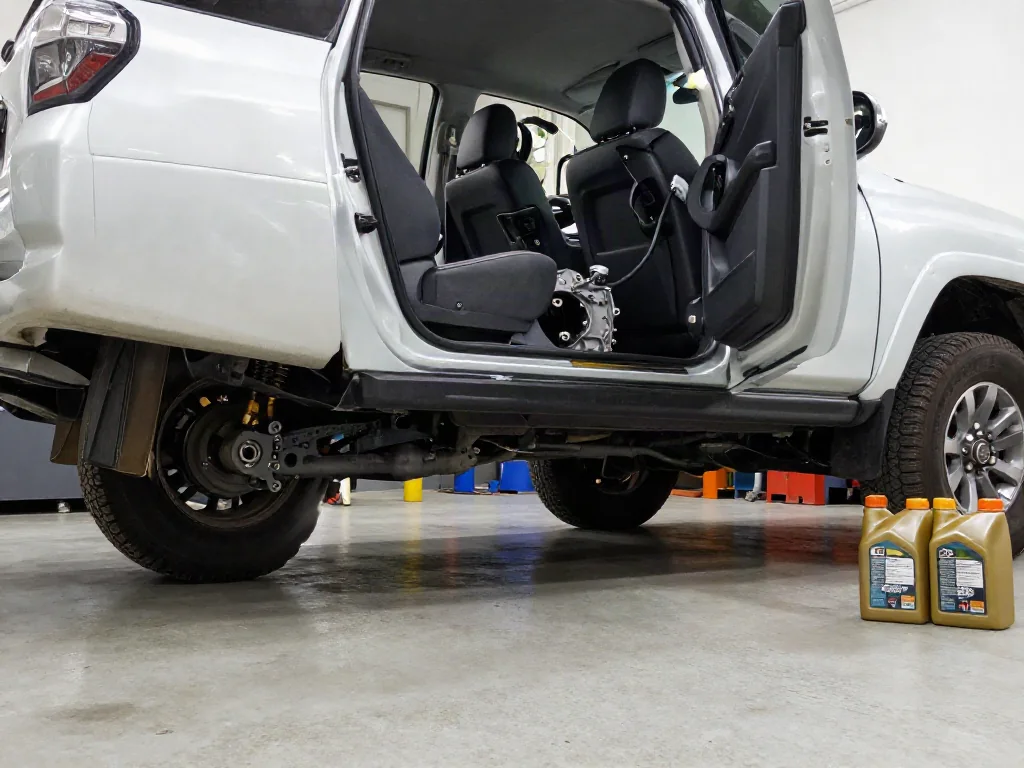
Toyota 4Runner differential fluid work is generation-specific service on the front differential, the rear differential, or both. Drain-and-refill capacity, gear oil viscosity, API specification, and change interval follow the exact model year, drivetrain, and axle identification. This guide covers third-, fourth-, and fifth-generation identification, fluid type, refill quantity, maintenance timing, the change procedure at an overview level, leak clues, and how to read a shop quote.
Identify Your 4Runner’s Model Year, Drivetrain, and Axle
Selecting Toyota 4Runner differential fluid starts with the vehicle, not the product aisle. Model year, two-wheel or four-wheel drivetrain, and the installed axle configuration decide which housing you are filling and which factory specification applies. Third-generation, fourth-generation, and fifth-generation 4Runner owners should treat those groups as separate identification problems because axle designs, locking differential options, and documented refill notes are not interchangeable across generations. Confirm the VIN-linked year and the actual drivetrain before you shop for gear oil or plan a drain-and-refill quantity.
Front differential service applies only when the 4Runner has a driven front axle. Rear-wheel-drive trucks need rear axle work only; four-wheel-drive vehicles typically have both a front differential and a rear differential that can be serviced independently. A work request should state whether Toyota 4Runner rear differential fluid, front differential fluid, or both are in scope. Factory documentation and axle identification tags or stamped codes help when a previous owner swapped housings, added a locker, or left mixed hardware that no longer matches the original build sheet.
Choose the Specified Front and Rear Differential Fluid
The correct 4Runner differential fluid is the viscosity and API gear oil specification listed for that exact vehicle, not a generic hypoid bottle chosen by habit. Use the owner's manual, any under-hood or door-jamb references, and factory service information tied to the VIN. Fifth-generation 4Runner differential fluid type still needs model-year and axle qualifications, because front and rear housings can carry different notes even within the same generation. If a parts-counter suggestion disagrees with the printed listing, stay with the vehicle's documented gear oil viscosity and API rating.
Treat Toyota 4Runner front differential fluid and rear differential fluid as separate approvals. A product that meets the rear axle listing is not automatically approved for the front, and the reverse is also true. A locking differential does not by itself require a friction modifier. Limited-slip or locker additives belong only where the application explicitly calls for them; an unapproved modifier can change clutch behavior or the intended film properties. When documentation is missing, obtain the specification from a dealer or a VIN-based lookup rather than blending leftover gear oils.
Find Differential Capacities for Your Generation and Axle
Published drain-and-refill capacity is not a shared 4Runner figure. Third-generation, fourth-generation, and fifth-generation 4Runner differential fluid capacity each depend on model years, drivetrain, and whether the housing is the front axle, the rear axle, or a later replacement. Without a VIN-matched factory quantity, US-quart and liter refill amounts stay unconfirmed and should not be guessed. Look up drain-and-refill capacity in the service information for the identified axle rather than copying a number from another generation.
Give Toyota 4Runner rear differential fluid capacity and front quantity separate line items whenever both axles exist. Rear housings often hold a different volume than the front, so a fifth-generation lookup should name the axle, not only the generation. Express the factory figure in US quarts and liters with the same rounding the manual uses. Published refill capacity helps plan the purchase; the service procedure sets final fill level at the fill plug when fluid reaches the opening with the housing in the specified attitude.
Determine the Correct Differential Fluid Change Interval
The Toyota 4Runner differential fluid change interval lives in the maintenance schedule for that model year, not in a universal mileage rule. Open the scheduled maintenance tables and read the differential inspection and replacement rows separately. An inspection milestone means check level, leaks, and obvious contamination; it is not an automatic 4Runner differential fluid change. Replacement language, when present, is the interval that actually calls for drain and refill. Fifth-generation and earlier schedules can differ, so borrow timing from the matching year rather than from a later redesign.
Towing, heavy loading, and other severe-service notes matter only when that year's schedule lists extra differential service under those conditions. Do not invent a shorter interval because the truck tows occasionally if the book does not say so. Unknown service history, milky fluid, or suspected water past the differential breather can justify a professional assessment even when the printed interval has not arrived. That is a history decision, not a substitute mileage figure.
Understand What a Differential Fluid Change Includes
A Toyota 4Runner differential fluid change is a drain-and-refill of the specified axle, not a rebuild. The job confirms the correct fluid, checks for leaks, drains used gear oil, inspects accessible plugs and sealing washers, refills to the specified fill level, and rechecks for leaks. Front and rear axles are separate service items, so the work order should name each housing, including a fifth-generation change that covers only the rear. Rear-only service still follows that axle's fill-plug height, specified seals, and fastener torque verification.
Do-it-yourself work has hard limits. Under-vehicle access, a seized fill plug or drain plug, damaged threads, and uncertain specifications all call for suitable equipment and professional help rather than improvised force. Do not guess at lift points or impact methods; a rounded plug can turn a routine 4Runner rear differential fluid change into a housing repair. After the refill, collect used gear oil in a closed container and take it to an accepted local collection facility. Do not dump gear oil on the ground, in household trash, or down a drain.
Recognize Leaks, Noise, and Possible Contamination
Safe checks stay outside the housing. Fresh spots under a parked 4Runner, wetness on the cover or pinion area viewed from outside, and a new change in driving noise are useful observations. Dark, burned-smelling, or metallic-looking Toyota 4Runner differential fluid does not prove an internal failure, and a quiet axle does not prove the fluid is still within specification. Color, odor, and noise are clues for a technician, not a parts diagnosis.
Persistent leaks, a new whine or grind, or suspected water entry through a clogged differential breather need professional inspection rather than another bottle of gear oil as the assumed cure. A routine fluid change cannot restore a torn seal, a scored pinion, or a breather pulling water into the housing. Those conditions need leak tracing and further testing. Treat the fluid change as lubricant maintenance, not proof the axle is healthy once the fill plug is reinstalled.
Estimate Service Cost and Read the Shop Quote
A 4Runner differential fluid change cost follows fluid quantity, the required oil specification, local labor rates, and how many axles are on the work order. Front-and-rear service uses more gear oil and more labor than a Toyota 4Runner rear differential fluid change alone. Unsupported national averages should not be treated as a quote. Ask for an estimate written around your model year and the housings being serviced. A fifth-generation job priced from another generation's capacity or fluid type will not match the parts actually used.
A complete quote should itemize specified gear oil, applicable sealing hardware such as a fill-plug or drain-plug sealing washer, labor, used-oil disposal, and tax. Those are the routine drain-and-refill pieces. Leak repairs, a damaged fill plug, stripped threads, and extra diagnosis sit outside that package and should appear as separate lines. If the shop finds a wet pinion seal or a crushed washer, approve that work before it is billed as part of the original refill.