Toyota 4Runner 4WD Actuator Fitment: How to Match the Right Part
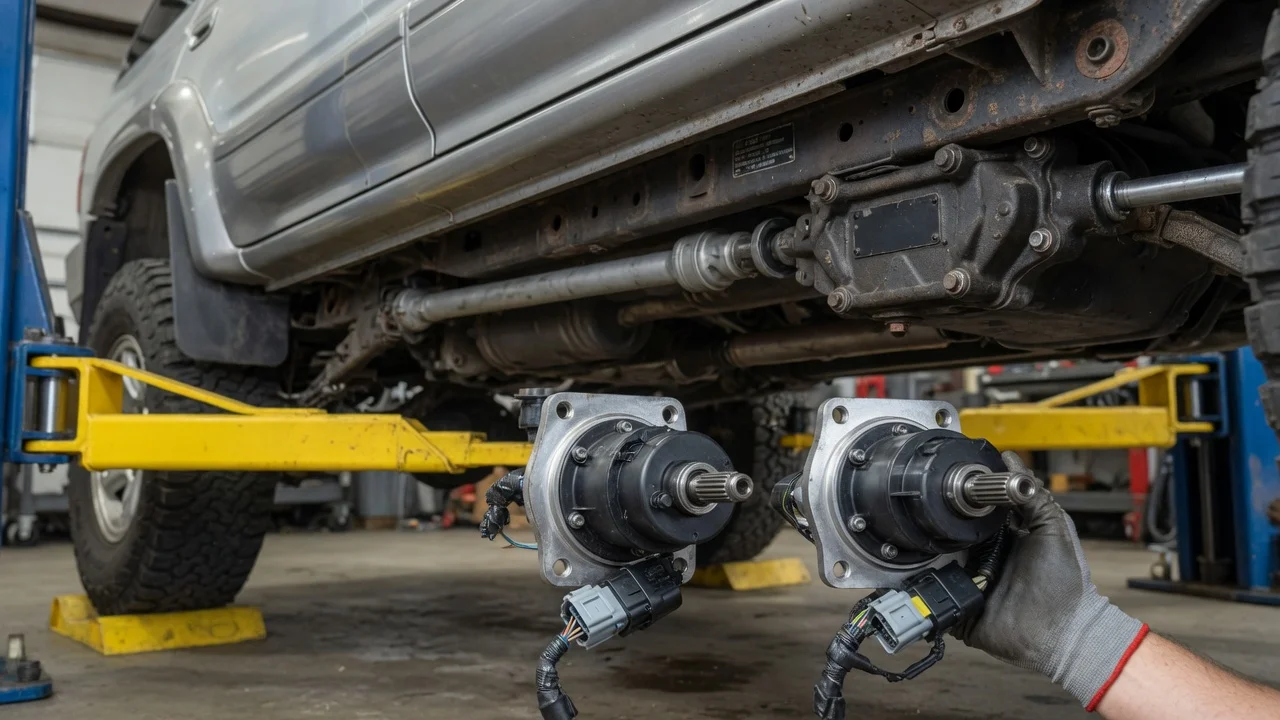
Buying a 4WD actuator for a Toyota 4Runner looks simple until several listings all claim to fit the same truck. The 4Runner has used different four-wheel-drive systems over its generations, so an actuator that suits one vehicle may not bolt up, plug in or work correctly on another. This guide explains how to match the part to your exact vehicle configuration, what the actuator does, and how to confirm the fault before you spend money on a replacement.
Which 4WD actuator fits your 4Runner
No single 4Runner 4WD actuator fits every truck. Fitment depends on the model year, whether the vehicle is two-wheel drive or four-wheel drive, which type of four-wheel-drive system it has, and in some cases the trim level and engine. A part-time 4WD truck and a full-time 4WD truck from the same period can use different hardware. The word actuator can also refer to more than one component: a front differential or axle disconnect actuator, a transfer case shift actuator, or a differential lock actuator. Before comparing prices, be sure which one you actually need.
The most reliable way to confirm fitment is a lookup by the 17-character VIN through a Toyota parts counter or a catalog that decodes the VIN. Then compare the result with the part number printed or stamped on the actuator you are replacing. If a catalog shows more than one option for your year, the VIN and the original part number settle the question. A listing that only gives a model year range is a starting point, not proof that the part fits.
What the actuator does in the 4WD system
On part-time four-wheel-drive systems, the front driveline is typically disconnected in two-wheel drive to reduce drag and wear. When you select 4WD, the transfer case sends power to the front driveshaft, and the front actuator moves a sleeve or collar that connects the front axle to the differential so the front wheels can drive. Older designs commonly use engine vacuum to move this mechanism, while later designs generally use an electric motor. The 4WD indicator on the dash usually flashes while engagement is in progress and stays steady once it is complete.
Other actuators handle different jobs. On trucks with electronic range selection, a transfer case actuator or shift motor moves the transfer case between ranges. On full-time systems, an actuator locks the center differential when you request it, and some trims add an actuator for a locking rear differential. Each has its own mounting, connector and function, so a failure in one does not mean the others are bad, and replacing the wrong one will not fix the problem.
What changes the right part
Generation and drivetrain matter most. A vacuum-operated actuator and an electric actuator are not interchangeable, and a part-time system does not use the same parts as a full-time system. Trims that include extra locking differentials carry additional actuators that base models lack. Running changes can also happen partway through a model year, which is why the production date on the driver door jamb label can be useful when a catalog splits a year into two part numbers.
Part numbers are sometimes superseded, so the correct replacement may carry a different number than the original and still be the right part according to the Toyota catalog. Aftermarket and remanufactured units are often listed by application rather than part number; check that the connector shape, pin count, mounting pattern and overall design match your original before ordering. Previous repairs also change the picture. If the front differential, transfer case or wiring harness was swapped at some point, the installed parts may not match what the VIN lookup expects, and the old actuator becomes the better reference.
What to check before ordering
Confirm the fault first. Common complaints include a 4WD indicator that keeps flashing, front wheels that do not drive in 4WD, grinding when engaging, or a system that will not return to two-wheel drive. Those symptoms can also come from a blown fuse, a failed relay, a damaged connector or wiring, a selector switch, or, on vacuum systems, a cracked hose or faulty vacuum switching valve. A scan tool that reads Toyota body and drivetrain codes can point to the circuit involved. A visual inspection of the harness near the front differential is worthwhile, since that area takes water, mud and road salt.
Make sure the issue is not the shifting procedure. The owner's manual describes when and how each range should be selected, and some engagements do not finish until the wheels turn slightly. Review the service history for earlier actuator replacements or differential work. If you see fluid around the actuator mounting area, have the differential fluid level checked against the manufacturer specifications.
When you are ready to buy, write down the VIN, the production date and the part number from the old actuator, and take photos of its connector and mounting. Compare these with the listing. After installation, confirm that the system engages in each 4WD range your truck offers, that the indicator stops flashing once engaged, and that it returns cleanly to two-wheel drive.
Limitations and when to get help
This guide cannot confirm a part number for your specific truck. Catalogs are updated, modified vehicles may not match factory records, and listings sometimes contain errors. Actuators are generally replaced when they fail rather than on a fixed maintenance schedule, so there is no universal replacement interval to follow. If a new actuator does not restore normal operation, the cause may be elsewhere, such as the shift collar or fork, the differential, the transfer case or the control module. That calls for proper diagnosis rather than more parts.
If the VIN lookup returns conflicting results, the old actuator is missing or unreadable, or the fault returns after replacement, have a technician with Toyota service information and a capable scan tool inspect the system. Until the problem is resolved, avoid relying on 4WD in operating conditions where losing front-wheel drive would leave you stuck. Do not leave a part-time system engaged on dry pavement.