Toyota 22RE Brake Booster Vacuum Hose: Choosing the Correct Part
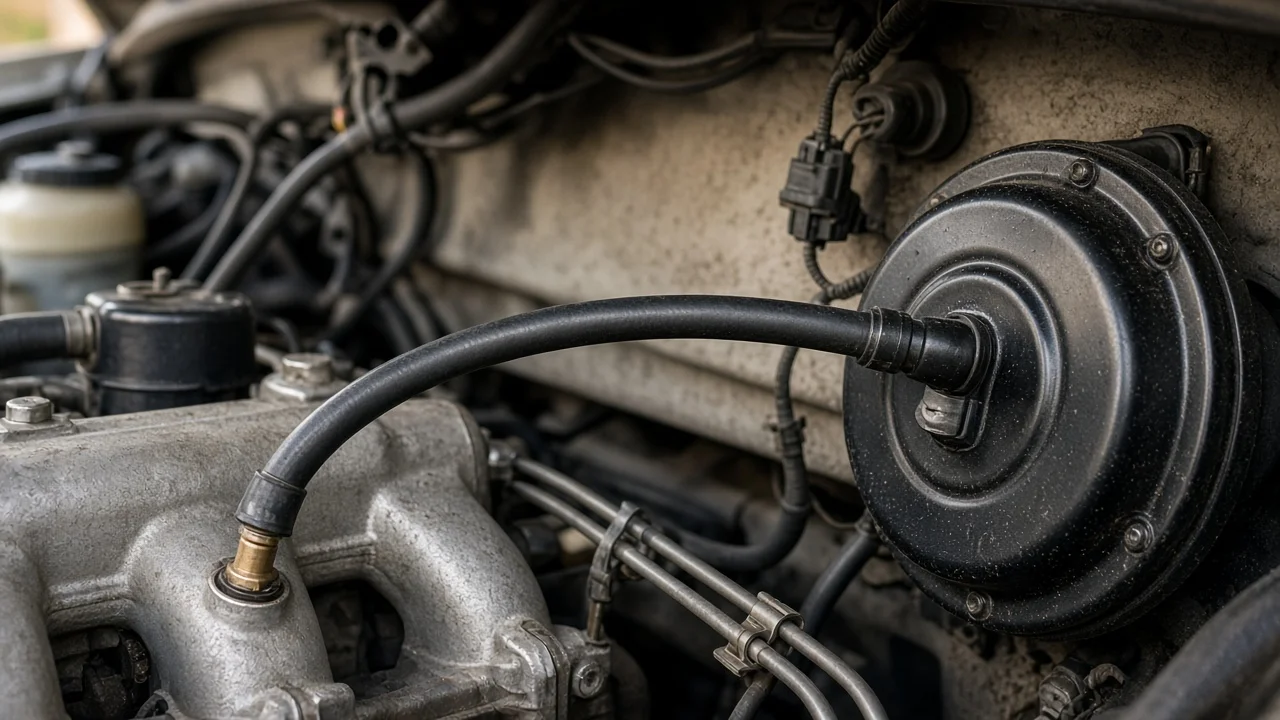
A hard brake pedal or a hiss under the hood on a 22RE-powered Toyota pickup or 4Runner often leads owners to the brake booster vacuum hose. It is a simple, inexpensive part, but the wrong hose can collapse, leak or kink and quietly reduce power assist. This guide explains how to confirm what your truck needs, which features actually matter and how to compare replacement options without guesswork.
Define the job the product must do
The vacuum hose carries engine vacuum from a port on the intake to the brake booster, where a one-way check valve holds that vacuum inside the booster. The booster uses the pressure difference across its diaphragm to multiply the force of your foot on the pedal. To do that job, the hose must hold steady vacuum without flattening, seal tightly at both connections, tolerate underhood heat and oil vapor, and keep the check valve working in the correct direction. A hose that looks fine from the outside can still be soft, cracked on the inside or loose on its fittings.
Before buying anything, confirm that the hose is likely the problem. Typical signs include a pedal that needs much more effort than usual, a hissing sound near the booster or intake, a rough or unusually high idle caused by a vacuum leak, and rubber that is cracked, swollen or oil-soaked. A soft or sinking pedal points somewhere else: low or leaking brake fluid, a caliper or wheel cylinder fault, or a master cylinder problem. A new hose will not fix worn brake pads, scored brake rotors or tired friction material either. If the truck does not stop as it should, stop driving it and have the brakes inspected before further use.
Check compatibility
The 22RE was used mainly in Toyota compact pickups and early 4Runners from the mid-1980s to the mid-1990s, and hose routing is not identical across every truck. Model year, two-wheel or four-wheel drive, cab and body style, and whether the engine is the turbocharged 22R-TE can all change the shape and length of the hose and where it connects. Confirm vehicle fitment using the model year, drivetrain and VIN, and if possible read the part number from the original hose or from the factory parts catalog for your specific truck rather than relying on the engine code alone.
Several interfaces decide whether a hose will fit and seal. Measure the inner diameter needed at each end, because the intake-side fitting and the check valve nipple may not be the same size. Note the overall length and any molded bends, whether the check valve is built into the hose assembly or sits separately in a rubber grommet on the booster shell, and what kind of clamps hold each end. Measure the old hose and the fittings before discarding anything. On older trucks, also look for splices, tee fittings or mismatched sections added by previous owners, since those can hide the original layout and introduce extra leak points.
Features that affect the choice
The most important feature is a genuine vacuum brake rating. Hose intended for brake booster service has a wall and reinforcement designed to resist collapsing under vacuum, and it is commonly made to the SAE J1403 standard for vacuum brake hose. When a listing names that standard or cross-references a factory part number, that is useful evidence. Heater hose and generic rubber tubing can flatten at high vacuum, and fuel hose is built for a different service, so neither is a sound substitute. Resistance to oil and heat matters too, because crankcase vapor and engine heat are what usually degrade the original. A pre-formed hose that reproduces the factory bends avoids kinks; straight bulk hose is acceptable only if the run can be made without tight curves or contact with hot or moving parts.
The check valve deserves the same attention as the hose. If the original valve is old or its grommet is hard, replacing it at the same time is sensible. A working valve lets air pass when you blow from the booster side and blocks it from the engine side, and most are marked with an arrow or label to show the direction toward the engine. Be skeptical of labels such as heavy-duty, premium or OEM quality when they come without a stated rating, dimensions or part-number reference. Silicone hose can work if it is specifically rated for vacuum and has adequate wall thickness, but color and appearance tell you nothing about its performance.
Limitations and ownership costs
Replacement is usually straightforward: with the engine off and cool, release the clamps, ease the old hose off without cracking plastic fittings, inspect the booster grommet, and route the new hose along the original path with secure clamps at both ends. Cut bulk hose slightly long so it is not under tension, but not so long that it sags into a kink. Afterward, run a basic booster check. With the engine off, pump the pedal several times to use up stored vacuum, hold steady pressure on it and start the engine; the pedal should move down slightly as assist returns. Listen for hissing and confirm the idle settles normally.
Ownership costs are low, but the hose is a wear item worth inspecting at routine service intervals. If the old hose was soaked with oil, find out why, because a crankcase ventilation problem will attack the new one as well. Know what this part cannot do: it will not repair a leaking booster diaphragm, a failing master cylinder or any hydraulic fault. If the pedal is still hard with a sound hose and a good check valve, the booster itself is the likely suspect. Pad and rotor wear limits, fluid condition and caliper function should be checked against vehicle-specific service information, and any lingering braking concern calls for professional service rather than more parts swapping.
Build a practical shortlist
Compare candidate parts on a short set of checks instead of star ratings. Does the listing match your model year, drivetrain and body style, ideally by part number? Do the inner diameters fit both the intake fitting and the check valve? Is the hose stated to be rated for vacuum brake service? Does the length and shape suit your routing without kinks? Is the check valve included or sold separately, and is its direction clearly marked? Are suitable clamps and a fresh grommet included or easy to source? Finally, check the return policy in case the fitment turns out to differ on your truck.
For most owners, an original-equipment or OE-equivalent molded hose matched by part number is the simplest choice because it reproduces the factory routing and fittings. A correctly sized, properly rated bulk vacuum brake hose is a reasonable alternative when the exact molded part is unavailable, provided you can route it cleanly. Whichever path you choose, verify assist after installation and treat any remaining hard pedal or reduced stopping ability as a reason to park the vehicle and have the braking system diagnosed.