Totaled Car Insurance Payout: How to Understand the Settlement
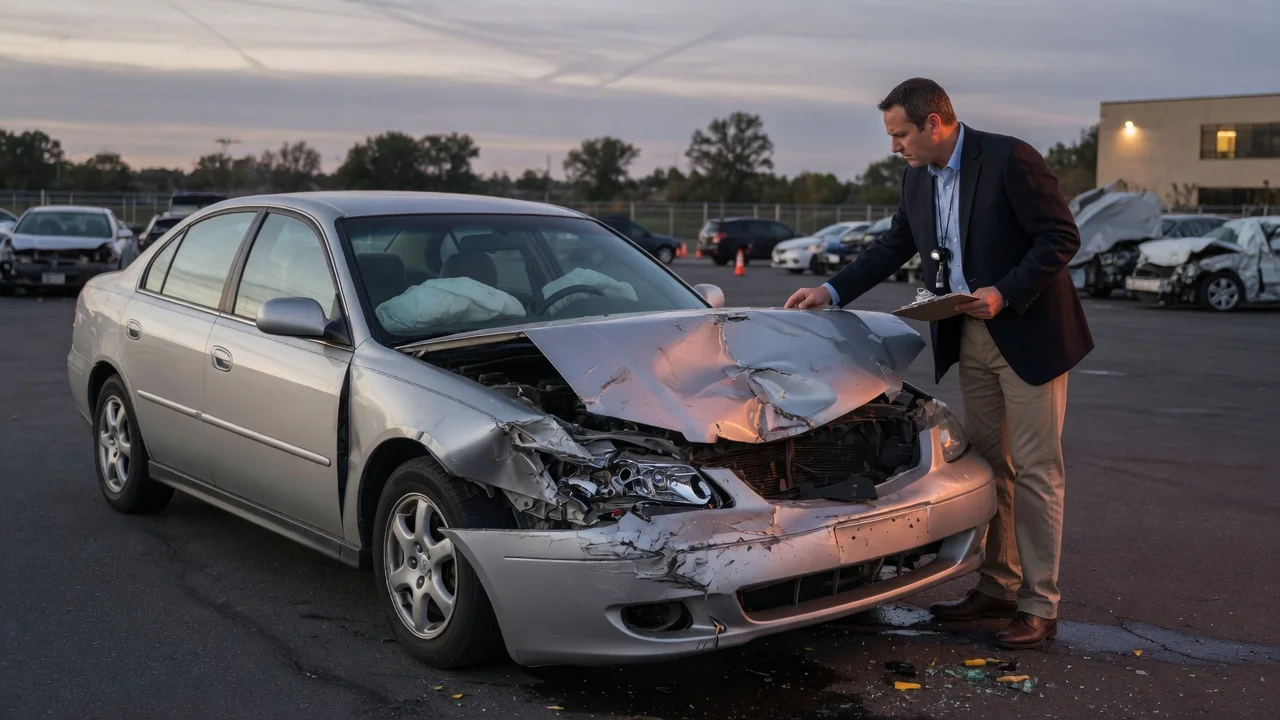
What a totaled-car payout is
When an insurer declares a vehicle a total loss, the settlement is typically the car’s actual cash value at the moment just before the loss, minus any deductible that applies under the policy you are claiming on. Actual cash value means the vehicle’s fair market worth in its pre-loss condition, not what you paid for it and not what it would cost to buy a new replacement. The amount can rise or fall with coverage type, loan or lease payoff, gap protection, sales tax and fees, salvage retention, and the total-loss rules that apply in your jurisdiction.
When an insurer calls a car totaled
A total loss, often called a totaled car, means the insurer has decided it will not pay to repair the vehicle. That decision is usually based on comparing the expected cost of repairs with the car’s actual cash value, and sometimes with the remaining salvage value of the wreck. Some jurisdictions set a legal threshold, often as a percentage of value, at which a vehicle must be treated as a total loss. Others leave more of the decision to the insurer’s policy and estimating practice. The exact cutoff is not uniform, so the same repair estimate can produce a total loss in one place and a repair authorization in another.
A constructive total loss can also apply when the car is still repairable in a mechanical sense but the combination of parts, labor, storage, and related costs makes repair uneconomical relative to value. Theft claims follow the same valuation idea when the vehicle is not recovered in usable condition. The payout question is the same in each case: what was this specific car worth immediately before the loss?
How the settlement figure is built
Insurers generally start with comparable vehicles of the same year, make, model, trim, and similar mileage and options, then adjust for condition, equipment, and recent local asking or sale prices. That adjusted figure is the actual cash value. From it the insurer subtracts the deductible on a first-party collision or comprehensive claim. If you keep the damaged vehicle, the insurer also subtracts the salvage value, because you are retaining an asset the insurer would otherwise sell.
The offer may list add-ons such as sales tax, title, and registration on a replacement vehicle. Whether those items are owed depends on the policy language and on the law where the loss is settled. Some policies and some jurisdictions require the insurer to include applicable tax and certain fees in a total-loss payment. Others pay market value only. That difference can be large, and it is one of the first lines to check on the settlement worksheet.
Coverage that changes who pays and how much
Collision coverage pays for damage from a crash with another vehicle or object, subject to your deductible, even when you are at fault. Comprehensive coverage pays for many non-crash losses, such as theft, vandalism, fire, flood, or hail, also subject to a deductible. If you claim on your own policy, the deductible almost always reduces the check. If another at-fault driver’s liability insurance accepts the claim and has enough limit to cover the actual cash value, the payment is typically the car’s value without your collision deductible. Liability limits, disputes over fault, and uninsured or underinsured motorist property-damage rules can still leave a shortfall.
A policy with liability coverage only does not pay to replace your own totaled car. Uninsured motorist property-damage coverage, where it is sold, may pay if an identified uninsured driver caused the loss, on terms that vary by jurisdiction. Rental reimbursement and related extra coverages, if you bought them, are separate from the vehicle’s actual cash value and do not automatically increase the total-loss check for the car itself.
Loans, leases, and gap protection
If a lender or lessor is listed as a loss payee, the insurer typically issues the settlement to the lienholder, or jointly to you and the lienholder. The lender applies the money to the remaining balance. When the actual cash value is lower than what you still owe, you remain responsible for the difference unless you have gap coverage, a similar loan-payoff endorsement, or a lease-payoff provision that the contract actually covers. Gap coverage is not the same as collision coverage. It is meant to address the loan or lease shortfall after the actual-cash-value payment, and its terms, exclusions, and whether it is primary or secondary to other benefits are defined in that separate contract.
Keeping the salvage
You can sometimes retain the damaged vehicle. The insurer then pays actual cash value minus deductible minus salvage value. The car will usually be branded with a salvage title or a comparable jurisdiction-specific brand, which affects whether it can be registered, inspected, rebuilt, and later insured. Retaining salvage is a value trade, not a way to collect a full payout and keep the wreck. Storage charges that accrue while the car sits at a yard can also reduce what you net if they are your responsibility under the policy or the shop’s contract.
What the offer often misses or understates
Trim, packages, and factory options that comparable listings used in the valuation did not include; Recent tires, brakes, or documented reconditioning that a typical comparable car would not have; Incorrect mileage, accident history, or condition grade on the valuation report; Local tax, title, and registration amounts where the policy or applicable law requires them; Owner-installed equipment only if the policy’s custom-parts or similar limit actually covers it; Betterment deductions, which some estimates use when a repair would have replaced worn parts with new ones; on a total loss the core issue is pre-loss market value, so a betterment-style cut needs a clear policy basis
Limits you should expect
The settlement is not a purchase-price refund, a new-car replacement, or compensation for a high loan-to-value ratio unless a specific endorsement pays that difference. Agreed-value and stated-amount policies, more common on collector or specialty vehicles, can replace actual cash value with a scheduled figure; ordinary personal auto policies usually do not. Diminished-value claims, where allowed, concern a repaired car that is worth less after an accident and are a different issue from a total-loss actual-cash-value payment. Applicable law, policy wording, and the facts of fault control the result. No single percentage, waiting period, or tax rule can be treated as universal.
What to check before you accept
Ask for the valuation report, the comparable vehicles used, the condition adjustments, the deductible, any salvage deduction, and a line-by-line statement of tax and fees. Compare those comps with the same generation, powertrain, trim, and options as your car, in the same market. If the report is wrong on equipment or condition, document the error with the window sticker, build sheet, service records, and dated photos. Many policies include an appraisal clause that lets each side appoint an appraiser when value is disputed; using it is a contractual process, not a court case, and it still has costs and deadlines. If a lender is involved, confirm the payoff quote date, per-diem interest, and how any surplus after payoff will be issued to you.
Accepting the check and transferring the title usually closes the vehicle claim on actual cash value. Read any release for language that would also waive unrelated claims, such as injury, before you sign. Specific dollar amounts, total-loss percentage thresholds, tax treatment, salvage-title rules, and appraisal procedures are jurisdiction- and policy-specific; the insurer’s written settlement explanation and the policy contract are the documents that control your claim.