Torque Converter Clutch Valve: Function and Identification
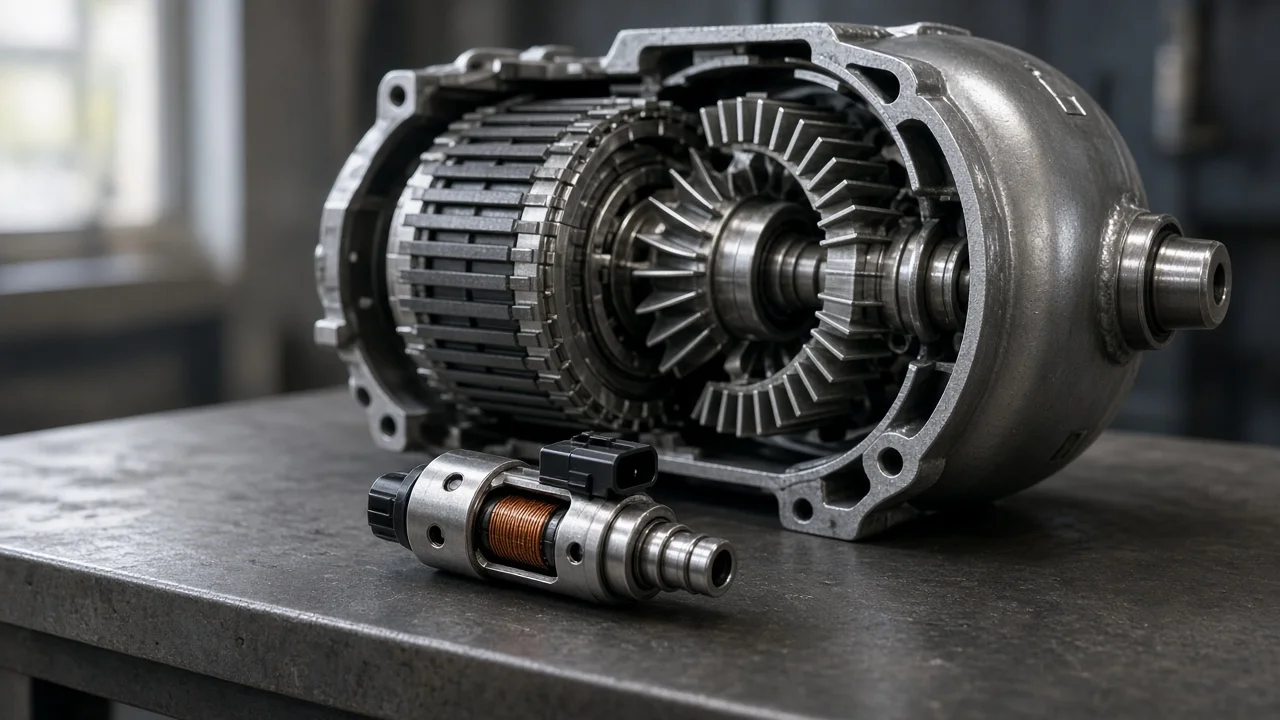
In an automatic transmission with a lock-up torque converter, the torque converter clutch valve helps decide when the converter locks and unlocks. Owners usually hear the term after a shudder, a high-RPM cruise or a stall at stops, or after a scan tool reports a converter clutch code. This guide explains what the valve does, how to tell which design your transmission uses, and what you can sensibly check before any parts are replaced.
What the torque converter clutch valve does
The torque converter clutch valve is a hydraulic spool valve, usually located in the transmission valve body. It routes fluid pressure to apply or release the clutch inside the torque converter. When the clutch applies, the engine and the transmission input shaft turn together instead of slipping through fluid. This lowers engine speed at cruise, reduces heat and improves fuel economy. When the clutch releases, the converter returns to fluid coupling. That lets the vehicle stop at idle without stalling and lets the converter multiply torque when pulling away.
The name is used loosely. Some service information calls it the converter clutch apply valve, regulator valve or control valve. Many owners and parts listings use "TCC valve" to mean the electronic TCC solenoid that commands the hydraulic valve. On most modern transmissions these are separate parts that work together. The solenoid is the electrical actuator, controlled by the powertrain or transmission control module. The valve is the mechanical part that moves in its bore to direct fluid. The first step in identification is knowing which of the two a diagnosis or a part listing refers to.
How lock-up control works
The control module decides when lock-up is allowed. It uses inputs such as vehicle speed, throttle position, engine load, current gear, brake switch status and transmission fluid temperature, and then energizes the TCC solenoid. Depending on the design, the solenoid is either switched on and off or pulsed with a varying duty cycle. Pulsing lets the clutch be applied gradually, held with controlled slip or fully locked. The solenoid changes a signal pressure, and that signal shifts the converter clutch valve against its spring. In its new position, the valve sends regulated pressure into the converter apply circuit and opens the release side. To unlock, it does the reverse.
The valve is a precision-fit spool, so wear between the valve and its bore can let pressure leak past it. On some valve body designs, this kind of wear is a known contributor to unstable apply pressure. That can show up as slipping, flare or shudder during lock-up. Contaminated or degraded fluid can also make the valve stick or move slowly. The clutch lining, the converter seals, the input shaft seals and the fluid's friction properties all affect the result too, so the valve is only one link in the circuit.
What changes the answer for your vehicle
Transmission type matters most. Conventional planetary automatics and most CVTs with torque converters use a lock-up clutch. Dual-clutch transmissions and manual gearboxes have no torque converter at all. Some older lock-up designs used hydraulic signals such as governor pressure instead of a computer-controlled solenoid. Newer units may use controlled slip strategies or several solenoids that share duties. Some put the solenoid inside a sealed electronic module, which changes where the parts are and whether they can be serviced separately.
Identification therefore starts with the exact transmission, not just the vehicle model. The transmission code may be on an identification tag or stamped on the case. It can often be confirmed through the VIN and build information in factory service data. Engine, drive layout and model year can all change the valve body, the solenoid connector, the calibration and the fluid specification. Fitment for solenoids, valve kits and replacement valve bodies is often tied to these details. Some units also require the control module to be programmed or adapted after parts are replaced.
Operating conditions also change the picture. Lock-up usually waits until the fluid reaches a minimum temperature and the vehicle is in a suitable gear and speed range. A converter that never locks on a short cold trip may be behaving as designed.
What the owner can do
Start with observation. With the engine fully warm, cruise at a steady speed on a level road with light throttle and watch the tachometer. On many vehicles, lock-up shows as a small, steady drop in RPM with no gear change. Note whether you feel a rumble or shudder like driving over rumble strips. Also note whether RPM rises and falls at a constant speed, or whether the engine nearly stalls when you come to a stop. Write down the speed, temperature, load and gear for each event. These details guide diagnosis more than a general description of the shift behavior.
Next, read diagnostic codes with a scan tool that can access the transmission. Generic readers may miss manufacturer-specific codes and data. Generic codes in the P0740 to P0744 range relate to the converter clutch circuit or its performance. However, a code describes what the module detected, not which part failed. A wiring fault, a weak solenoid, a sticking valve, a worn converter clutch or low fluid pressure can produce similar results. A capable scan tool may also show commanded versus actual converter slip, which is more useful than a code alone.
Check the fluid level and condition using the method specified for your transmission. Some units have no dipstick and require a specific temperature and procedure. Confirm that the fluid in the transmission matches its fluid specification, since the wrong friction characteristics alone can cause lock-up shudder. Review the service history for fluid changes, previous repairs and software updates. Repair options include a fluid service, a calibration update, solenoid replacement, valve body repair with an oversized valve kit, a replacement valve body or a new torque converter. The right choice depends on test results.
Limitations and next step
Symptoms overlap heavily. A faulty converter clutch valve, a bad solenoid, a worn converter, engine misfires and driveline vibrations can all feel alike. A shudder or a stored code does not confirm that any one part has failed. Procedures, pressure specifications, solenoid resistance values and fluid types are specific to each transmission, and guessing at them can cause damage or wasted repairs.
If basic checks do not explain the problem, take the vehicle to a transmission specialist with access to factory service information for your exact unit. Bring your notes on when the symptom happens, the stored codes and freeze-frame data, and your service history. Pressure testing, live data review and, where needed, valve body inspection are the reliable ways to confirm whether the torque converter clutch valve is the cause before parts are ordered.