Top Engine Oil: Leading Brands, Product Lines and How to Choose the Right One
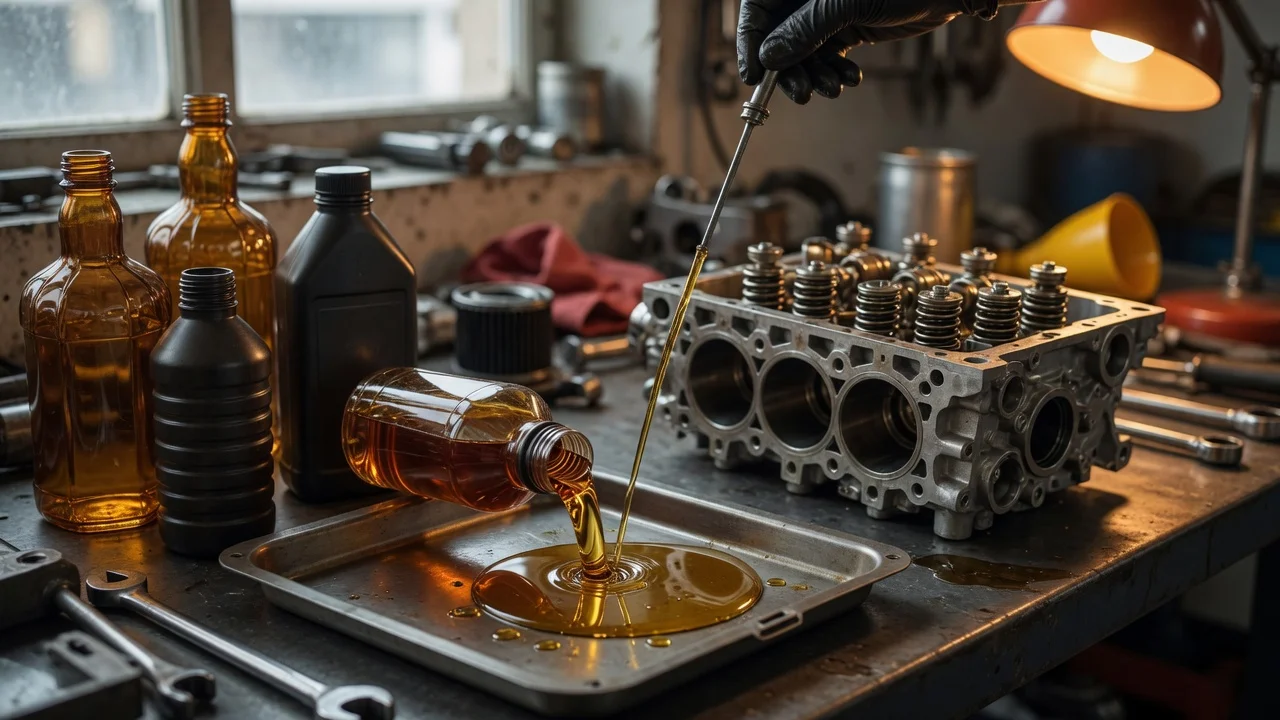
Searching for the top engine oil usually means one of two questions: which brands and product lines are worth knowing, and which of them is right for a particular car. This guide covers both. It presents a selection of widely recognized engine oil brands, then explains the ratings and approvals that decide whether a given oil suits a given engine. The short answer to the second question is that the best oil for an engine is the one that meets the viscosity grade and specification listed in that vehicle's owner's manual. Brand comes after that.
How this list was put together
This is a selection, not a complete inventory of the market and not a performance ranking. Entries were included because they are established, widely distributed brands or product lines for passenger-car engines, and because they offer oils carrying recognized industry specifications or manufacturer approvals. They appear in alphabetical order. No comparative laboratory test data, wear measurements or pricing were available for this article, so no brand is placed above another. Any claim that one oil is objectively the best across all engines should be treated with caution. Engines differ in their requirements, and independent comparative testing is limited.
Widely recognized engine oil brands and product lines
Amsoil
Amsoil is a US company that specializes in synthetic lubricants. It sells largely through dealers and direct channels rather than mainly through general retail. It belongs on this list because its range covers a wide spread of viscosity grades and applications, including passenger cars, light trucks and powersports. As with any brand, buyers should confirm that the specific product meets the specification their vehicle requires.
Castrol EDGE and Castrol GTX
Castrol is one of the most widely distributed lubricant brands in the world. EDGE is its flagship full-synthetic line. GTX is its long-running mainstream line, which includes conventional, blend and high-mileage variants. Castrol is also relevant to an important terminology question. A US advertising dispute it was involved in during the late 1990s is the reason many oils marketed as full synthetic in North America are made from highly refined mineral base stocks rather than chemically synthesized ones. That distinction is explained further below.
Liqui Moly
Liqui Moly is a German brand known for an extensive catalogue of engine oils and additives. It is relevant for owners of European vehicles in particular, because many of its oils are formulated and labelled against European manufacturer approvals, such as those issued by Volkswagen, Mercedes-Benz and BMW. Check the label for the exact approval code your engine requires.
Manufacturer-branded (genuine) oils
Many vehicle manufacturers sell oil under their own or an affiliated brand, usually produced by a major lubricant company. Examples include Toyota Genuine Motor Oil, Mopar for Stellantis brands and ACDelco for General Motors. These oils are not inherently superior. They earn a place here because they are formulated to the manufacturer's own requirements and are commonly used by franchised dealers. For owners who want the simplest route to meeting the factory specification, they are a straightforward choice.
Mobil 1
Mobil 1 is ExxonMobil's synthetic motor oil brand. Introduced in the 1970s, it is one of the longest-established synthetic oil lines on the market. Its relevance comes from its wide distribution and broad range of viscosity grades. Many of its products also carry manufacturer approvals, such as GM dexos or European OEM specifications. Which approvals apply varies by individual product and market, so the specific bottle should be checked.
Motul
Motul is a French lubricant company with a long association with motorsport. Its 8100 series is its main passenger-car synthetic range. It is relevant for owners of performance and European vehicles, because many of its products are labelled with specific ACEA sequences and manufacturer approvals.
Pennzoil Platinum and Ultra Platinum
Pennzoil is owned by Shell. Its Platinum and Ultra Platinum full-synthetic lines are made with base oil from Shell's PurePlus gas-to-liquids process, which converts natural gas into base oil rather than refining it from crude oil. That makes Pennzoil a distinct example of how base stock origin varies between brands. It is widely sold in North America.
Shell Helix
Helix is Shell's engine oil brand in many markets outside North America, where Pennzoil plays the equivalent role. Helix Ultra is its top full-synthetic tier and also uses PurePlus gas-to-liquids base oil. It is relevant to readers in Europe, Asia and other regions where Helix is the more common Shell product on shelves.
TotalEnergies Quartz
Quartz is the passenger-car engine oil range from French energy company TotalEnergies. It is widely available in Europe and other markets. It is relevant to this list because its range includes oils labelled against ACEA sequences and European manufacturer approvals.
Valvoline
Valvoline is a long-established US lubricant brand with conventional, synthetic-blend and full-synthetic lines. It is also well known for its high-mileage oils, which are formulated for older engines and typically include seal conditioners intended to reduce leaks and oil consumption. That makes it a relevant name for owners of vehicles with substantial mileage.
Why specification matters more than brand
Every brand above sells many different oils, and they are not interchangeable. A full synthetic suited to a modern turbocharged gasoline engine may be the wrong choice for a diesel with a particulate filter, or for an older engine that specifies a different viscosity. The owner's manual, or the oil filler cap on some vehicles, states the required viscosity grade and performance specification. Using an oil that meets both matters more than the logo on the bottle. Using an oil that does not meet a required manufacturer approval can also matter for warranty purposes, depending on the manufacturer and market.
Key terms on an engine oil label
Term | What it means | Where you see it; Viscosity grade (for example 0W-20, 5W-30) | An SAE J300 rating of how the oil flows. The number before W indicates cold-start performance, where lower means it flows more easily when cold. The number after it indicates thickness at engine operating temperature. | Front label of every bottle; API service category (for example SP, or the newer SQ) | The American Petroleum Institute performance level for gasoline engines. Letters later in the alphabet are newer standards. Diesel categories start with C, such as CK-4. | API service symbol, often called the donut, on the back label; ILSAC (for example GF-6A, GF-6B, GF-7) | A standard set by US and Japanese automakers, focused on fuel economy and engine protection in gasoline cars | API certification mark, often called the starburst; ACEA sequence (for example A3/B4, C2, C3) | European automakers' oil specifications. C-category oils are low-ash formulations designed to protect exhaust after-treatment systems such as particulate filters. | Back label, common on European-market oils; Manufacturer approval (for example GM dexos1, VW 504 00/507 00, MB 229.5, BMW Longlife-01) | Formal approval that the oil meets a specific carmaker's own standard, which can be stricter than general categories | Back label, usually listed by code
Conventional, synthetic blend and full synthetic
Conventional (mineral) oil: refined from crude oil. It is suitable where the manufacturer permits it, typically in older or less demanding engines. Synthetic blend: a mix of conventional and synthetic base oils, positioned between the two in performance and price. Full synthetic: made from highly processed or chemically synthesized base oils. It generally offers better resistance to breakdown at high temperatures and better flow when cold. Many modern engines that specify low-viscosity grades such as 0W-20 effectively require it. High-mileage oil: not a separate base-oil category. It is a formulation, available as conventional, blend or synthetic, with additives aimed at older engines.
The term full synthetic is not tightly defined everywhere. In the United States, oils made from severely hydrocracked mineral base stocks, known as API Group III, can be marketed as synthetic. Others use chemically built base stocks such as polyalphaolefins (PAO, API Group IV) or gas-to-liquids base oil. The label alone usually does not reveal which base stock is used. For most drivers, meeting the required specification is the practical test, not the base-oil chemistry.
Choosing among the top engine oils: a quick checklist
Find the required viscosity grade and specification in the owner's manual for your exact make, model, model year and engine. Check whether your engine requires a specific manufacturer approval code. This is common on European, diesel and many turbocharged engines. Confirm the bottle shows that grade and that specification or approval, not just a similar-sounding one. Follow the manufacturer's oil change interval, using the severe-service schedule if your driving matches its description. Choose among qualifying products by availability, price and preference. Any well-known brand meeting the requirement is a sound choice.
What this guide does not cover
No independent comparative test results, wear data, prices or market-share figures were available for this article. As a result, it does not rank brands by protection, longevity or value, and it does not list the specific approvals held by individual products, which change over time and differ between markets. For those details, the current product data sheet for the exact oil, and the specification listed for your vehicle, are the authoritative references.