Tire Widths in Inches: 275, 285, and Full Tire Size Dimensions
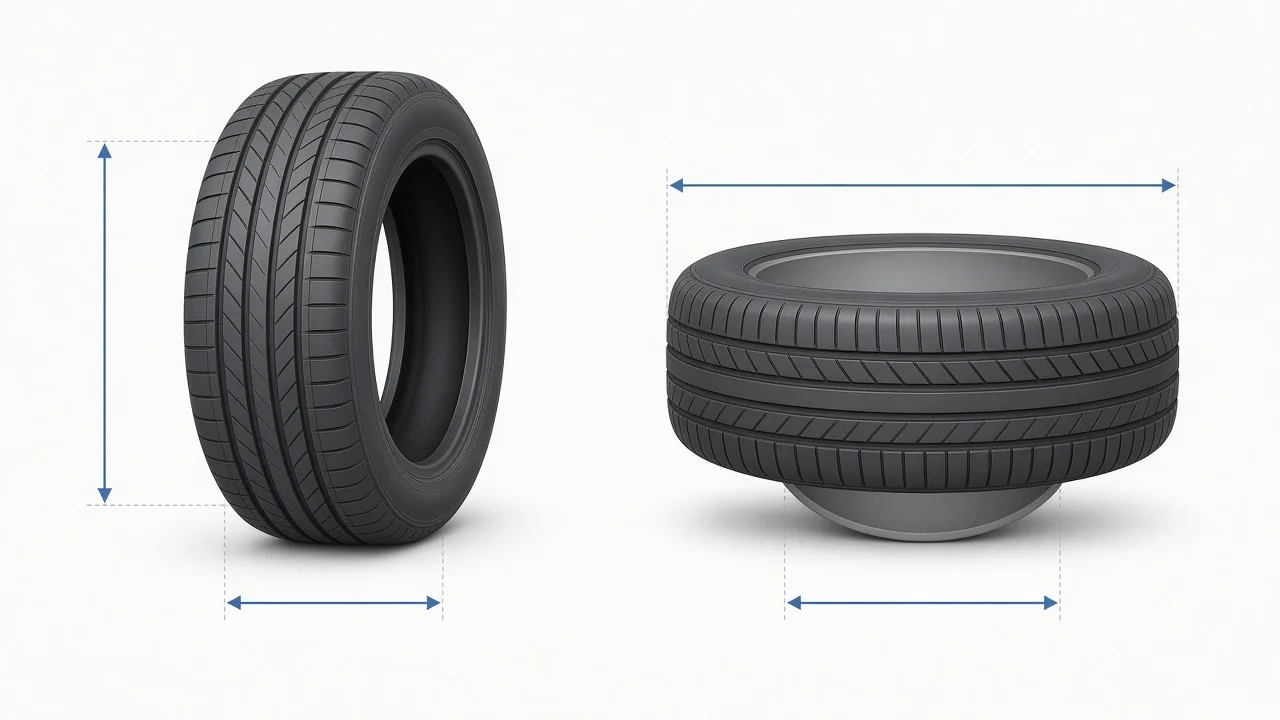
When a tire size starts with 275, that three-digit figure is the nominal section width in millimeters, not the overall height. Converting 265, 275, 285, 295, 305, and 315 sizes to inches answers how wide those tires are, but height still depends on aspect ratio and wheel diameter. Full markings such as 275/55R20 and 275/60R20 unpack width, sidewall, and diameter together, which also matters for rolling circumference and speedometer calibration.
Tire section widths from 265 to 315 converted to inches
The three-digit number at the beginning of a metric size is the nominal section width in millimeters. Dividing by 25.4 converts that width to inches: 265 equals 10.43 inches, 275 equals 10.83 inches, 285 equals 11.22 inches, 295 equals 11.61 inches, 305 equals 12.01 inches, and 315 equals 12.40 inches. The same division answers what size a 275 tire is in inches and applies equally to 265, 285, 295, 305, and 315 widths.
Section width is the sidewall-to-sidewall measurement taken under specified measuring conditions on a designated rim, not the tread width that contacts the road. The inch figures above are nominal tire dimensions rounded to two decimal places. Actual width still depends on tire design and the measuring rim, including whether that rim sits inside the approved rim width range, so two 285 size tires can differ even when both carry the same millimeter marking.
Why the width number cannot tell you tire height
A width such as 275, 285, or 305 alone cannot establish overall tire diameter, sidewall height, or wheel fitment, because height is a function of aspect ratio and wheel diameter. The complete metric marking on the sidewall, and the vehicle's specified tire size on the tire placard, supply those missing pieces. In that format the first number is section width, the second is aspect ratio as a percentage of width, R indicates radial construction, and the last number is wheel diameter in inches.
Sidewall height in inches equals section width multiplied by aspect ratio, divided by 100, then divided by 25.4. Nominal overall diameter equals wheel diameter plus twice that sidewall height. Without those numbers, a 275, 285, or 305 marking only describes width. Two tires that share a 275 label can have very different overall diameters once aspect ratio and wheel diameter change, which is why the full sidewall code and the placard size matter more than the width digits alone.
275/55R20 dimensions in inches
A 275/55R20 tire size reads as 275 millimeters of nominal section width, a sidewall height equal to 55 percent of that width, radial construction, and a 20-inch wheel diameter. Converted, the 275/55R20 section width is 10.83 inches. Sidewall height is 275 times 0.55, or 151.25 millimeters, which divided by 25.4 is approximately 5.95 inches when rounded, and 5.9547 inches if the unrounded value is kept for the diameter step.
Nominal overall diameter is the 20-inch wheel plus twice 5.9547 inches, or approximately 31.91 inches. That result for 275/55R20 is a calculated figure from the size formula, not a measured diameter on a particular tire. It does not confirm clearance, load capacity, or compatibility with a given truck, and it should not replace the manufacturer's published dimensions or the vehicle's approved size. The same width with a different aspect ratio or wheel diameter would produce a different overall tire diameter.
275/60R20 dimensions and speedometer calculations
A 275/60R20 tire size in inches starts from the same 10.83-inch nominal width as other 275 sizes, but the 60 aspect ratio raises sidewall height to 275 multiplied by 0.60, then divided by 25.4, or approximately 6.50 inches. On a 20-inch wheel, nominal overall diameter is 20 plus twice that sidewall, approximately 32.99 inches. That extra aspect ratio versus 275/55R20 adds roughly an inch of diameter and lengthens rolling circumference even though section width is unchanged.
A change in rolling circumference changes the distance traveled per wheel revolution and can shift speedometer and odometer readings. A common approximation is actual speed equals indicated speed multiplied by installed tire diameter, then divided by the diameter used for the vehicle's speedometer calibration. Nominal overall diameter does not capture loaded rolling behavior, tread wear, inflation, or existing calibration error, so after an approved size change a qualified professional may need to verify the result rather than relying on the calculated diameter alone.
What to verify before using a converted tire size
An inch conversion of 265, 275, 285, 295, 305, or 315 is a dimension reference, not approval to install that tire or to treat the metric width as a flotation-size label. Before any change, compare the vehicle's approved specifications with the tire manufacturer's published dimensions, approved rim-width range, load capacity, and speed rating. Load index and those ratings belong to the complete size, not to the width number alone, so a 305 size tire is not interchangeable with another 305 marking that differs in construction or wheel diameter.
A qualified tire professional should assess clearance through steering and suspension travel, wheel specifications, and any vehicle-specific size restrictions that a millimeter-to-inch conversion cannot reveal. Use the vehicle's specified cold inflation pressure for its approved fitment. Nonstandard fitment, a different overall diameter, or speedometer questions after a size change should go to that professional, because converting 265 or 315 width to inches does not confirm the assembly will clear the body or carry the required load.