Tire Deflators: Choosing Tools for Controlled Airing Down
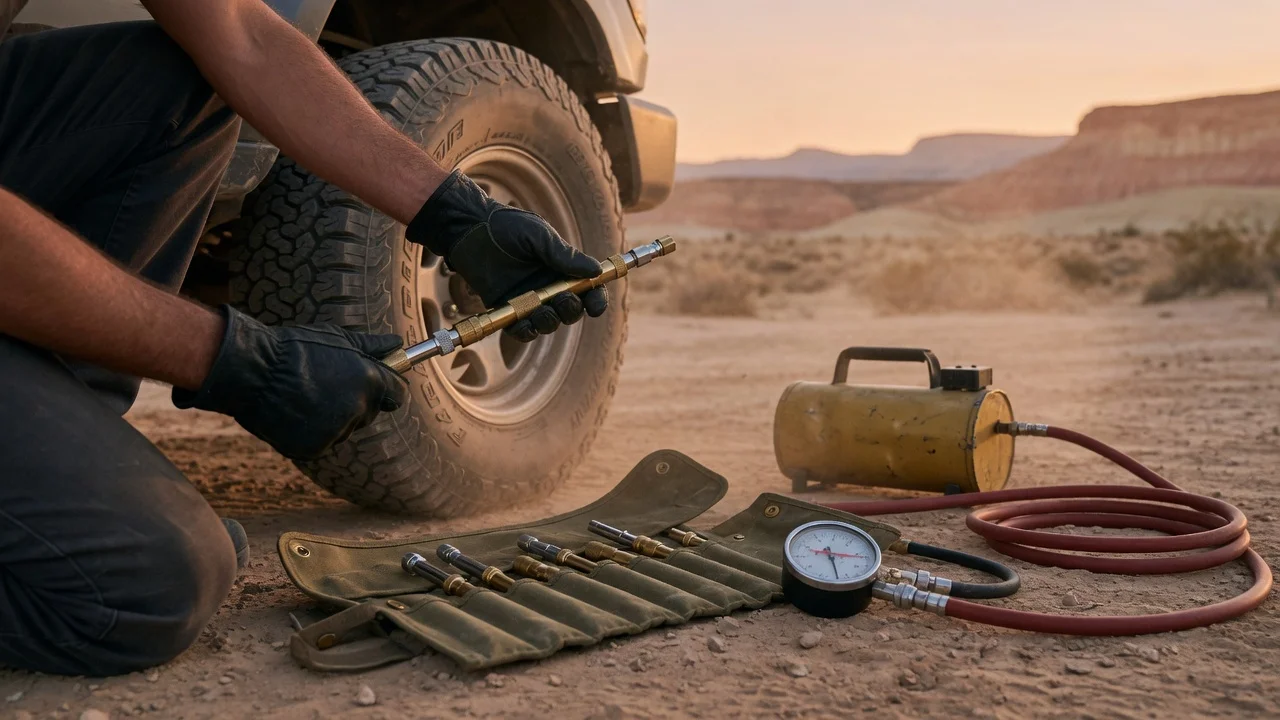
What a tire deflator does
A tire deflator removes air from a tire in a controlled way. Instead of pressing the valve core with a key or tool and repeatedly checking pressure, a deflator threads onto the valve stem and either holds the core open or removes it so air can escape predictably. This matters most when airing down for sand, gravel, dirt, snow or rough off-road travel, where lower pressure can improve traction and ride comfort. The basic job is the same across designs: open the valve, release air, and let the user stop at a target pressure.
The main styles of tire deflators
Presettable or automatic deflators are adjusted to a chosen pressure and stop releasing air near that point. The user threads them onto all four valve stems, then removes them as each tire reaches the setting. This can save attention when managing four tires at once, but accuracy depends on the design, adjustment range and how well the mechanism is maintained. Some types are faster or more repeatable than others, so advertised presets should not be treated as exact gauges without confirmation.
Rapid or open-flow deflators remove the valve core or otherwise expose a wide air path. They release air quickly, but the user generally controls when to stop and verifies pressure with a separate gauge. This style can suit drivers who want speed and are comfortable monitoring each tire. The trade-off is less automatic control: leaving a rapid deflator in place too long can take a tire below the intended pressure.
Simple valve-core tools are the least complex option. They remove or depress the valve core so air can escape, but they offer no preset stop and usually produce a less controlled release than a purpose-made deflator. They can be useful as a repair accessory, but they are not a substitute for a dedicated deflator if repeatable pressure control is the priority.
What to check before buying
First confirm the valve-stem fit. Passenger cars, light trucks and many off-road vehicles commonly use Schrader valves, but adaptations such as valve-stem extensions or special wheel configurations can affect access and sealing. The deflator must thread on cleanly and stay sealed while air escapes. If the wheels have recessed stems or short valves, a compact head or an extension may be needed.
Check the adjustment range. A preset deflator is only useful if the pressures typically used on the vehicle fall within its range. A driver airing down from highway pressure to a sand setting has different requirements from someone making a small pressure change for a rough dirt road. If the required target falls near the edge of the range, accuracy may be less dependable.
Consider how the tool will be used. A driver working alone on an exposed trail may benefit from a set that can run on all four tires at once. A driver who only occasionally adjusts pressure may prefer a simpler rapid deflator and a reliable gauge. Include the cost of an accurate separate pressure gauge if the deflator does not provide a trustworthy reading.
Comparing the choices
Presettable deflators trade simplicity for potential repeatability. Their value is greatest when the same target pressure is used often and the tools can be verified occasionally against a known gauge. Poorly calibrated or dirty mechanisms may produce inconsistent results, so a preset is only convenient if it is actually repeatable.
Rapid deflators trade automatic stopping for speed and fewer parts. They can be more tolerant of grit and simpler to clean than a preset mechanism, but they require active attention. For varied terrain where the target changes with conditions, direct user control may be easier than changing or checking four preset devices.
A valve-core tool is usually the least expensive route, but it adds steps and increases the chance of an overshoot. It removes the core rather than simply depressing it, so there is also a small risk of dropping or damaging a core in the field unless the tool retains it securely.
Ownership and field considerations
The total cost of a deflator setup includes the tool or set, a gauge if needed, and possibly spare valve cores and a valve-core tool. Storage and maintenance also matter because grit, moisture and corrosion can affect threads and preset mechanisms. Keep the tool clean, dry and protected when not in use, and avoid placing it in a location where dirt can enter the valve-side connection.
No supplied price evidence is available for this article, so specific prices should be checked with current sellers rather than inferred from product descriptions. Advertised prices should be treated separately from completed transactions, since bundle contents, seller location, currency and shipping vary.
Which option fits your priorities
For a driver who repeatedly airs down to the same pressure on all four tires, a presettable set is the strongest fit if the target sits comfortably within the stated range and the tools can be checked for consistency. For a driver who varies pressure by terrain and wants quicker control, a rapid deflator plus an accurate gauge may be the more practical pairing. A valve-core tool is better viewed as a backup or repair item than as the primary method for controlled airing down.
In every case, verify the actual pressure with a separate gauge before driving. A deflator helps release air; it does not eliminate the need to confirm that the result matches the intended setting for the load, terrain and vehicle.