How to Fix Tire Cupping and What It Costs
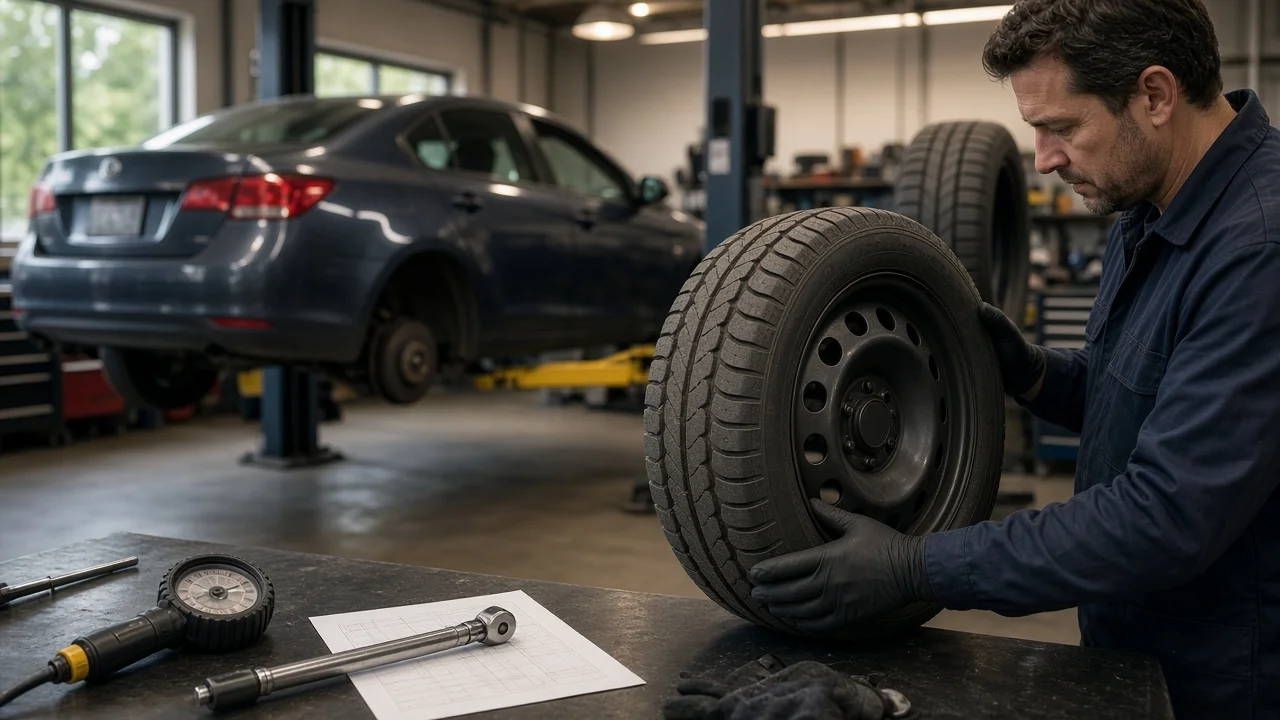
Cupped tires announce themselves with a rhythmic hum or wobble that changes with road speed, and a hand run across the tread finds alternating high and low patches. A lasting tire cupping fix has two parts: correcting whatever made the tread bounce, and deciding whether the tires themselves can stay in service. This guide explains what a realistic estimate covers, why quotes differ, and how to compare them without paying for a shortcut that brings the problem back.
What the estimate includes
Cupping is a symptom, not the fault itself. Tread wears in scalloped spots when the tire stops keeping steady contact with the road and briefly skips. The usual causes are worn shock absorbers or struts, a wheel and tire assembly out of balance, worn ball joints, tie rod ends or control arm bushings, a loose wheel bearing, misalignment, and long gaps between rotations or pressure checks. A complete repair therefore begins with diagnosis: a road test, an inspection of the dampers, mounts, joints and bearings, and a check of balance and alignment.
Separate total cost from partial quotes. A price for balancing or an alignment alone covers only one possible cause; if a strut is worn out, the cupping will return on the next set of tires. A full estimate names the diagnosed cause, lists parts and labor to correct it, includes an alignment after any work that changes suspension or steering geometry, and states a decision about the tires. Think in terms of the ownership period as well: new tires installed on an uncorrected suspension wear out early, so the cheapest visit can become the most expensive outcome.
Cupped tread cannot be rebuilt. Once the cause is fixed and the tires are rotated, mild cupping may become quieter, but the irregular pattern usually remains to some degree. Some shops offer tire truing, which shaves the tread to restore a round profile; it removes rubber, shortens remaining life and is not appropriate for every tire, so ask whether it suits yours. Replacement is the sensible choice when noise or vibration stays unacceptable, when tread depth is at or near the legal or manufacturer minimum, or when the tire shows other damage.
What changes the cost
The root cause is the largest variable. Balancing and rotation are comparatively small labor items. Replacing shocks or struts adds parts and labor that vary widely by vehicle, and dampers are normally replaced in pairs on the same axle so both sides respond alike. A complete strut assembly with spring and mount is quicker to install than a bare strut that requires transferring the old spring, which shifts the balance between parts and labor. Worn joints, bushings or a wheel bearing add their own parts and labor, and most of that work calls for an alignment afterward.
Vehicle configuration matters next. Tire size, load index and speed rating all affect tire pricing; large diameters, low-profile sidewalls, run-flat construction and high load ratings typically cost more and may take more mounting time. Drivetrain compatibility can change how many tires you buy: many all-wheel-drive and four-wheel-drive systems require all four tires to match in size and closely match in tread depth, so replacing only the cupped pair may not be allowed by the owner's manual. Vehicles with electronically adjustable dampers or air suspension usually cost more to repair than those with conventional shocks.
Location and shop type also play a part. Labor rates differ by region and between dealers, independent repair shops and tire retailers. Smaller line items add up too: valve stems or tire pressure sensor service kits, road-force balancing versus standard balancing, tire disposal, shop supplies and taxes. None of these amounts are fixed, which is why an itemized written estimate for your specific vehicle is the only reliable figure.
Compare like-for-like options
Most tire cupping repair plans fall into three groups: correct the cause and keep the tires with rotation and monitoring; correct the cause and replace the tires; or replace the tires only. The third option is not a repair, and comparing its price with either of the first two is misleading. Make sure each quote you compare addresses the same diagnosed cause and the same tire decision.
When tires are part of the quote, confirm equivalent scope. Each option should use the size listed on the vehicle placard or owner's manual, a load index and speed rating at least equal to the original specification, the same tire type for the season and use, and matching tires across the axle or all four positions where the drivetrain requires it. For the mechanical work, compare part quality, such as original-equipment or equivalent dampers, and the parts and labor warranty offered. Note that tire treadwear warranties commonly exclude wear caused by worn suspension or misalignment, so fixing the cause also protects coverage on the new set.
If two shops disagree, with one recommending struts and another only balancing, ask each to show its evidence. Leaking or damaged dampers, broken mounts, measurable play in joints or bearings, and printed balance or alignment readings are concrete findings; a vague description of a bouncy ride is not.
Read an itemized quote
A useful quote shows the diagnostic fee and whether it is credited toward the repair; each part with a brand or description, quantity and whether it is a pair; labor time for each job; and the alignment type, front-only or four-wheel, with four-wheel needed when the rear is adjustable. Tires should be listed with the full size, load index, speed rating and model, followed by mounting, balancing, valve stems or sensor service, and disposal.
Look for exclusions and conditional charges: seized or broken hardware, additional parts found during disassembly, an alignment marked as if needed, and shop supply fees. Ask for an out-the-door total including taxes, and request printed before-and-after alignment readings so you can confirm the work was completed to specification.
Decide the next step
Before visiting a shop, note when the noise or vibration appears, photograph the tread and measure tread depth across several ribs. Check inflation pressure with the tires cold and compare it with the vehicle placard on the door jamb, not the maximum pressure molded on the sidewall. Ask for a written diagnosis that names the cause, then request itemized out-the-door estimates covering the same scope from more than one shop. If tires are being replaced, confirm they match the placard size, load and speed requirements and your drivetrain's matching rules.
Avoid shortcuts that bring the problem back: new tires without correcting the cause, balancing alone when parts are worn, mismatched tires on an all-wheel-drive vehicle, skipping the alignment after suspension work, or overinflating to quiet the noise. After the repair, rotate on the interval in your owner's manual and recheck pressure regularly so any new irregular wear is caught early.