Tire Chains for Winter Driving: Requirements, Fit, and Use With Winter Tires
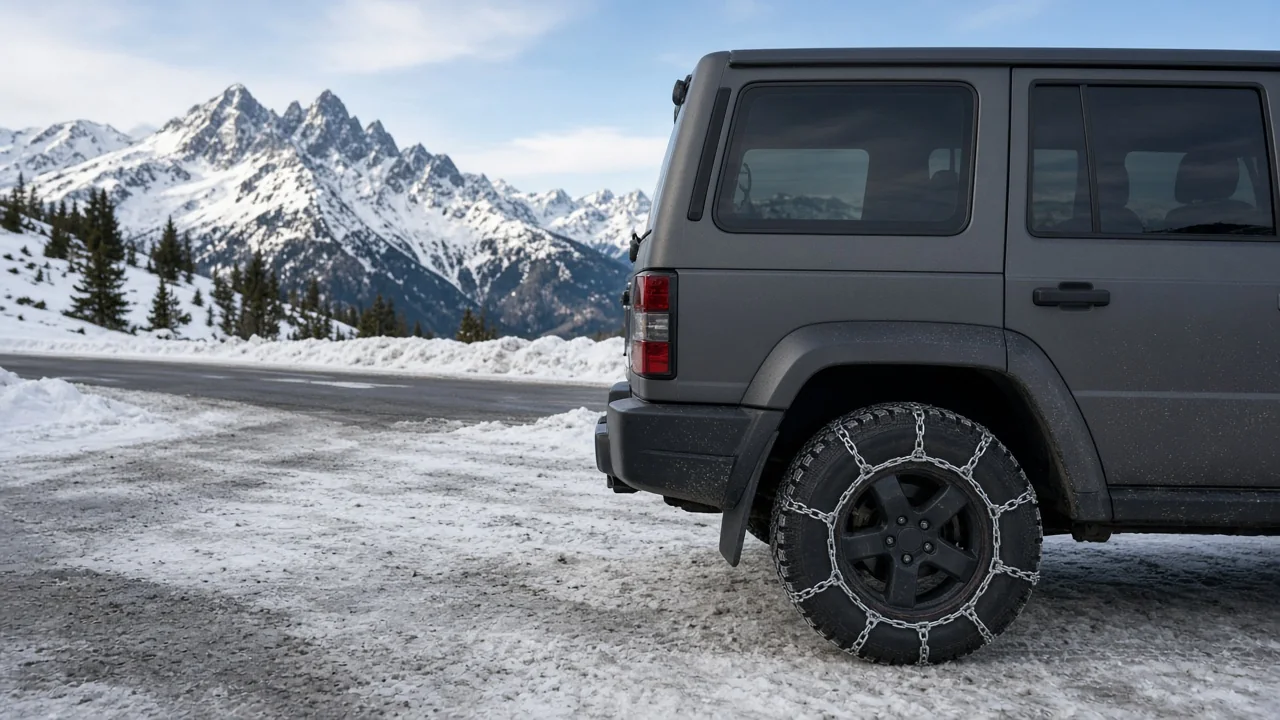
Winter tires and tire chains solve different parts of the same problem, and mountain travelers often need both. Winter tires give you everyday grip on cold, slick pavement. Chains and other traction devices add bite when snow and ice get deep or the grade gets steep. Knowing when chains are required, which products fit your vehicle, and how to install and drive on them helps keep a winter trip moving safely.
How Tire Chains Work With Winter Tires
Chains work by giving the tire something harder and more aggressive than rubber to press into the road surface. As the wheel turns, the cross links dig into packed snow and bite at ice, creating mechanical grip where tread alone may slip. That makes them most effective on snow-covered or icy stretches, particularly climbs and descents, rather than on bare or merely wet pavement. Chains can go on winter tires when the vehicle maker permits chains, the tire size matches the chain's fitment listing, and there is enough clearance around the tire.
The two pieces of equipment work together rather than compete. A winter tire's soft compound and siped tread improve braking, cornering, and starting across a wide range of cold conditions, while chains are temporary aids for the worst patches. Neither guarantees safe travel, and both still depend on sensible speed. Having winter tires also does not automatically mean you can leave chains at home. Whether you must carry or install them depends on the road restrictions in effect and on your vehicle's requirements, so packing a compatible set is often the prudent choice.
When Mountain Routes Require Chains
Chain controls usually come in stages, and the wording matters. One level may require drivers to carry traction devices in the vehicle, ready for use if conditions worsen, while a stricter level requires installing them before continuing past a checkpoint or sign. Which vehicles are affected depends on the jurisdiction, the posted restriction, the vehicle's configuration, and the traction equipment the authority accepts. A rule that lets some vehicles proceed without chains in one place may not apply on another route, even one only a few hours away.
Before leaving, check the official road-condition reports for every mountain pass on your route, and check again if the forecast shifts during the trip. Once on the road, follow posted signs and instructions from highway personnel, who may direct you to install devices or turn around. Winter tires and all-wheel drive improve traction, but they do not create a universal exemption from chain requirements; any allowance depends on the specific rule in force. When a road is closed, it is closed to everyone, regardless of how well a vehicle is equipped.
Chain Designs and Other Traction Devices
Traditional link chains use steel links arranged in a ladder or diamond pattern across the tread, held in place by side chains around the tire. Traction cables replace heavy links with steel cable wrapped in rollers or coils, giving a lower profile that can suit vehicles with tight wheel wells. Textile traction devices, often called snow socks, are fabric covers that slip over the tire and grip snow through their weave. All of these are designed for temporary use on snow and ice, not as a permanent substitute for suitable tires.
A product marketed for winter traction is not automatically accepted under every chain-control rule. Some road authorities accept only certain device categories at certain restriction levels, and your vehicle maker may approve some types while prohibiting others. Confirm both before buying. Fastening systems also shape the fitting experience: some chains use manual hooks and separate tensioners, others have self-tensioning mechanisms, and textile covers simply stretch into position. Whatever design you choose, the steps for fitting and adjusting it come from that product's own instructions, not from general habit.
Confirm Tire Size, Clearance, and Approved Wheel Positions
Choosing the right device starts with the complete tire size printed on the sidewall, including width, aspect ratio, and rim diameter. Wheel diameter alone is not enough, because two tires on the same rim size can differ substantially in width and height. Match that full size against the device manufacturer's fitment information. The owner's manual adds another layer, explaining whether chains are allowed at all, which tire sizes are approved for use with them, and how much tire clearance is needed around suspension, brake, and body components.
The manual also specifies which wheel positions may receive chains. On many front-wheel-drive and rear-wheel-drive vehicles that means the drive axle, but all-wheel-drive and four-wheel-drive vehicles vary by design, so follow what the manual says. Some vehicles restrict chains when optional larger wheels or tires are installed. If fitment is uncertain, or the manual and product instructions seem to conflict, ask a qualified tire professional before winter arrives. Never trim components, alter the suspension, or modify the device to make it fit.
Prepare for Safe Chain Installation
The first time you fit chains should not be on a dark, icy shoulder. Practice the manufacturer's fitting procedure at home or in an empty lot, noting which parts go where and how long the process takes. Before each winter trip, inspect the set for broken links, frayed cables, torn fabric, worn fasteners, or missing tensioners, and pack gloves, a flashlight, and something waterproof to kneel on. Problems found in the driveway are far easier to solve than the same problems found at a checkpoint.
On the road, use a designated chain installation area or another spot well clear of moving traffic. Secure the vehicle as its manual directs, and keep passengers in a safe place away from the roadway. Following the product instructions, position the device over the tire, fasten the connections, and check chain tension or fit without jacking the vehicle or working underneath it. Many devices need a short drive and a recheck to seat properly, so stop safely for that adjustment. If traffic, weather, or uncertainty makes installation unsafe, call roadside assistance instead.
Drive Within Chain Limits and Know When to Stop
Chains come with speed limits from several directions: the vehicle maker, the device maker, and posted chain-control restrictions. Follow the lowest of these, then slow further if visibility or road surface demands it. Steer smoothly, accelerate and brake gently, and leave much more following distance than usual, because chains improve grip without eliminating the chance of a skid. Stop in a safe place and inspect, or call for help, if you hear banging, feel new vibration, notice looseness, or suspect the device is contacting brake lines, suspension parts, or bodywork.
Remove chains when the device instructions call for it and when conditions no longer justify them, usually as the road returns to bare pavement. Pull into a safe turnout rather than continuing for miles on dry asphalt, which can damage the device, the tires, and the road while reducing handling. Also recognize the limits of any equipment. Heavy snowfall with poor visibility, a posted closure, or a route that simply looks unsafe can justify waiting it out, even with chains in the trunk and winter tires on the car.