Tire Balancing Bags, Liquids and DIY Fillers: What to Know
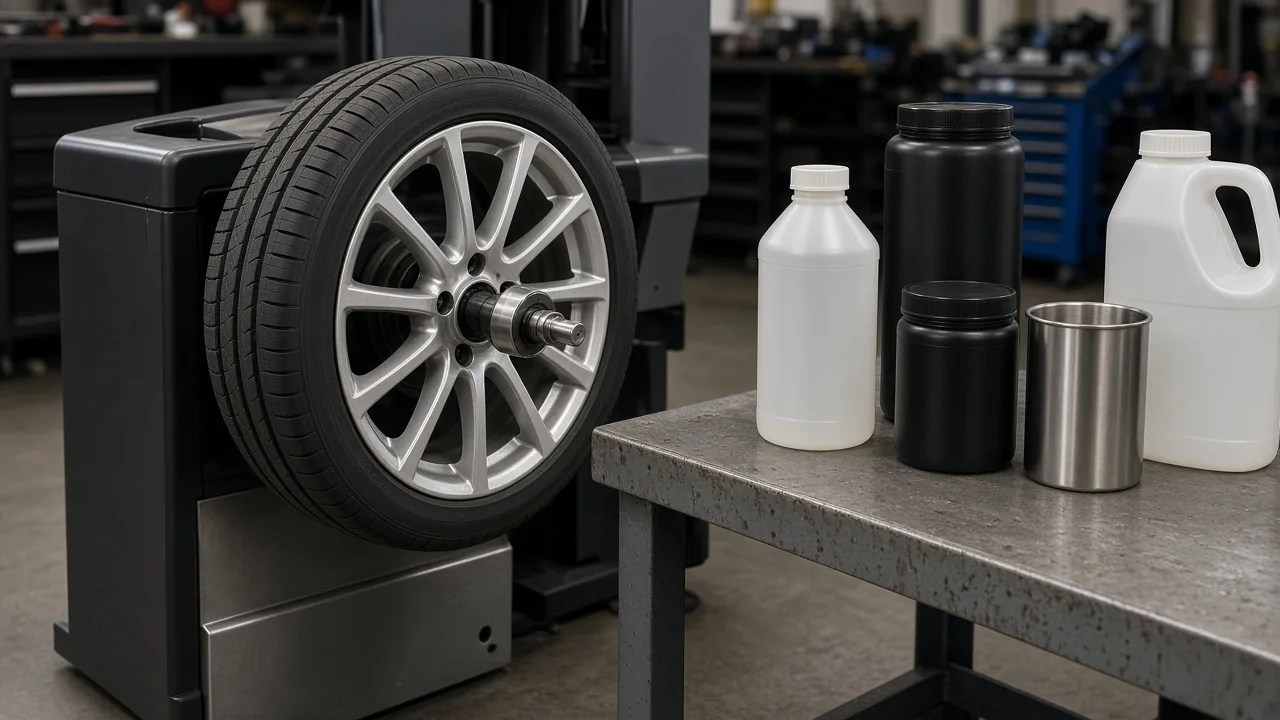
Drivers searching for a tire balancing bag, liquid balancers, or improvised fillers such as airsoft BBs, sand, golf balls, or antifreeze often want to quiet tire vibration without weights or beads. Those options are not interchangeable. A product name or online chart does not prove a filler will correct wheel imbalance, protect the tire liner and tire pressure monitoring system, or stay safe inside a rotating assembly.
What Tire Balancing Bags Actually Contain
A tire balancing bag is a package, not a single defined material. Some products hold factory-formulated internal balancing media meant to stay contained or to open inside the tire after mounting, while others are simply bags of unlabeled granules. Bead bag tire balancing products fall into the same category: the bag is a delivery method, and only the manufacturer's documentation identifies what is inside and how it is supposed to behave during rotation.
Searches for sand bags for tire balancing or tire balancing sand bags often point to packaged media sold for that purpose, not to ordinary construction sand poured into a wheel. Ordinary sand is not established as a tire-use material, and an improvised bag cannot be assumed to distribute correctly or remain harmless against the liner, valve, or sensors. Before considering any bag, confirm the product's stated tire applications and its compatibility with the tire, wheel, valve, and tire pressure monitoring system.
Understanding Balancing Compounds and Application Charts
Tire balancing compound covers many products rather than one chemistry. A dry powder, gel, or other internal balancing medium may be sold under that name, and only the product literature states what it contains and what it claims to do. Purpose-made media are intended to redistribute as the tire rotates, which is the idea behind dynamic balancing inside the casing. Whether that movement actually reduces wheel imbalance still depends on the tire assembly, speed range, load, and the condition of the wheel.
A tire balancing compound chart is tied to one product's recommended fill for listed tire sizes. It cannot set a universal quantity for every powder, bag, or liquid sold as a balancer. Using another brand's chart, or guessing from tire diameter alone, does not establish that the material will work in that wheel. When the documentation is missing, the tire size is unlisted, or the wheel already has a liner, sensors, or unknown residue, a tire professional should confirm suitability before anything is added.
What to Verify About Liquid Tire Balancers
A purpose-made liquid tire balancing product, sold as tire balancing fluid, tire balancing liquid, or self balancing tire liquid, claims to move inside the casing and offset uneven mass. That claim belongs to the documented product, not to every fluid poured through a valve. A puncture sealant does not become a balancer because it is wet. Liquid tire balancing still requires the maker's stated use and does not guarantee that wheel imbalance will be corrected.
Before any liquid is considered, documented compatibility with the tire liner, wheel finish, valves, and tire pressure monitoring system components has to be in writing, including any operating-temperature limits the maker publishes. Fluids can leak at the bead, contaminate a valve core, and leave residue that complicates later service. Valve obstruction is a practical concern when gel or liquid reaches the stem. Existing cuts, belt damage, or wheel distortion still need their own inspection; a balancer does not diagnose or repair those faults.
Why Airsoft BBs and Pellet Charts Cannot Establish Suitability
Airsoft BBs for tire balancing, BB tire balancing, and tire balancing with airsoft pellets are improvised ideas, not established tire procedures. Plastic airsoft pellets and unspecified BBs have no demonstrated suitability inside a passenger or light-truck tire unless a product maker documents that exact use. Material, diameter, crush resistance, and how the pellets behave once moisture, heat, and centrifugal load are present remain unanswered for household fillers. Those unknowns matter for the liner, the valve, and any internal sensor.
An airsoft BB tire balancing chart or BB tire balancing chart found online cannot validate balancing performance, tire compatibility, or tire pressure monitoring system safety. Those listings typically pair pellet counts with tire sizes without test data for the reader's wheel, sensors, or temperatures. Quantity guesses and home installation steps are not a substitute for documented tire-use products. Anyone who already has pellets in a tire should disclose the material to a tire shop before service so the technician can inspect and contain it.
What “Balancing Balls” Means and Why Golf Balls Raise Concerns
Tire balancing balls is a phrase that can mean a commercial internal product or a handful of loose spheres tossed into a casing. The name alone establishes no suitability. A documented tire product still has to show its intended application, while improvised objects do not inherit that status. Golf ball tire balancing belongs in the improvised group. Loose golf balls have no demonstrated compatibility with the reader's tire assembly and no predictable way of offsetting wheel imbalance as speed, load, and temperature change.
Large loose objects can shift in ways a fine balancing medium is not designed to, raising concerns about clunking, uneven mass, and contact with the liner, valve stem, or a sensor. Damage is not inevitable, but golf balls should not be treated as harmless fillers. Unusual internal noises or tire vibration after loose objects were added call for professional inspection rather than continued driving until the sound fades.
Why Antifreeze Should Not Be Used as a DIY Tire Balancer
Antifreeze tire balancing treats engine coolant as if any liquid could serve as a balancer. Coolant is formulated for engines, not for tire casings, and its presence as a liquid does not prove it will offset wheel imbalance. Ethylene glycol and similar chemistries can raise unresolved questions about tire liner compatibility, wheel finish, rubber valves, and sensor housings. Some formulations are toxic, which matters for anyone who later breaks the bead, handles the residue, or disposes of the fluid.
Coolant should not be treated as a DIY tire balancer, and there is no reason to add it through a valve. If antifreeze is already inside a tire, tell a tire professional before the wheel is dismounted. The shop can inspect the casing and sensors, contain the liquid, and arrange appropriate disposal. That disclosure protects technicians from unexpected spray at the valve or bead and keeps the fluid from being handled as ordinary tire sealant or balancing liquid.
When Vibration Needs Professional Diagnosis
Tire vibration is a symptom, not a diagnosis of wheel imbalance. Belt separation, a bent rim, wheel runout, cupping, a dragging brake, or a worn driveline joint can produce related shaking that no bag, compound, or liquid will correct. Note when the vibration appears, whether tire work was recent, and compare cold inflation pressure with the vehicle placard. Those observations help a shop; they do not replace inspection.
Severe shaking, a visible sidewall bulge, or rapid pressure loss is a reason to stop driving and seek assistance rather than add a balancer. A shop can spin-balance the assembly, measure runout, and inspect the tire and wheel before deciding that internal balancing media are relevant. Machine dynamic balancing with weights remains the standard correction when imbalance is the actual fault. An internal product is only worth considering after inspection shows it addresses the real problem.