Timing Chain vs Timing Belt: What Is the Difference and Which One Does Your Engine Use?
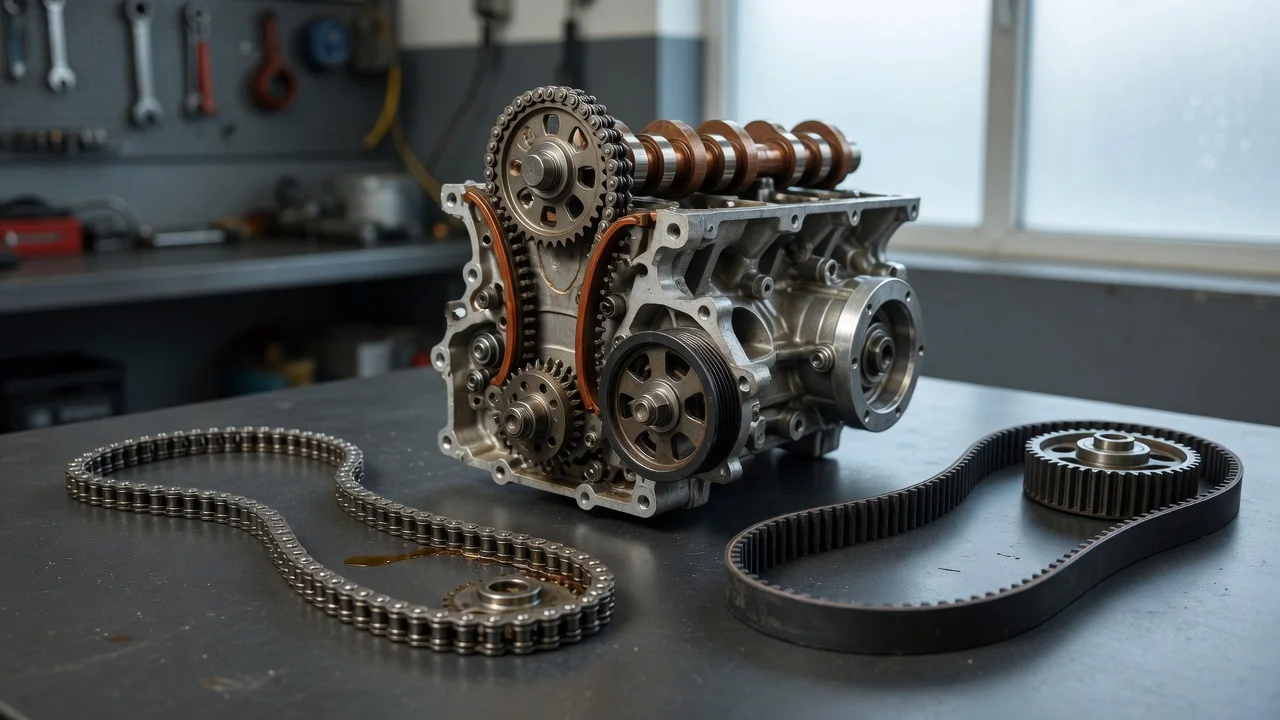
Direct answer: what separates a timing chain from a timing belt
A timing chain and a timing belt perform the same basic job: they synchronize the crankshaft and camshaft so the engine valves open and close at the correct point in each combustion cycle. The main difference is material and typical service life. A timing chain is a metal chain, usually housed inside the engine and lubricated by engine oil. It is commonly described as a long-life component that may last for the life of the engine, although tensioners, guides and chain wear can still create service needs. A timing belt is a reinforced rubber belt, typically running outside the main oil area behind a cover. It generally has a scheduled replacement interval and can cause serious engine damage if it breaks on an interference engine.
The answer is not "one is always better." The correct choice depends on the specific engine design, maintenance history, model year and market configuration. Some engines use one design, some use the other, and a few designs may use a belt or chain in combination with other drive components. Vehicle-specific service information is necessary to confirm which component a particular engine uses.
What each component does
In a four-stroke engine, the crankshaft turns twice for every full cycle while the camshaft turns once. The timing drive keeps those two shafts in the correct mechanical relationship. If the relationship is lost, the valves may contact the pistons on an interference engine, potentially bending valves or damaging pistons. On a non-interference engine, a failure may stop the engine without the same valve-to-piston collision risk, but the engine will still not run until the timing drive is repaired.
Timing chain characteristics
Material and location: a metal chain that is commonly located inside the engine and lubricated by engine oil. Service life: often expected to last much longer than a timing belt, but not guaranteed for every engine. Wear items: tensioners, guides and sprockets can wear even when the chain itself has not broken. Failure signs: rattling or metallic noise, especially at startup, can indicate chain tension or guide wear, but diagnosis should be confirmed by inspection.
Timing belt characteristics
Material and location: a reinforced rubber belt, usually running behind a protective cover. Service interval: a scheduled replacement item, with the interval depending on engine, model year and market. Age matters: a belt can degrade with time even if mileage is low, so age-based replacement may apply. Related parts: water pumps and tensioners are often replaced during a timing belt service because they share the same area or drive.
Key comparison
Characteristic | Timing Chain | Timing Belt; Typical material | Metal | Reinforced rubber; Typical location | Inside the engine, oil-lubricated | Behind a cover, usually not oil-lubricated; Typical service expectation | Long-life, but tensioners and guides can wear | Scheduled replacement by age or mileage; Failure noise or symptom | Rattling or metallic sound possible | Cracking, wear or breakage; may fail without long warning; Maintenance approach | Inspection for noise and oil-related wear | Planned replacement before the interval expires
How to tell which one your engine has
There is no universal rule based on vehicle brand, country of origin or fuel type. Some manufacturers have used both designs across different engines and model years. The reliable ways to identify the timing drive are a service manual for the exact engine, a dealer or workshop parts lookup using the vehicle identification number, or a visual inspection of the front timing area by a qualified technician. Engine covers may hide the component, so removing a cover is sometimes required for a certain visual identification.
Why the distinction matters for owners
The distinction changes maintenance planning. With a timing belt, the owner should determine the applicable replacement interval and confirm whether the belt has been replaced on schedule when buying or maintaining a used vehicle. With a timing chain, the owner should still pay attention to engine oil level and condition, and investigate unusual rattling rather than assuming the chain can never fail. In either case, the safest guidance is to follow the service schedule for the specific engine rather than relying on a general lifespan claim.
Known gaps
This guide does not list replacement intervals or labor costs because those values vary by engine, model year, region and repair market. No specific vehicle applicability is stated. Confirm the exact timing drive type and service interval using documentation for the particular vehicle and engine configuration.