Timing Chain Kits Explained: What Is Included and What to Replace Together
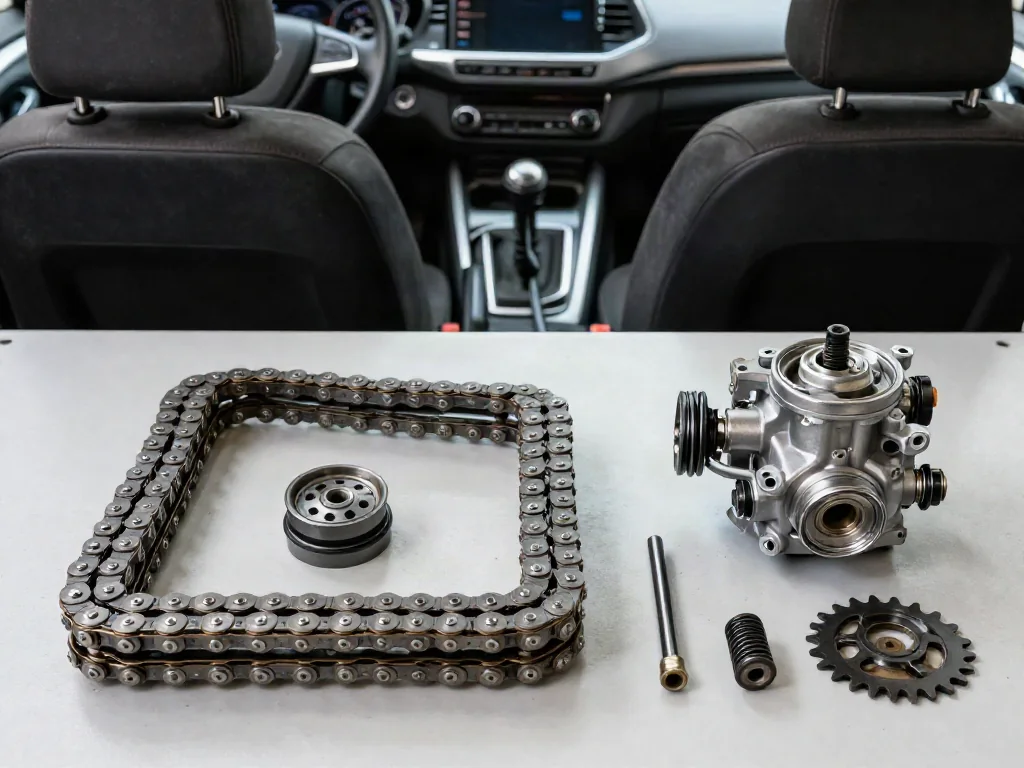
A timing chain kit can look like a simple box of parts, but what arrives inside varies widely by engine and supplier. It helps to know what kits usually contain and why guides and the chain tensioner are often replaced along with the chain. It also helps to know when a timing chain and water pump belong in the same job. With that knowledge, you can compare quotes, confirm fitment and avoid ordering the wrong timing chain replacement kit.
What a Timing Chain Kit or Set Contains
Inside the engine, the timing chain links the crankshaft to one or more camshafts. This keeps the valves opening and closing in step with piston movement. That relationship, called engine timing, has to stay precise for the engine to run smoothly. On many designs, it also keeps valves and pistons from hitting each other. A chain timing kit renews the parts that maintain this relationship. It can include the chain itself, timing chain guides, a chain tensioner and timing sprockets or gears.
Sellers use the terms timing chain set and timing chain kit loosely, and neither one guarantees a complete or standard package. One supplier's timing chain sets may hold only a chain and sprockets. Another supplier's kit may add guides, a tensioner, timing cover seals and gaskets. Engines with more than one chain may need separate packages for secondary or balance shaft drives. Before buying, get an itemized contents list and compare it with what the job needs. Don't assume seals, bolts or extra chains are in the box.
Why Guides and Tensioners Need Attention With the Chain
Guides are shaped rails, usually with a wear-resistant face. They hold the chain on its intended path and limit whipping between sprockets. The tensioner takes up slack as the chain and guides wear, keeping the chain tight enough for accurate timing. A new chain running on grooved guides, a weak tensioner or worn sprocket teeth can develop extra slack and vibration, and it may wear out early. That is why many timing chain kits pair the chain with these supporting parts instead of selling it alone.
Decide what to replace based on the service information for your specific engine and on what the technician finds during inspection, not a generic rule. Many tensioners depend on engine oil pressure. An oil supply problem can let the chain run slack even with fresh parts. Causes include low oil, the wrong oil, sludge or a blocked passage. If a tensioner or guide failed early, check oil pressure and supply first. That way, the timing chain kit replacement fixes the cause and not just the damage it produced.
When a Water Pump Belongs in the Timing Chain Job
People searching for a water pump timing chain combination often assume the two parts always go together, but that depends on engine design. Some engines drive the water pump from the accessory belt, some from the timing drive, and a few use electric pumps. A timing chain engine does not automatically have a chain-driven pump. Replacing the water pump and timing chain together can make sense when the pump sits behind the timing cover or runs directly off the chain. In those cases, reaching one part means doing most of the work to reach the other.
When deciding whether to replace the water pump at the same time, weigh several factors. Consider the pump's current condition, any seepage or coolant loss and how much disassembly separates the two parts. Also check what the manufacturer's service guidance recommends. A timing chain kit with water pump can be convenient, but it still needs checking in two ways. Confirm the pump matches your engine, including its drive method and housing. Then confirm the rest of the kit has the chain parts you actually need.
How to Confirm the Kit Fits Your Engine
Many vehicles came with a choice of engines, and even one engine family can switch timing drive parts partway through production. Model year alone may not be enough to confirm fitment. You may also need engine identification codes, build information and a catalog lookup by VIN. Compare the kit's listed application with the documented timing drive layout for your engine. Check the number of chains, the sprocket design, the tensioner type and the guide layout, so the new parts match the ones coming out.
Some engines have primary and secondary chains, balance shaft drives or a chain-driven oil pump. These may need parts beyond a single timing chain replacement kit. A package that covers only the primary drive can leave you waiting for parts while the engine is partly apart. If a catalog shows several possible configurations for the same vehicle, ask the supplier or shop for written fitment confirmation tied to your VIN or engine code. That record also helps if a return or warranty question comes up later.
Symptoms That Need Diagnosis Before Ordering Parts
A rattle at cold start, rough running or a warning light can point toward the timing drive. So can a stored code related to timing correlation. None of these proves the chain has failed. Similar noises can come from accessory parts, loose heat shields or other valvetrain parts. Timing-related codes can also come from sensors, wiring or the oil-controlled timing system. Note when the noise starts, how long it lasts and whether it changes as the engine warms up. Check the oil level only as the owner's manual directs, with the vehicle parked safely.
Confirming a timing problem often takes professional testing. A technician may check mechanical timing against specification and test how the tensioner works. They may also review live data comparing camshaft and crankshaft positions and measure oil pressure with the right equipment. That evidence shows whether you need a timing chain kit or whether another fault explains the symptoms. If an oil-pressure warning appears, the engine overheats or a severe mechanical noise develops, stop safely and call for help. Restarting the engine to reproduce the sound can turn a repairable problem into serious engine damage.
What a Timing Chain Replacement Estimate Should Cover
A useful estimate names each part of the chain assembly, including the chain, guides, tensioner and sprockets. It should say whether these come as one kit or as separate parts. If the quote includes a water pump, it should explain why. The reason might be shared access, the way the pump is driven or visible wear. Ask whether timing cover seals, gaskets, sealant and any required single-use bolts are included. Also ask whether the oil and coolant drained during the work will be replaced.
Timing chain work requires procedures specific to each engine and exact torque values. Many designs also need special locking or alignment tools. It is best left to a qualified technician with current service information. The estimate should also describe the checks done at the end. These include confirming correct timing before and after startup, inspecting for oil and coolant leaks and listening for unusual noise. Stored codes should be cleared and rechecked. If cooling-system work is included, confirm the system will be refilled, bled of air and checked for proper temperature control.