Timing Chain Cover: What It Is and What It Does
Direct answer
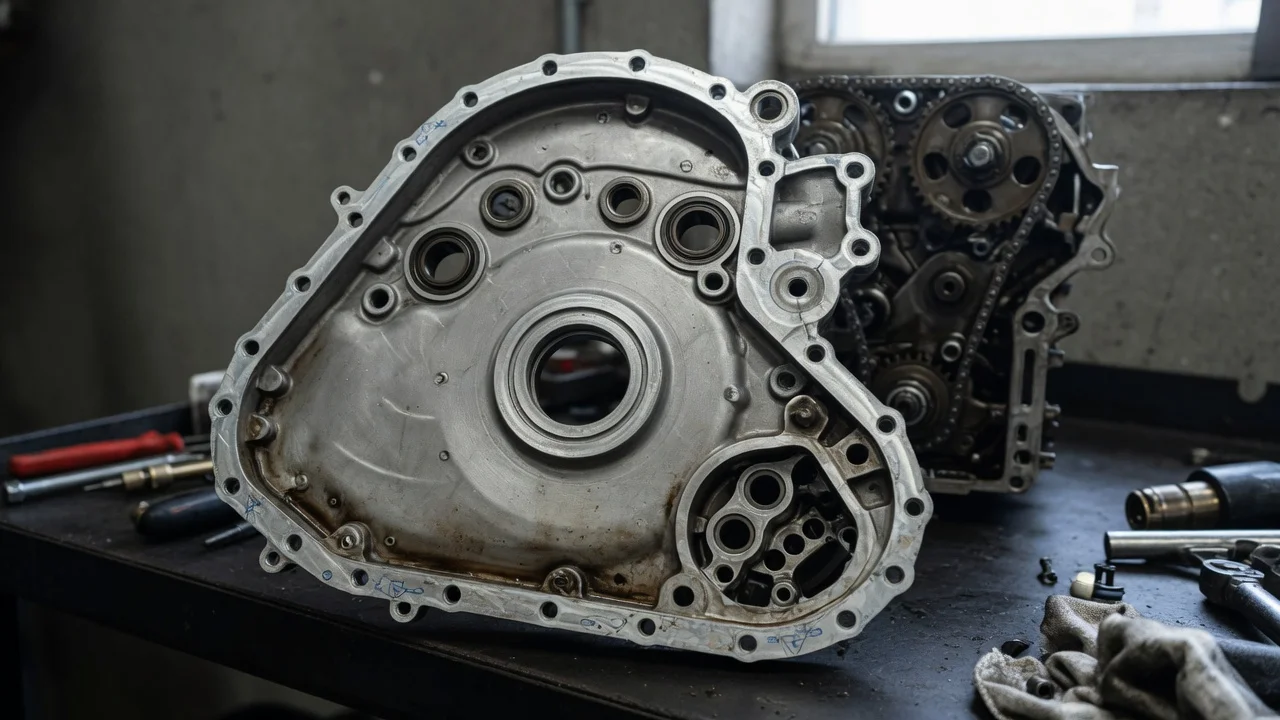
A timing chain cover is the engine component that encloses and protects the timing chain, chain guides, tensioner, and related sprockets at the front of the engine. It also provides a sealing surface for the engine oil system and usually carries the front crankshaft seal. On many engines it is a structural or accessory-mounting point, but its core job is the same: keep the timing chain area lubricated, shielded from debris, and sealed from oil leaks.
The term is often used broadly. On engines with a timing belt rather than a chain, the equivalent part may be called a timing belt cover and may be made of plastic or sheet metal rather than cast aluminum or stamped steel. If a vehicle listing or parts catalog says timing chain cover, it normally refers to the rigid front cover used on a chain-driven timing system.
Where the timing chain cover is located
The timing chain cover is mounted at the front of the engine, between the engine block and the drive belt area. It closes off the timing chain housing and forms part of the front sealing surface. Its exact position and orientation depend on the engine layout. In a conventional longitudinal engine it faces the front of the vehicle. In a transverse engine it typically faces one side of the engine bay, which can make access tighter.
Because the cover is engine-specific, its shape and bolt pattern vary widely. Some covers are a single large casting, while others are designed around variable valve timing components, oil passages, or balance shaft hardware. Vehicle applicability should always be confirmed by model year, engine code, and market.
What the timing chain cover does
Protects the timing chain, guides, tensioner, and sprockets from road debris and contamination; Contains oil around the chain drive and helps direct oil return; Provides a mounting location for the front crankshaft seal; Supports a sealing surface for the cylinder head, block, and oil pan or lower cover; May provide mounting points for accessories or engine mounts on some designs
Not every cover performs all of these functions. Material and complexity differ between engines, so a cover that supports accessories on one engine may be a simpler sealing cover on another.
Common signs of a timing chain cover problem
Oil leaking from the front of the engine is the most common symptom. The leak may come from the cover gasket, a failing sealant joint, or the front crankshaft seal installed in the cover. Oil may collect low on the engine, spread across the oil pan, or be visible around the cover seam.
Visible oil seepage or wetness around the cover edges; Oil drops on the ground toward the front or belt side of the engine; Oil residue on the lower engine or oil pan; Burning oil smell if oil reaches hot engine surfaces; Low oil level found during routine checks
A leaking timing chain cover does not automatically mean the timing chain itself is failing. The chain and tensioner can remain serviceable while the cover gasket or seal leaks. Conversely, internal timing chain wear may not produce a visible oil leak from the cover.
Why timing chain cover replacement can be involved
Removing the timing chain cover typically requires draining engine oil and coolant, removing the accessory drive belt and related components, and often removing the crankshaft pulley or harmonic balancer. On many engines the oil pan or valve covers must also be disturbed because their seals overlap the cover joint. This makes a leaking cover a larger repair than a simple gasket replacement on some other engine parts.
Once the cover is off, the timing chain, guides, and tensioner are exposed. A shop may recommend inspecting or replacing them at the same time because access is already open and because the cost of repeating the labor later can be high. Whether replacement is appropriate depends on mileage, engine condition, service history, and the specific engine design.
Resealing versus replacing the cover
A leak at the cover is often repaired by resealing the cover with a new gasket or the specified sealant rather than by replacing the cover itself. Replacement is more likely when the cover is cracked, warped, corroded, or damaged, or when a sealing surface cannot be restored. Some covers also have integrated oil passages or seals that may make replacement the practical repair.
The correct procedure depends on the engine. Some manufacturers specify sealant only at certain joints, while others use a formed gasket. Using the wrong sealer or applying it incorrectly can cause a repeat leak, so model-specific service information matters.
What to check before buying a timing chain cover
Confirm the vehicle year, engine code, and market configuration; Check whether the engine uses a timing chain or timing belt; Determine whether the problem is a gasket, seal, or the cover itself; Inspect the cover for cracks, corrosion, or damaged mating surfaces before replacement; Confirm whether related timing components should be replaced during the same repair
Fitment for timing chain covers is not universal. Small differences in engine generation, accessory layout, or variable valve timing equipment can change the required cover, so the exact engine configuration should govern parts selection.