Timing Chain Cover Oil Leak: Gasket Replacement and Cost
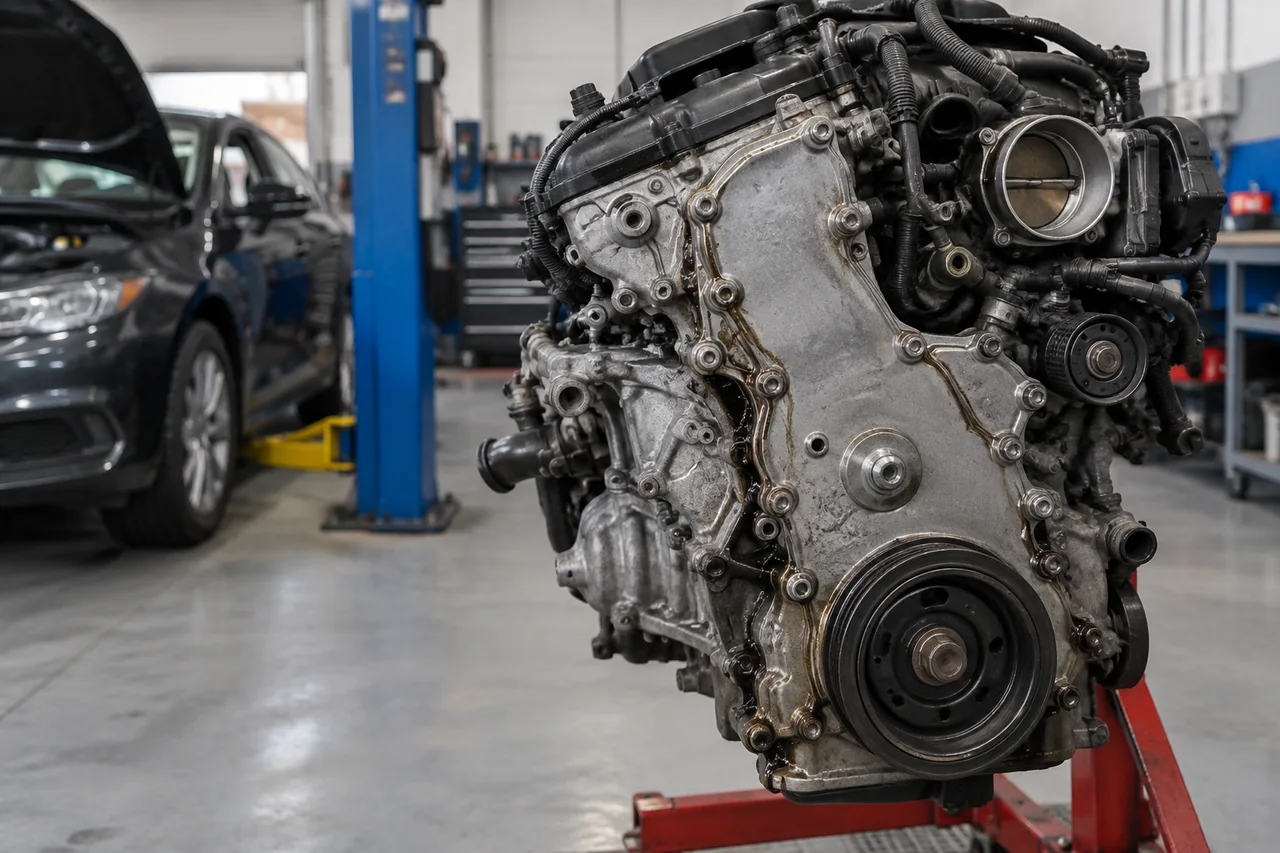
A timing chain cover leak can look like a simple drip at the front of the engine, yet the wet area is not always the true origin. Diagnosing oil around the cover, deciding whether a timing chain cover gasket or other seal is involved, and understanding replacement cost all start with the vehicle and engine design. The cover's job, shop leak tracing, gasket replacement, and post-repair checks all depend on that identification.
What the Timing Chain Cover and Its Seals Do
The timing chain cover is a housing at the front of many engines that encloses the chain, guides, and related hardware so those parts stay lubricated and debris stays out. Engine oil circulates through that area, so the cover must seal against the block, the cylinder head on some designs, and openings for the crankshaft and accessories. A timing chain cover gasket, a specified liquid gasket, or both may form that barrier. Separate timing chain seals, including a front crankshaft seal, often complete the arrangement.
The phrase timing chain gasket, and similar wording such as timing chain gasket cover, commonly refers to the cover sealing joint, a timing chain tensioner gasket, or another nearby sealing part, not a gasket on the chain itself. Layouts differ widely: some engines use a formed gasket on a machined cover sealing surface, others rely on a liquid gasket with a defined bead path, and some combine both with a separately sealed tensioner. Identify the vehicle and engine before describing which cover, gasket, or seal actually applies.
Signs of a Leak and Safe Checks Before Driving
A timing chain cover leaking oil often first shows as oil residue along the cover edge, fresh drips on the driveway, or dark spots after parking. A falling engine oil level between checks is another reason to investigate, because a cover leak can be slow and messy rather than a sudden puddle. Oil around the timing chain cover does not, by itself, prove the cover gasket is the source or reveal how quickly oil is escaping. Gravity, airflow, and belt splash can move oil far from where it first left the engine.
Before driving farther, check the engine oil level using the method in the owner's manual, then look at accessible areas with the engine off and cool. Do not reach toward belts, pulleys, or the fan, and do not crawl under an unsupported vehicle. If an oil pressure warning appears, oil loss is substantial, or smoke develops where oil contacts hot exhaust or other hot surfaces, stop the engine and arrange professional help. A timing chain cover oil leak that is only staining the housing still deserves diagnosis, but those warning signs change the urgency.
How a Shop Confirms the Source of Oil Around the Cover
Leak source diagnosis for an oil leak from the timing chain cover starts with the fact that oil travels. A valve cover, camshaft seal, oil filter housing, or other higher joint can wet the timing chain cover as oil runs downhill. The wettest patch is therefore an unreliable origin marker. A shop typically inspects the engine, cleans the stained area, then traces fresh oil under controlled conditions. Dye testing can help when the path is unclear, provided the technician follows a method suited to that engine and leak pattern.
On some engines a front crankshaft seal or a timing chain tensioner seal sits in or beside the cover, so a timing chain cover leak may actually be coming from those parts rather than the cover seam. Verify the actual design before naming either as the source. A confirmed leak at the cover joint is a different repair from nearby leakage at a tensioner, accessory, or crankshaft opening. Distinguishing those paths matters because cover removal is labor-intensive; shops should establish the origin before recommending that the cover come off.
What Timing Chain Cover Gasket Replacement Involves
Timing chain cover gasket replacement is a professional job that starts with gaining access to the front of the engine, then removing the affected cover as required. The technician inspects the cover sealing surface and mating area, renews the specified gasket or liquid gasket, and often replaces associated seals that cannot be reused once disturbed. Reassembly follows the engine's fastener and alignment requirements. Access and connections to adjacent assemblies vary by engine and can account for most of the repair labor, especially when mounts, accessories, or covers in front of the chain housing must come off first.
Vehicle-specific service information governs sealing materials, fastener requirements, assembly sequence, and any sealant cure time before filling oil or starting the engine. The shop must also inspect the cover for cracks, warped flanges, damaged seal bores, or stripped threads before deciding whether resealing is enough or timing chain cover replacement is necessary. Work that involves engine support, timing alignment, or chain and tensioner components belongs with a qualified technician using the correct procedure for that engine.
What Determines the Cost of Cover and Gasket Repairs
Timing chain cover replacement cost and timing chain cover gasket replacement cost are driven by engine access, local labor rates, diagnostic work, and the confirmed repair scope. A job that only reseals an exposed cover is a different estimate from one that requires dropping a crossmember, supporting the engine, or removing a large accessory stack. Timing chain gasket replacement cost follows the same pattern: the estimate is shaped more by access than by the gasket or sealant itself. Potential estimate items include sealing materials, a replacement cover if the original is damaged, required fasteners, fluids, and applicable taxes.
Gasket replacement terminology on an invoice may describe a resealing job even when the engine uses liquid sealant rather than a cut gasket. Ask for an itemized estimate that identifies the confirmed leak source, planned parts, labor, and conditions that could change the total, such as a damaged cover or additional leaks found after cleaning. A cover leak alone does not establish a need to replace the timing chain or tensioner. Those parts need their own evidence, such as noise, timing concern, or inspection findings, before they belong on the same ticket.
How to Confirm the Repair Has Resolved the Leak
After timing chain cover gasket replacement, the shop should check for fresh leakage and restore the engine oil level under the vehicle-specific procedure, including any required sealant cure time. Residual oil on the cover, subframe, and undertray can hide the result, so cleaning the affected area is part of a useful post-repair check. The goal is to see whether new oil appears at the joint, the front crankshaft seal, or a timing chain tensioner gasket area that was also disturbed. Correct fluid level and the absence of immediate drips are the first confirmation steps, not the last.
Continue monitoring the engine oil level and the parking area after service according to the shop's guidance, rather than a single universal interval. A slow timing chain cover leaking condition can take time to reappear if residual oil was not fully cleaned or if a nearby seal was not the confirmed source. Return for reassessment if new drips form, oil loss continues, smoke appears, or a warning light comes on. Those signs mean the leak is not resolved or another problem is present, and they deserve another inspection instead of assuming the cover job failed on appearance alone.