Timing Chain Codes: What P0016–P0019 and VVT Codes Can Tell You
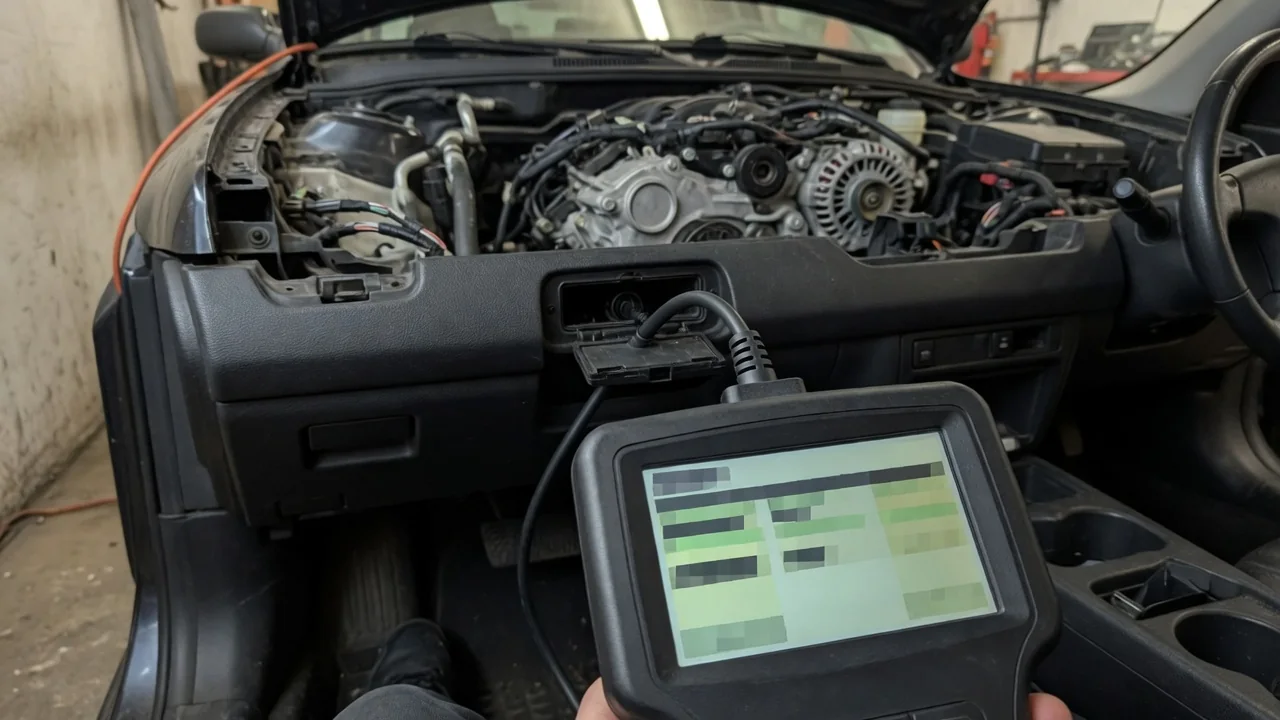
A timing chain code is not a direct measurement of chain stretch. Instead, the engine control module compares camshaft and crankshaft signals and reports when the relationship falls outside expected limits. Codes such as P0016 through P0019 or variable valve timing faults can point to a worn chain, but they can also stem from sensors, oil supply, or control parts. Interpreting them correctly means looking at the whole pattern rather than assuming the chain has failed.
Why There Is No Single Timing Chain Code
OBD-II has no dedicated code for timing chain stretch. The engine computer watches the camshaft and crankshaft position sensors, expecting a predictable alignment as the timing set rotates. When a stretched chain lets the cam lag or a failed tensioner lets it jump, the measured angle deviates. The computer sets a correlation or performance code because the signal mismatch exceeds a calibrated window, not because it has directly measured chain length.
Because the computer only sees electrical signals, the same code can appear when a sensor is failing, wiring is chafed, oil pressure is low, or a cam phaser is stuck. Manufacturer thresholds also differ: one engine may set P0016 at five degrees of deviation, another at ten. Always confirm the code definition for your specific vehicle, since the generic label may not match the actual fault logic.
Reading the P0016–P0019 Cam/Crank Correlation Family
P0016, P0017, P0018, and P0019 are generic camshaft/crankshaft position correlation faults. P0016 refers to bank 1 sensor A, P0017 to bank 1 sensor B, P0018 to bank 2 sensor A, and P0019 to bank 2 sensor B. Bank 1 is the side with cylinder number one, but sensor A and B can be intake or exhaust depending on the engine. Without the manufacturer's documentation, you cannot assume which physical camshaft is involved.
A correlation code on a single bank often suggests an isolated issue on that cam, such as a faulty sensor, a restricted oil passage to one phaser, or one loose reluctor wheel. Codes on both banks or multiple cams point toward shared causes like a stretched chain, low oil pressure, or a common wiring fault. A code that returns immediately after clearing indicates a persistent mechanical or electrical fault, while one rare intermittent event may be noise or a temporary oil pressure drop.
VVT and Cam Timing Performance Codes That Often Appear Alongside
Variable valve timing codes, often in the P0010-P0014 or P0020-P0025 ranges, monitor whether the cam reaches the commanded advance or retard. The computer adjusts oil flow through an oil control valve to move the cam phaser. If the chain is stretched or the tensioner is weak, the base cam timing is already retarded, and the VVT system may not be able to reach its target. The computer then sets an over-retarded or performance code because the cam remains out of position.
Manufacturer-specific codes, such as those starting with P1xxx or P2xxx, may also relate to cam timing. Always look up these codes in service information for the exact engine. When correlation and VVT codes appear together, treat them as one problem. The correlation error shows the cam and crank are misaligned at idle; the VVT code shows the system cannot compensate. Chasing each code separately wastes time and risks replacing parts that are not faulty.
Ruling Out Sensors, Wiring and Signal Problems First
A failing camshaft or crankshaft position sensor can mimic chain stretch. The sensor may output an intermittent or skewed signal that shifts the reported cam angle. Damaged connectors, oil-soaked terminals, or chafed wiring can add resistance or ground loops, producing false correlation errors. No chain wear is needed: the computer simply sees bad data.
A damaged or shifted reluctor wheel, also called a tone ring, can create the same effect. If the wheel has moved on the cam or crank, the sensor pulses arrive at the wrong time, exactly like a stretched chain. Before condemning the timing set, visually inspect the sensor connectors and harness for obvious damage. Do not swap sensors on guesswork; a new sensor will not fix a wiring fault, and you may introduce a new variable. Proper signal testing with a scope is the only way to confirm a sensor problem.
How Oil Level, Oil Condition and VVT Control Parts Can Mimic Chain Stretch
Many timing chain tensioners rely on oil pressure to keep the chain tight. VVT phasers also use oil pressure to move. Low oil level, wrong viscosity, or degraded oil can reduce pressure and prevent the phaser from reaching its target. The resulting cam angle error looks identical to chain stretch. Check the oil level first; a crankcase that is two quarts low can cause intermittent timing codes.
Sludge or debris can clog the oil control valve screens, starving the phaser of oil. A faulty oil control solenoid or a mechanically stuck phaser can also set correlation or VVT codes, even with a healthy chain. These components are serviceable separately from the chain. Review the vehicle's oil change history and inspect the oil condition. If the oil is thick or gritty, an oil system flush and fresh correct-viscosity oil may resolve the codes without touching the timing chain.
Symptoms, Live Data and When to Get Professional Testing
Symptoms that often accompany timing chain problems include a brief rattle at cold startup from a weak tensioner, rough idle from unstable cam timing, hesitation, or reduced power. However, none of these is conclusive; a poorly maintained VVT system can cause the same complaints. A code plus a cold-start rattle does increase suspicion, but the only way to confirm chain stretch is through measurement or inspection.
A technician can use a scan tool to read cam angle deviation, freeze frame data, and sometimes live cam/crank waveforms. A healthy chain shows stable deviation under load and throttle changes. A stretched chain shows increasing deviation and slow phaser response. Confirming the diagnosis may require manufacturer-specific procedures, such as checking chain slack through a service window or comparing crank and cam timing marks after removal. Continuing to drive with a suspected chain fault risks chain jump and valve-to-piston contact. Seek prompt professional diagnosis rather than attempting DIY timing work.