Timing Belt Replacement Cost: What Drives the Price and What a Full Job Includes
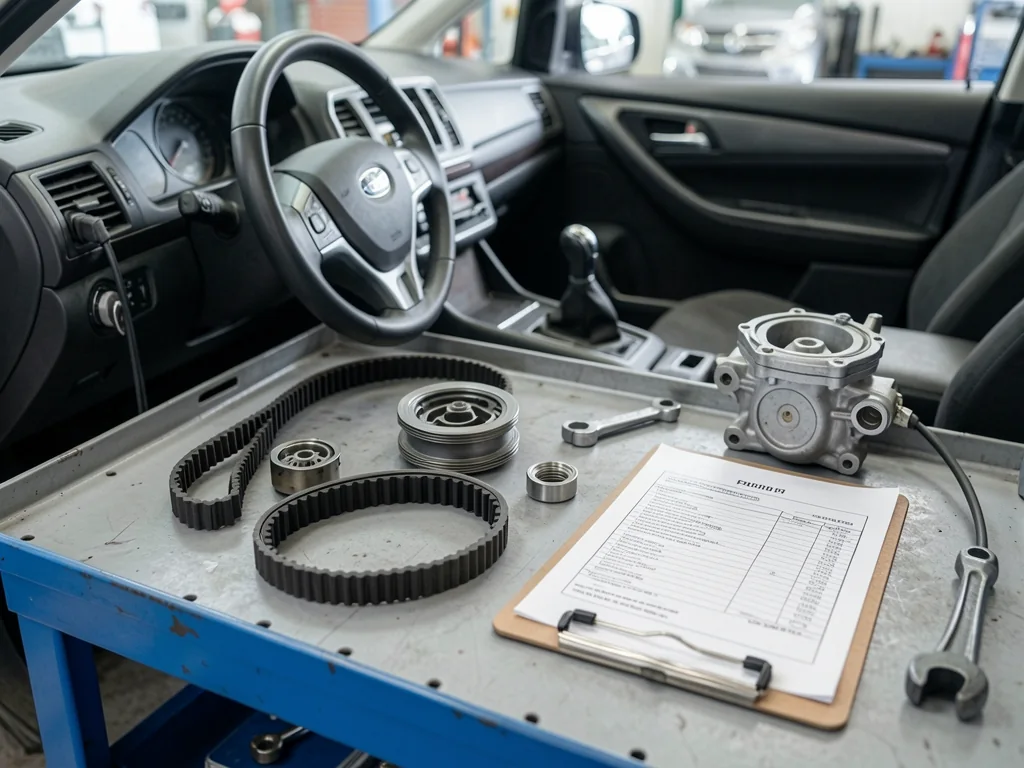
A timing belt keeps the crankshaft and camshafts turning in exact step. Replacing it is one of the larger scheduled maintenance bills many owners face. The price depends less on the belt than on how hard the engine makes it to reach. Here is what shapes the total, what a complete service should cover, how to judge an estimate, and why waiting for the belt to fail costs far more.
What Timing Belt Replacement Typically Costs and Why the Range Is So Wide
As a broad indicative range, not a live or guaranteed quote, timing belt replacement commonly runs from a few hundred dollars on an engine with easy access to well over a thousand on a crowded one. A full service that includes the water pump can cost more still. The belt itself is usually a modest part of the bill. Most of the money goes to the labor hours needed to remove covers, brackets and pulleys just to reach it.
Quotes also differ because they describe different jobs. A bare belt swap replaces only the belt. A complete timing service adds the tensioner, idlers, seals and often the pump, so the two fall into separate price bands. Shop type matters too. Dealers, independent garages and chains charge different labor rates, which also vary by region, and OEM parts usually cost more than aftermarket ones. The figure worth trusting is a written estimate for your exact year, engine and trim.
How Much Should You Expect to Pay: Parts Versus Labor Breakdown
A typical bill has a handful of lines: the belt, the tensioner, one or more idler pulleys, the camshaft and crankshaft seals, the water pump where it applies, coolant if the cooling system is opened, and labor. Shops price labor from flat-rate time guides that assign a set number of hours to the job for each engine. That book time may be short on one car and several times longer on another, and it is multiplied by the shop's labor rate.
Many shops use a timing belt kit that bundles the belt, tensioner and idlers. A kit usually costs less than buying each piece separately, and the parts are matched. A complete estimate shows every part, the labor hours, the rate, and fluids or shop supplies. If one quote is far below the others, check what it leaves out. Skipping the tensioner, pump or seals can mean a second teardown later, paying the same labor again.
Why Engine Layout Changes the Price So Much
Engine layout is the biggest reason two cars with similar belts can have very different bills. An inline four mounted sideways often has open space at the belt end, so a technician can reach the covers quickly. A transverse V6 packed against the inner fender or firewall may need the engine supported and a mount removed. Accessory brackets, the serpentine belt and the crankshaft pulley may also have to come off before the timing cover can be removed.
Some engines need special tools to lock the camshafts and crankshaft in position while the belt is changed. That adds time, and not every shop has the equipment. Dual overhead cam designs generally have more sprockets, pulleys and seals than single cam engines, which raises both parts and labor. Instead of comparing against another car, ask the shop how many labor hours its guide lists for your engine. That number explains most of the quote.
What a Complete Timing Belt and Water Pump Service Should Include
On many engines the timing belt also drives the water pump. In that case the pump is commonly replaced during the belt job because the labor to reach it is already being paid for. Adding the pump raises the parts cost but usually adds only a little labor. Replacing the pump separately later would mean paying again to remove the same covers, pulleys and belt, so combining the work is usually the better value.
A full service typically includes the belt, tensioner, idler pulleys, water pump, camshaft and crankshaft seals, and fresh coolant. The practical reason is protection. A weeping pump or leaking seal can soak a new belt in coolant or oil and shorten its life, and a seized pump bearing can shred the belt outright. When you review the estimate, confirm whether the pump, tensioner and seals are included or listed as optional add-ons.
How to Read and Compare a Timing Belt Estimate
A useful estimate separates labor from parts. Look for the labor hours, the hourly rate, and each component listed by name with its price. OEM parts come through the vehicle manufacturer. OE-supplier parts are made by a company that supplies the factory but are sold in that company's own packaging. Aftermarket parts come from other brands, and quality varies. The parts source alone can explain a large price difference between two quotes.
Ask which components are included, whether the water pump is driven by the timing belt on your engine, and what warranty covers parts and labor. Then compare two or three estimates item by item, not just by the total. If a shop offers to leave out the tensioner or idlers to save money, say no. A worn pulley bearing can wobble, overheat or seize, and the belt running on it often fails first.
Why a Timing Belt Is Replaced, Not Repaired
A timing belt is a wear item made of reinforced rubber with molded teeth. It cannot be safely patched, glued or spliced, so the only fix is replacement. When people talk about timing belt repair, they usually mean replacing a worn or broken belt and then fixing whatever damage the failure caused. If the belt is replaced before it breaks, the job is routine preventive maintenance with a fairly predictable price.
After a failure, the picture changes. In an interference engine, the valves and pistons use some of the same space at different moments. If the belt snaps, pistons can hit open valves and bend them or damage the pistons. A professional compression or leak-down test helps show whether that happened. Until the engine is inspected, the cost can't be predicted. It may turn out to be only a belt job, or it may require cylinder head work or a major engine repair.
Signs You May Be Due and When to Get It Checked
Most timing belts give little or no warning before they fail. That is why manufacturers schedule replacement by mileage and often by age instead of by condition. Check the owner's manual and service records to see when the belt was last changed. Follow your vehicle's published interval, including any time limit, because rubber ages even when a car is driven little. If part of the belt is visible without removing anything, cracks or a shiny, glazed surface mean it is overdue.
Some symptoms call for prompt professional inspection: ticking or slapping from the timing cover area, rough running, oil or coolant leaking near the cover, or hard starting. These can have other causes, and a stored fault code is a clue to interpret, not proof that a part has failed. It also helps to confirm whether your engine has a timing chain instead of a belt. On a used car with unknown history, the safe choice is to treat the belt as due.