Timing Belt Kits: What's Included and Why Replace Parts Together
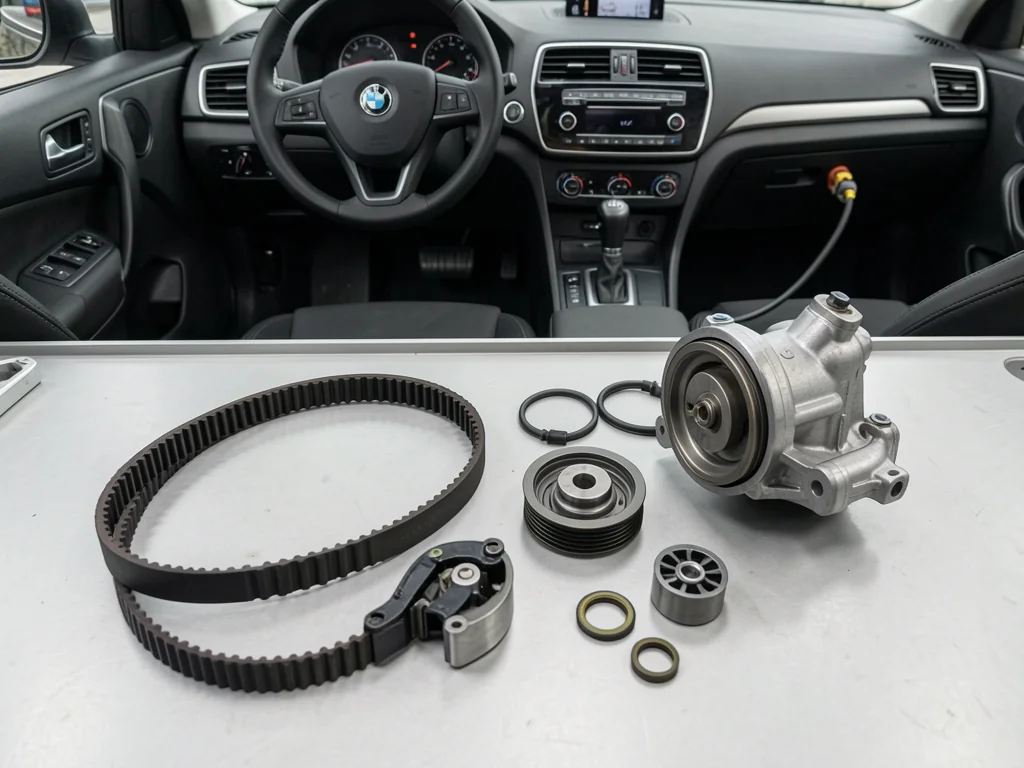
A timing belt kit bundles the parts that work alongside the belt to keep camshaft timing synchronized with the crankshaft. Understanding what the tensioner for a timing belt does, how idler pulleys guide the belt, and when a water pump belongs in the job helps owners read estimates clearly. It also explains why technicians often replace these components together.
What a Timing Belt Kit Can Include
Most timing belt kits contain the toothed belt, a timing belt tensioner and one or more idler pulleys, but contents vary by engine and by kit. Some timing belt replacement kits add a water pump, a water pump seal or gasket, camshaft and crankshaft seals, and replacement bolts or other required hardware. Others supply only the belt and tensioner, so the pump, seals and fasteners have to be sourced separately. A timing belt kit with a water pump is common on engines where the pump sits behind the timing belt cover, but it is not universal.
Because designs differ even within one model line, you should confirm the exact engine before authorizing a timing belt kit replacement. Two engines of similar size can use different belt lengths, tooth profiles, tensioner styles and numbers of pulleys. Ask for an itemized list of kit contents rather than relying on the box label. A package described as a complete kit may still leave out a single-use bolt the manufacturer requires or a seal that turns out to be leaking. Matching the parts list to the service procedure keeps the job from stalling halfway through.
How the Tensioner Maintains Timing Belt Tension
The timing belt tensioner holds the belt at its specified tension so the teeth stay fully engaged with the crankshaft sprocket and camshaft sprockets. Timing belt tension must be firm enough to prevent slack as the engine speeds up and slows down, but not so tight that it overloads the bearings. Designs vary by engine. Some use a manually set mechanical tensioner locked in position, others use a spring-loaded automatic unit, and some pair the tensioner pulley with a hydraulic damper that absorbs belt vibration and makes up for expansion as the engine heats up.
Incorrect timing belt tensioning causes problems either way. A loose belt can flap, wear its teeth unevenly or skip a tooth, which shifts camshaft timing and changes how the engine runs. An overtightened belt can whine, strain its internal fibers and put excessive load on the tensioner bearing, the idlers and the water pump bearing, shortening their life. The correct method depends on the engine, so checking and setting the tension on a timing belt requires the manufacturer's procedure, including any specified alignment marks, locking tools and rotation checks, rather than a one-size-fits-all deflection rule.
What Idler Pulleys and Timing Sprockets Do
Idler pulleys guide the belt along its designed path. They control how far the belt wraps around each sprocket and keep enough teeth in contact to carry the load. Idlers are smooth or toothed wheels running on sealed bearings, and they do not adjust tension themselves. When people search for a timing belt pulley, they may mean an idler, the tensioner pulley or the toothed timing sprockets on the crankshaft and camshafts. Clarifying which component is meant avoids ordering or quoting the wrong part.
A worn idler pulley or tensioner bearing can develop play, run rough or seize. Play lets the belt drift toward one edge and fray its sides. A seized pulley forces the belt to drag across a surface that no longer turns, which generates heat and quickly destroys the belt. Toothed timing sprockets usually last longer and are not automatically included in a timing belt and pulley kit. Whether they need replacing depends on tooth wear, visible damage and any manufacturer requirement, which a technician can check during disassembly.
When a Water Pump and Seals Belong in the Service
On some engines the timing belt drives the water pump, which makes the pump's bearing and seal part of the timing drive. If the pump seizes, it can strip or break the belt, and if its seal weeps, coolant can contaminate the belt. The pump is often reached through the same disassembly, so a timing belt water pump kit lets both be handled while everything is open. Other engines drive the pump with an accessory belt or a chain, though. Check the engine layout and service guidance before assuming a timing belt and water pump kit is needed.
Seals serve different purposes. A water pump seal or gasket keeps coolant in at the pump mounting, while crankshaft and camshaft seals keep oil in where the shafts exit the engine behind the timing belt. Whether a kit includes these seals, and whether they need replacing, must be confirmed for the specific engine and the condition of the parts. The source of any existing coolant leak or oil seep also needs to be found and fixed. Fluid on a new belt can degrade the rubber and teeth and undermine the new installation.
Warning Signs That Need Professional Diagnosis
Possible warning signs include rattling, grinding, chirping or whining from near the timing belt cover, especially at startup or at idle. Sound alone cannot tell you whether the tensioner, an idler, the water pump or some other part is responsible. Owners can safely note when the noise occurs and whether it changes with engine speed or temperature. They can also record any dashboard warnings or stored fault codes as evidence for the technician and look for fluid under the parked vehicle. Do not remove covers or reach near moving parts while the engine is running.
A tensioner or pulley can fail with little warning, and a quiet engine does not prove the belt has life left. If you hear a sudden, severe mechanical noise, see the engine overheating or lose power abruptly, shut the engine off as soon as it is safe and arrange professional help instead of continuing to drive. Timing belt tensioner repair questions generally require an inspection of the whole assembly and the surrounding timing drive. Lubricating a noisy pulley, improvised fixes or owner adjustment are not appropriate substitutes for proper replacement.
Why the Belt, Tensioner and Idlers Are Often Replaced Together
The belt, tensioner and idlers work as a single system. If a tensioner or idler with a worn bearing is left in place, it can damage a newly installed belt soon after the job. Replacing them together also makes use of shared access, since reaching any one of them usually means removing the same covers, mounts and accessories. Handling the specified parts in one timing belt and tensioner replacement reduces the chance of paying for substantial labor twice. The stakes are higher on interference engines, where lost valve timing can let pistons strike valves, although not every engine uses that design.
Before approving the work, ask for an itemized estimate that lists the belt, timing belt tensioner, idlers, any applicable water pump, seals and required hardware, with the reason for each item. The technician should follow the engine-specific procedure. After installation, they should confirm that camshaft timing is aligned, belt tension is correct and there are no leaks before returning the vehicle. To decide when to replace the timing belt tensioner and related parts, rely on the vehicle's documented maintenance schedule and your technician's inspection findings rather than general rules of thumb.