Tiger Tool U-Joint Pullers: Choosing the Right Model
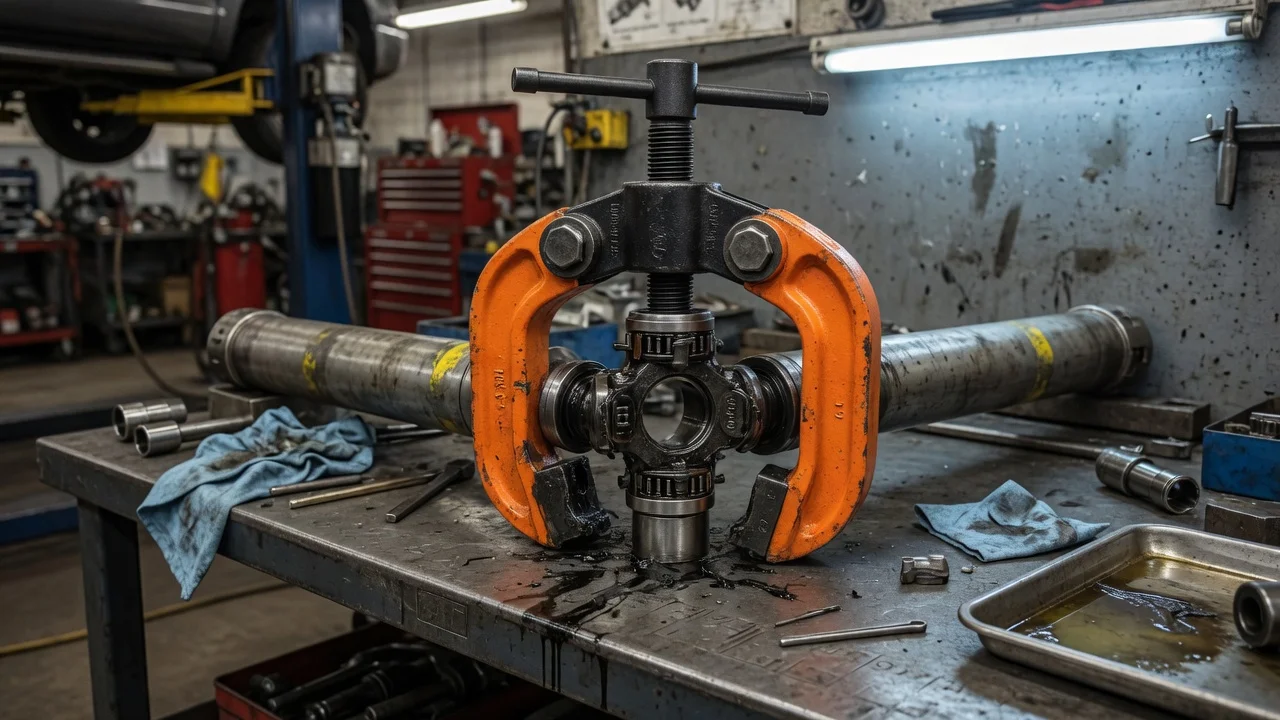
A Tiger Tool U-joint puller presses universal joint bearing caps out of driveline yokes in a controlled way, so you do not have to hammer on yoke ears and risk distorting them or damaging the driveshaft. The right model depends on the joint series on your vehicle, where you will do the work and how often you replace joints. This guide covers the job definition, fitment checks, features, limitations and a practical shortlist.
Define the job the product must do
Start with the drivelines you actually service. A pickup owner replacing one worn joint every few years has different needs than a fleet shop that changes joints on medium and heavy trucks every week. Write down each vehicle you expect to work on, its driveline layout and the joints involved: front and rear driveshaft joints, center support positions and any slip yoke or flange yoke connections. Your service history helps here, because repeated joint failures on one unit tell you which positions you will press most often.
Next, decide where the work will happen. Some pullers are designed to work with the driveshaft still installed, while others are intended for use on a bench or in a vise after the shaft is removed. Clearance around the frame, crossmembers, exhaust and transmission can rule out a bulky frame for in-vehicle use. Also consider how you will drive the forcing screw, whether by hand ratchet or by an impact wrench, and confirm in the manufacturer's instructions which methods a given model allows.
Check compatibility
Fitment is the deciding factor. Universal joints are made in different series, and each series has its own bearing cap diameter and cross dimensions. Identify the series from the replacement part number in your service records, from markings on the existing joint or driveshaft, or from the driveline information for your exact vehicle configuration. Then compare it with the joint series the puller listing explicitly states it covers. If your series is not listed, treat that model as unconfirmed and ask the seller or manufacturer before buying, rather than assuming a close size will work.
Check the yoke style as well. Full-round yokes hold press-fit bearing caps in closed bores, and that is where a puller does most of its work. Half-round yokes typically retain caps with straps or U-bolts, so those caps often come free once the hardware is removed. Note how the caps are retained, whether by inside or outside snap rings or by injected plastic retainers, because every retainer must be removed or broken out before pressing. Finally, aftermarket or modified driveshafts may not match the original vehicle data, so inspect the actual parts on the vehicle before relying on a model's listed coverage.
Features that affect the choice
The features worth paying attention to are the ones that change how the tool fits and loads the yoke. Look at the adapters or receiver cups included and which joint series each one is matched to, the length and thread of the forcing screw, and whether the frame seats squarely against the yoke ears so force is applied in line with the bearing bore. A frame that flexes or sits at an angle can cock the cap in its bore and make removal harder. Storage that keeps adapters organized matters in a busy shop, because a missing adapter turns a quick job into a delay.
Separate useful evidence from marketing labels. Terms such as heavy duty or professional grade tell you little on their own; the published list of covered joint series, the stated drive method for the screw and the included components are the details that answer your fitment question. A complete kit makes sense when you service several series, while a single-series tool can be enough when your fleet or personal vehicles all share one driveline type. Buy for the coverage you will actually use rather than the largest kit available.
Limitations and ownership costs
A puller removes and helps install bearing caps; it does not diagnose why a joint failed or replace the rest of the job. You still need new joints in the correct series, new retainers, grease for serviceable joints, and fastener torque values from the manufacturer specifications for your vehicle. Before removing a driveshaft, chock the wheels, secure the vehicle, support the shaft so it cannot drop, and mark the slip yoke and shaft so phasing and balance alignment can be restored on reassembly. A puller also cannot straighten a yoke that is already bent, recover a bore that has been damaged, or remove a pinion or transmission output yoke, which require different tools.
Ownership costs are modest but real. Keep the forcing screw threads clean and lightly lubricated, inspect the frame, screw and adapters for cracks, mushrooming or thread damage before use, and replace worn components with parts intended for that tool. Heavily corroded caps under harsh operating conditions may need penetrating oil and patience, and exceeding the tool's intended use can damage both the puller and the yoke. Joint replacement frequency follows the vehicle maker's maintenance schedule, your inspection findings and how the vehicle is used, not a universal interval, so estimate tool use from your own records.
Build a practical shortlist
Narrow your options with a short checklist. First, list every joint series you service and confirm each one appears in the model's stated coverage. Second, confirm the yoke style on your drivelines is one the puller is intended for, and note how the caps are retained. Third, decide whether you need in-vehicle use or bench use, and check that the frame fits the available clearance. Fourth, verify how the forcing screw may be driven, by hand or by impact, according to the manufacturer's instructions. Fifth, check which adapters are included and whether replacement parts are available.
Once a model passes those checks, compare the remaining candidates on practical points: how many of your joints each one covers without extra adapters, how easily it stores and travels, and whether the instructions are clear about setup. If two models cover the same series, choose the one that fits your workspace and frequency of use. If no model clearly covers a joint you service, contact the seller or manufacturer with the joint part number and vehicle details before purchasing, and keep the confirmed answer with your service records.